
0%

Choosing the right Shock Absorber Mounting manufacturer affects ride comfort, suspension stability, and long-term vehicle safety. For global buyers, the decision involves more than comparing prices or browsing attractive product catalogs. Material quality, dimensional accuracy, production control, and technical support all deserve careful review.

A reliable manufacturer should understand rubber-metal bonding, corrosion resistance, vibration behavior, and vehicle-specific fitment. Buyers should examine production records, inspection procedures, testing equipment, and batch traceability. Clear drawings and consistent dimensions matter. A mount that appears correct may still create noise, uneven loading, or premature wear when installed. Suppliers with ISO 9001 or IATF 16949 systems may offer stronger process discipline, but certification alone cannot prove product performance.

Real-world evidence remains important. Ask whether the manufacturer performs endurance, temperature, salt-spray, and load testing. Request samples before approving large orders. Check how quickly the supplier responds to design changes, packaging concerns, and warranty claims. Small details count, such as protected studs, dry packaging, and readable labels.

No ranking fits every market. A manufacturer serving passenger cars may not suit heavy trucks or electric vehicles. Public information can also be incomplete, and some supplier claims require independent verification. That limitation deserves attention. This guide compares leading Shock Absorber Mounting manufacturers through product range, engineering capability, quality controls, export experience, and buyer support. The goal is practical selection, not a perfect verdict. Global buyers can use these criteria to reduce sourcing risks and build more dependable supplier relationships.
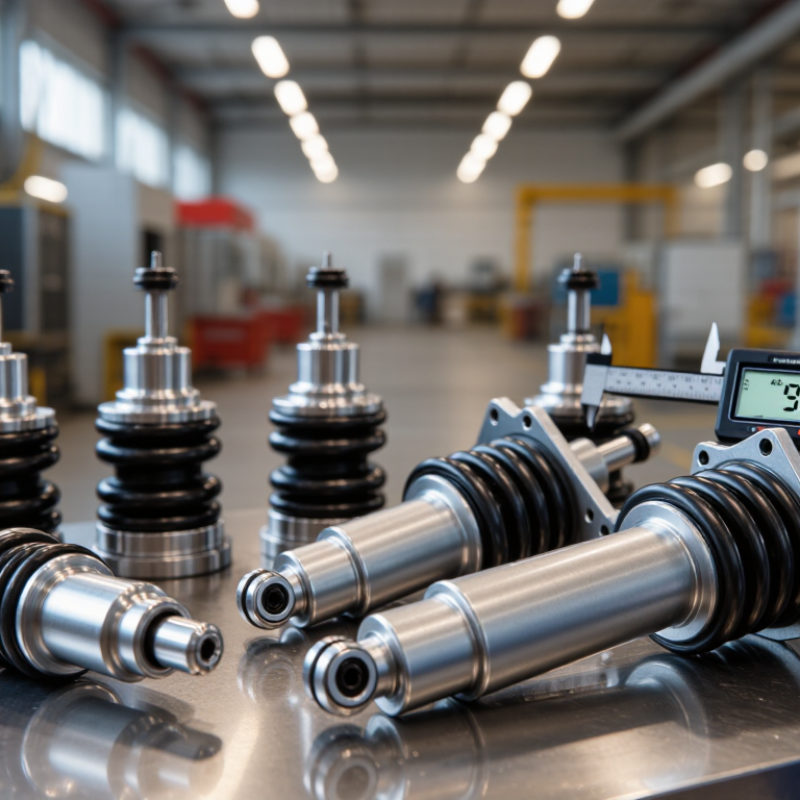
Top Shock Absorber Mounting Manufacturers for Global Buyers

Shock Absorber Mounting Manufacturers: Industry Definition and Product Scope

Shock Absorber Mounting Manufacturers: Industry Definition and Product Scope

The shock absorber mounting industry covers components that secure dampers to vehicle bodies, axles, or suspension assemblies. These parts connect the shock absorber to the vehicle structure. They also manage vibration, noise, and movement during driving. In practice, mounting products influence ride comfort, handling, and component service life.

The boundary is not always clean.

Product scope includes top mounts, strut mounts, rubber bushings, bearing plates, brackets, sleeves, and fastening hardware. Common products combine molded rubber with steel inserts for strength and vibration isolation. Some manufacturers produce complete mounting assemblies, while others supply individual parts for assembly plants or repair channels.

Rubber-to-metal bonding is widely used. Polyurethane parts may offer different stiffness and durability. No single material wins every application.

Experienced buyers inspect material data, dimensional drawings, and production traceability before placing orders. They request evidence of fatigue testing, corrosion resistance, bonding strength, and temperature performance.

Dimensional checks matter because a small mismatch can create noise or uneven suspension movement. Practical validation should include road simulation, repeated loading, and fit checks on representative vehicle structures.

A reliable supplier explains design limits instead of promising universal performance. It is easy to overvalue a low unit price. Real-world fit matters more. Small alignment errors can become expensive warranty problems.

Key Materials and Engineering Standards Used in Mounting Components

Shock absorber mounts combine elastic materials with rigid load-bearing structures. Steel remains common because it tolerates impact, fatigue, and manufacturing variation. The World Steel Association reported 1,888 million tonnes of crude steel production in 2023. This scale supports stable sourcing, but not every steel grade suits suspension mounts.

Aluminum is useful where lower mass matters. The U.S. Geological Survey estimated global primary aluminum output at about 70 million metric tonnes in 2023. Engineers still need to control porosity, galvanic corrosion, and thread strength. Rubber elements commonly use EPDM, NBR, or natural rubber. ASTM D2000 helps classify elastomer performance, while ISO 815-1 evaluates compression set. A hardness value alone can mislead. Temperature aging changes real stiffness.

Reliable manufacturers should connect material certificates with process evidence. IATF 16949 methods, including APQP, PPAP, and statistical process control, support repeatable production. ISO 16232 is valuable for checking particulate cleanliness in assembled components. The ISO Survey 2023 recorded 1,265,216 ISO 9001 certificates worldwide, showing broad adoption of quality systems. Certification is not proof of perfect mounts. It must match inspection records, fatigue testing, and dimensional control. In practice, engineers should review bushing preload, metal thickness, weld quality, and torque retention. Small geometry errors can create cabin noise, uneven loading, or premature separation. Supplier data often looks complete, yet missing temperature-cycle results deserves careful questioning.

How Leading Manufacturers Design, Test, and Validate Their Products

Top Shock Absorber Mounting Manufacturers for Global Buyers

Leading manufacturers design shock absorber mounts around real vehicle loads, not only catalog dimensions. Engineers study rubber hardness, metal thickness, corrosion exposure, and installation angles. They also compare road data from different climates. A mount used in cold regions may need different material behavior than one used in tropical humidity. Practical experience matters here. Small design changes can reduce vibration, noise, and premature wear.

Reliable factories test prototypes before approving production tools. Common checks include static load testing, fatigue cycling, temperature conditioning, and salt spray exposure. Engineers measure deformation, cracking, noise, and fastener movement. Test results should connect clearly with drawings and batch records. Independent laboratory verification can add confidence for global buyers. Still, no test plan is flawless. Unexpected vehicle conditions may reveal weaknesses later.

Tips: Ask for material certificates, dimensional inspection reports, and traceable test records. Request samples from regular production, not specially prepared units. Check whether the supplier controls rubber formulas and metal processing consistently. A useful audit should review equipment calibration, worker training, and corrective actions. Look closely at failure analysis. Honest reporting often shows stronger engineering than perfect-looking claims. Be careful with vague durability promises. Clear limits are more credible. Examine packaging as well; bent studs or poorly protected surfaces can damage an otherwise well-validated mount.

Regional Manufacturing Strengths and Global Supply Capabilities

Global buyers often compare shock absorber mounting manufacturers by unit price. Regional capability matters more during production changes. East Asian factories often combine stamped steel, rubber molding, and automated assembly nearby. This shortens movement between processes and supports high-volume programs. Central European suppliers may excel in tight tolerances, documented testing, and smaller engineering runs. North American plants often provide responsive prototyping and strong aftermarket logistics. These strengths are not universal. Site-level verification still matters.

In practical sourcing work, I look for evidence rather than polished claims. A capable plant can show incoming-material records, mold-maintenance logs, and test results for temperature, vibration, and corrosion. It should explain how defects are isolated before shipment. Regional logistics also shape reliability. Ports, inland rail, customs experience, and backup warehouses can protect deliveries when one route fails. Dual sourcing across two regions may reduce disruption, although it adds inspection and coordination costs. Evidence matters.

Global supply capability is more than exporting cartons. Buyers need engineering communication, stable packaging, traceable batches, and realistic production schedules. A supplier should confirm whether rubber compounds, metal grades, and tooling are locally available or imported. That detail can change lead times quickly. I have seen promising quotations weaken after tooling delays. Price alone misleads. Some manufacturers also need improvement in digital traceability or response speed. Honest evaluations should record those gaps, not hide them. The strongest partnership usually grows through sample approval, pilot orders, and measured corrective actions.

How Buyers Compare Suppliers, Quality, Pricing, and After-Sales Support

Global buyers often compare shock absorber mounting suppliers beyond catalog prices. In practical sourcing, the first check is dimensional consistency. A mount may look correct but fail during installation. Buyers should request tolerance data, rubber hardness ranges, metal thickness, and batch traceability. Inspection records matter. Ask for test methods, not only certificates. A useful supplier can explain vibration testing, corrosion testing, and fatigue limits in clear terms. That conversation reveals engineering depth.

Pricing needs a complete view. Compare tooling fees, minimum order quantities, packaging, freight terms, and replacement policies. A low unit price may hide unstable material quality or expensive rework. Request samples from the intended production line. Measure stud position, bolt-hole alignment, and surface finish before approval. Include a landed-cost sheet. It prevents uncomfortable surprises. Still, buyers sometimes overvalue the cheapest offer. That is a costly habit.

After-sales support becomes visible when a shipment has mixed batches or early noise complaints. Reliable suppliers should provide a named technical contact, response timelines, and a practical claim process. Ask how they isolate defective lots and protect later shipments. Clear photos, test reports, and returned samples can speed root-cause analysis. Experience shows that fast replies are useful, but technical ownership matters more. No supplier is perfect. Some corrective actions remain vague, especially under schedule pressure. Buyers should record every promise in the purchase agreement and review performance after delivery. That creates evidence for the next sourcing decision.

Top Shock Absorber Mounting Manufacturers for Global Buyers

How buyers typically compare suppliers across quality, pricing, delivery, and after-sales support

The chart presents a normalized buyer evaluation framework commonly used in global automotive sourcing. Product quality and landed cost receive the highest weighting, followed by delivery reliability, warranty support, and compliance documentation. The percentages represent evaluation priorities rather than data from any individual company or brand.

FAQS

What do shock absorber mounting components do?

They connect dampers to the vehicle body, axle, or suspension structure. They also control vibration, noise, and movement during driving. Fit matters greatly.

Which products are included in this industry?

Common products include top mounts, strut mounts, rubber bushings, bearing plates, brackets, sleeves, and fastening hardware. Some suppliers provide complete assemblies. Others deliver separate parts for final assembly or repair.

Which materials are commonly used?

Steel provides impact resistance, fatigue strength, and stable load support. Aluminum reduces weight but needs control of porosity, corrosion, and thread strength. Rubber types differ in temperature behavior, stiffness, and compression recovery. No material wins every application.

What should buyers inspect before ordering?

Buyers should review material data, dimensional drawings, test records, and production traceability. Check stud position, bolt-hole alignment, rubber hardness, and metal thickness. A small mismatch can create noise or uneven suspension movement.

How can suppliers validate mounting performance?

Useful validation includes repeated loading, temperature cycling, corrosion checks, road simulation, and installation trials. Bonding strength and fatigue results also deserve review. Laboratory results alone may not represent actual vehicle behavior.

How should buyers compare supplier prices?

Compare tooling fees, minimum order quantities, packaging, freight, replacement terms, and inspection costs. Request samples from the planned production line. A low unit price can hide rework, unstable quality, or expensive returns.

What quality evidence should a supplier provide?

A supplier should provide material certificates, inspection records, dimensional results, and batch traceability. Process controls should support repeatable production. Certification helps, but it does not prove perfect mounts.

What after-sales support is important?

Buyers should request a named technical contact, response times, and a clear claim process. Suppliers should isolate defective batches and explain corrective actions. Fast replies help. Technical ownership matters more.

What mistakes should buyers avoid?

Do not judge a mount by appearance or price alone. Confirm fit on representative vehicle structures before approval. Some test information may be missing. Ask again, and record every promise in the purchase agreement.

Conclusion

This guide provides a practical overview of Shock Absorber Mounting manufacturers and the products they supply for passenger vehicles, commercial vehicles, and industrial applications. It explains the role of mounting components in securing shock absorbers, reducing vibration, improving ride comfort, and supporting suspension durability. The discussion also covers commonly used materials, including rubber, elastomers, steel, aluminum, and engineered composites, along with relevant dimensional, performance, and quality standards that help ensure reliable operation.

Leading manufacturers typically combine computer-aided design, material analysis, precision tooling, and controlled production processes to develop mounting solutions. Their products are evaluated through load, fatigue, temperature, corrosion, noise, vibration, and durability testing before validation. The guide also compares regional manufacturing strengths, export readiness, production capacity, and supply-chain flexibility. For global buyers, key selection factors include consistent quality, technical customization, transparent pricing, delivery reliability, documentation, warranty terms, communication efficiency, and responsive after-sales support.

Clara

Clara

Clara is a dedicated marketing professional with a strong understanding of the company’s products, customers, and industry landscape. With a background in market research, content strategy, and customer communication, she specializes in transforming complex product information into clear,......