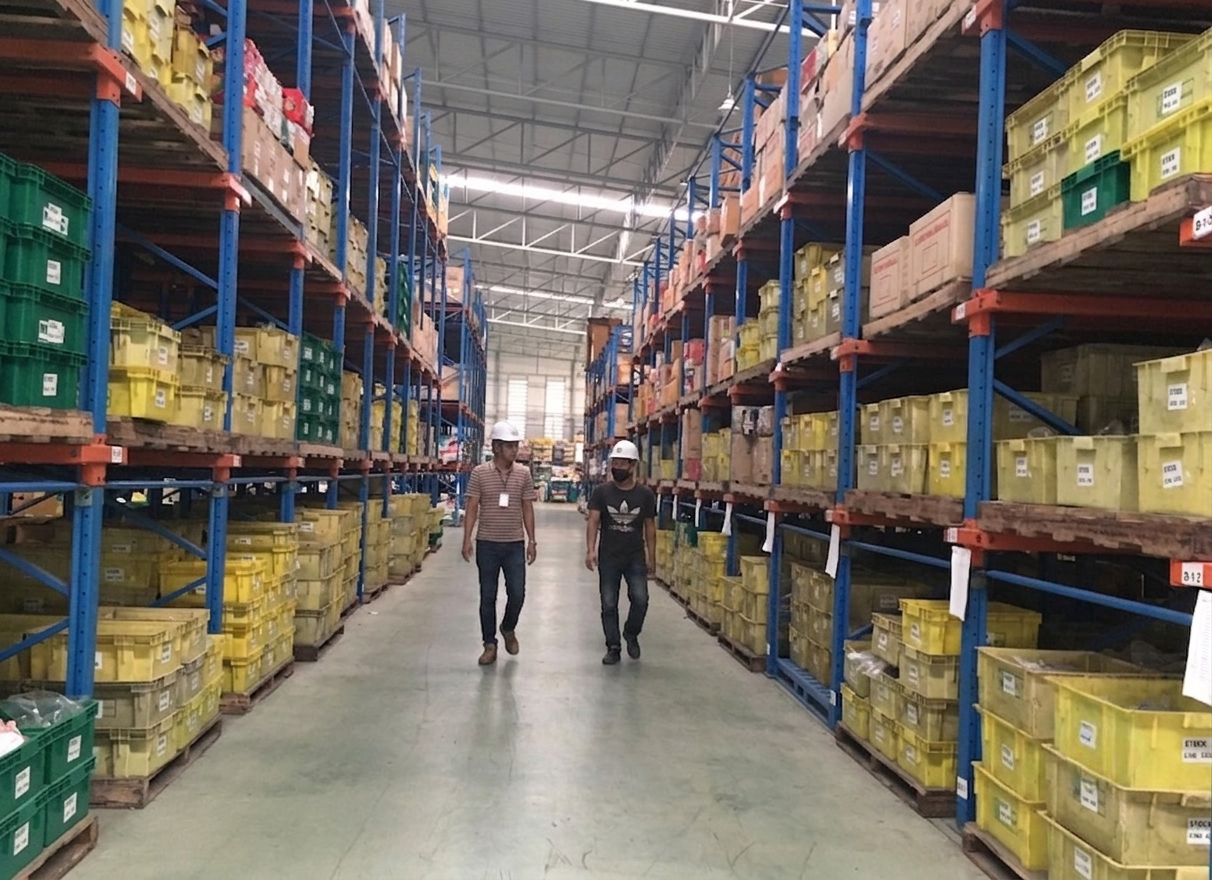
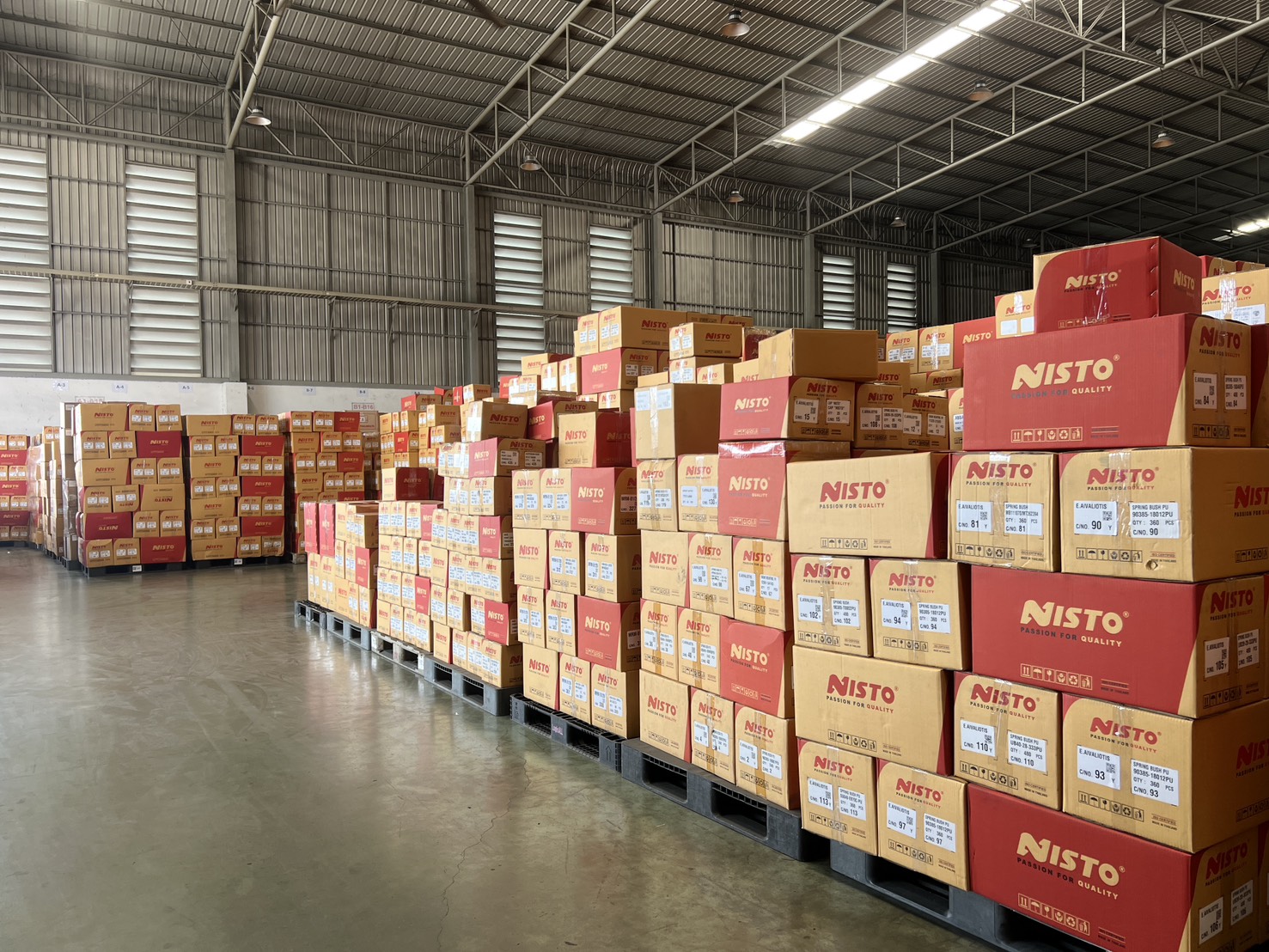
Engineering Authority · Thailand Direct Manufacturer
Stabilizer Bar Bushing: The Technical Sourcing Guide for Global OEM & Aftermarket Distributors
How do high-mileage fleet operators, Tier-1 distributors, and automotive aftermarket importers prevent premature sway bar noise, dynamic bore deformation, and warranty blowouts? Explore in-depth elastomeric compounding, rubber-to-metal bonding durability, EV chassis torsional resistance, and verified fitment data straight from our factory floor in Thailand.
780Stabilizer Bush SKUsDirect-fit OEM catalogued
9,485Total Rubber PartsCross-chassis catalog coverage
31Vehicle Makes SupportedAsian, US & European fleets
100%In-House MoldedRaw compound to final testing
Engineered Programs
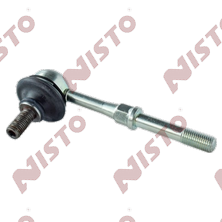
High-Velocity Stabilizer Bar Bushing & Chassis Components
Curated selections engineered with strict Shore A durometer tolerances, precise inner bore geometries, and superior ozone-resistant elastomer blends for demanding aftermarket channels.
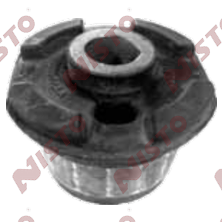
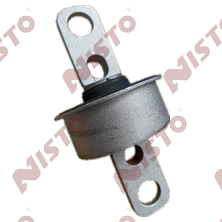
Mechanical Insight
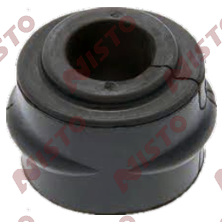
The Critical Role of the Stabilizer Bar Bushing in Dynamic NVH Management
Why this unassuming rubber component dictates steering precision, vehicle roll stiffness, and suspension acoustic comfort across millions of operating cycles.
Kinematic Anti-Roll Transfer
The stabilizer bar bushing anchors the torsion bar directly to the subframe or chassis cradle. As the vehicle enters a corner, centrifugal force produces chassis body roll, forcing opposing suspension arms into asymmetric travel. The sway bar twists to transfer load from the loaded outside wheel to the unloaded inside wheel. The stabilizer bar bushing acts as the torsional pivot; if its internal diameter expands or exhibits elastic yield under dynamic lateral load, effective anti-roll bar stiffness drops by up to 28%, causing sloppy steering response and hazardous body lean.
NVH Acoustic Decoupling
Beyond anti-roll control, the bushing prevents metal-to-metal shock between the high-tensile spring steel stabilizer bar and the stamped steel chassis bracket. Wheel impact vibrations (frequencies between 20 Hz and 250 Hz) are absorbed by the rubber matrix through progressive hysteresis damping. Poorly formulated bushings with incorrect loss factor (tan delta) either transmit high-frequency suspension rumble directly into the passenger cabin or degrade into low-frequency mechanical thumping when worn.
Rotational Slip vs. Torsional Shear
Modern OEM suspensions implement two distinct engineering philosophies: internal rotational slip bushings with engineered internal lubrication grooves, and vulcanized chemically bonded bushings that accommodate sway bar motion purely through elastomeric shear strain. NISTO RUBBER engineers both configurations, ensuring exact dimensional tolerance matching so that rotational bushings never bind, seize, or produce the notorious low-speed cold morning squeak.
Molded In Thailand
Direct Compounding.
Direct Compounding.
Zero Compromise in Hardness.
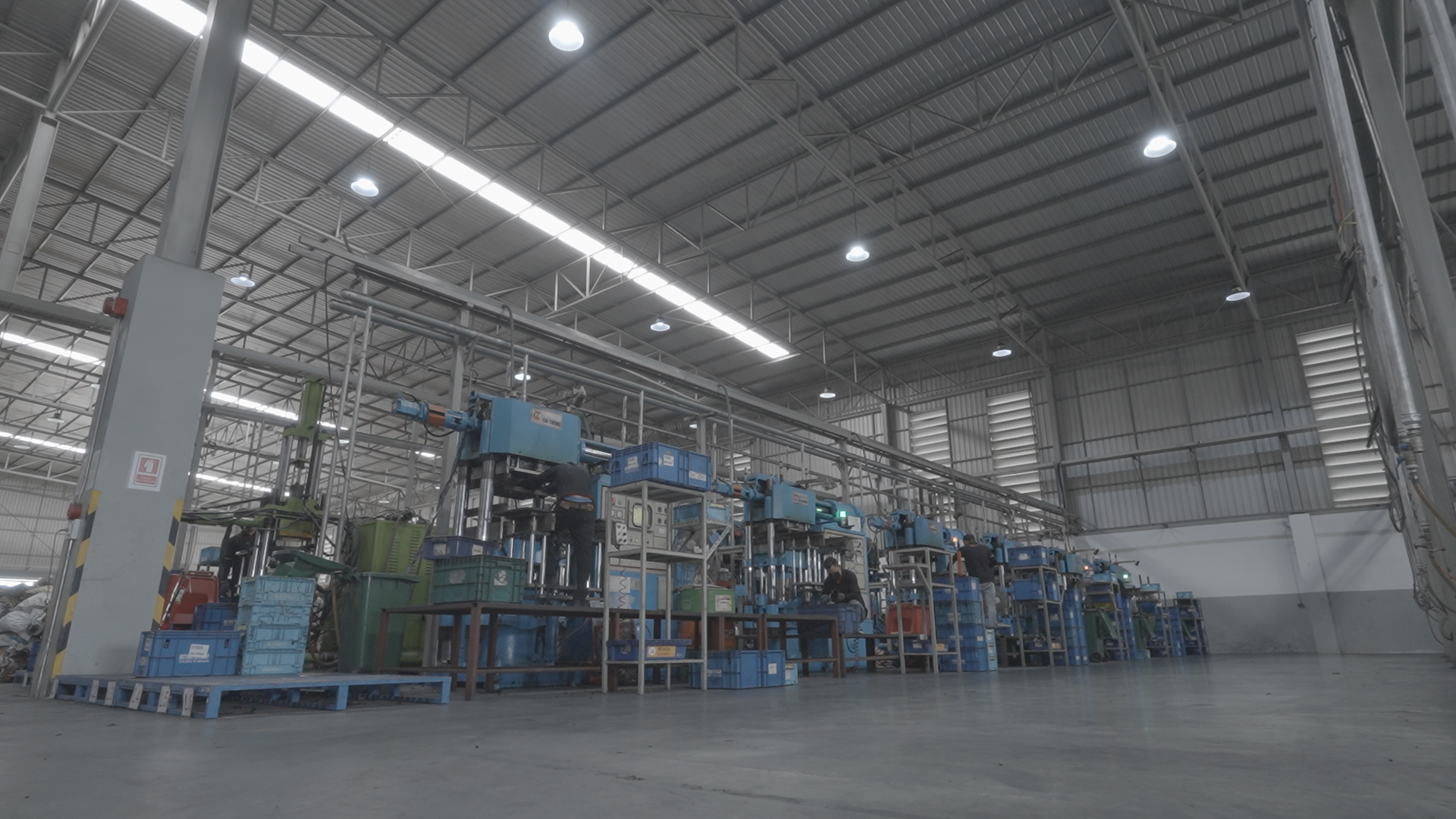
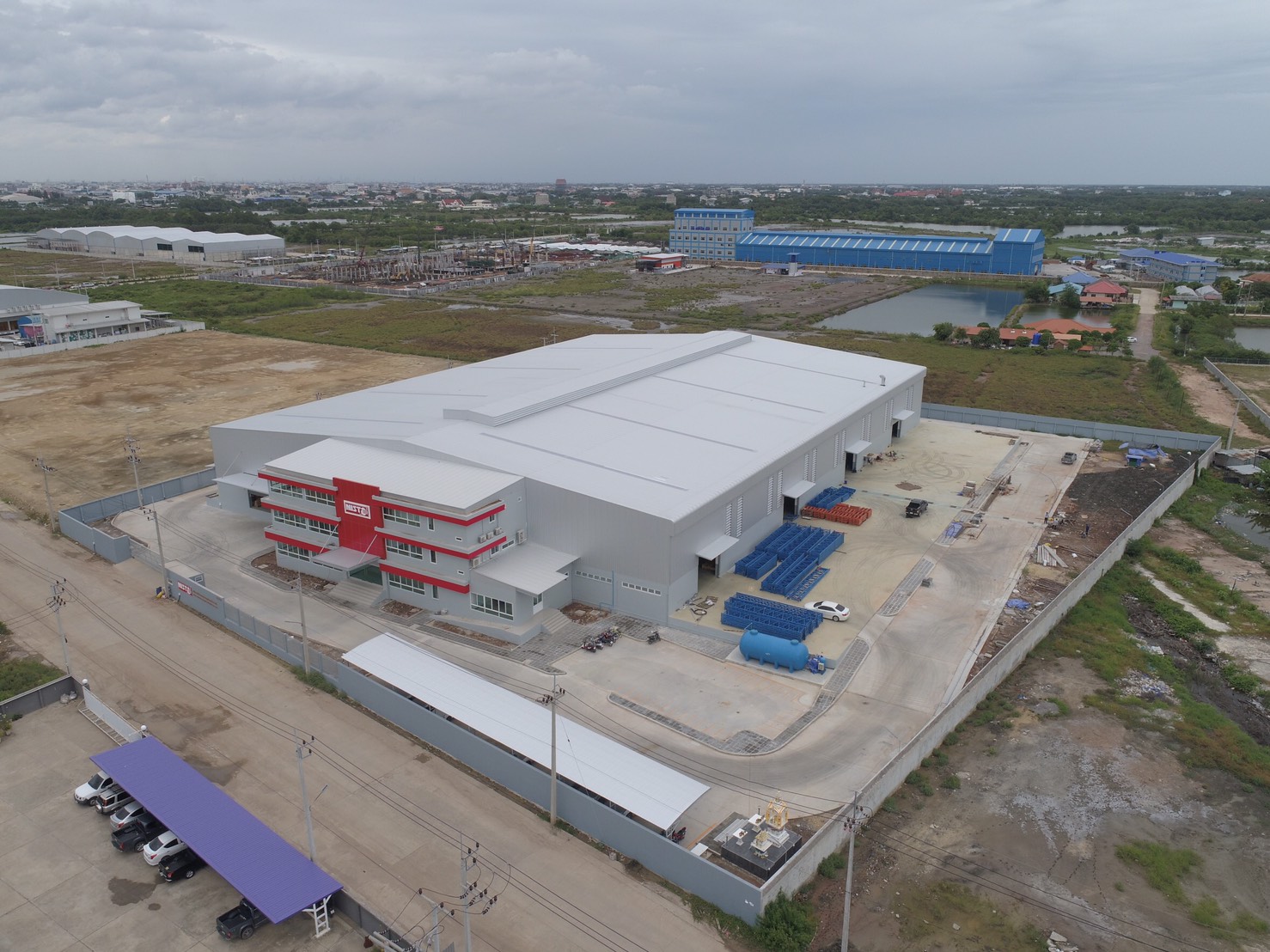
Because we formulate and blend our own raw elastomer compounds in Thailand, NISTO RUBBER maintains complete metallurgical and elastomeric traceability. From custom tensile curing to automated cryogenic deflashing, our stabilizer bar bushings deliver repeatable Shore A durometer, zero inner-bore flash, and permanent vulcanization bonds across volume purchase orders.
Market Intelligence & Procurement Analysis
Future Sourcing & Technological Trends in Stabilizer Bar Bushings
Actionable intelligence for Tier-1 supply chain heads, automotive warehouse distributors, and OEM buyers navigating vehicle electrification and global sourcing realignment.
01
Heavier EV Battery Packs Demand Low-Creep Elastomers
The accelerated adoption of battery electric vehicles (BEVs) has pushed vehicle curb weights up by 25% to 40% compared to internal combustion counterparts. Heavy structural floor batteries create a low center of gravity combined with immense inertial mass, exposing front and rear stabilizer bars to severe torsional shock loads. Forward-looking procurement teams are shifting away from generic low-cost rubber compounds in favor of advanced NR/BR (Natural Rubber/Polybutadiene) and EPDM compounds that resist dynamic compression set and inner-diameter creep under sustained heavy loads.
02
Silent Cabin Standards & PTFE Bore Liners
Without the masking noise of internal combustion engines, suspension chatter and high-frequency friction squeaks become glaring customer complaints in electric and hybrid vehicles. To combat dry friction and micro-slip chatter between the stabilizer bar and rubber contact surfaces, high-end procurement now prioritizes bushings manufactured with co-molded internal PTFE fabric sleeves or integrated dry-lubricant molybdenum inner barriers. This engineering design permanently eliminates rotational friction noise without relying on temporary petro-grease lubricants that wash away in heavy rain.
03
Supply Chain Decoupling & Sourcing from Thailand
Global supply chain disruptions, escalating trade tariffs, and single-source dependencies have driven European, North American, and Australasian auto parts importers to diversify into Southeast Asia. Thailand stands as the global epicentre of high-grade natural rubber production and automotive manufacturing, dubbed the "Detroit of the East." By sourcing direct from NISTO RUBBER in Thailand, importers secure authentic direct-from-source rubber pricing, avoid geopolitical tariff premiums, and gain direct factory communication from CAD mold tooling to container vessel dispatch.
Why Source From NISTO
Precision Rubber Compounding Backed by In-House Tooling
Importers, warehouse distributors, and fleet specialists choose NISTO RUBBER to eliminate the two biggest risks in automotive rubber distribution: dimensional mismatch and premature elastomeric fatigue.
-
01
100% In-House Compounding & Vulcanization
We do not broker parts or outsource molding. Every stabilizer bar bushing is compounded from selected raw natural and synthetic rubber, mixed under strict rheometer-verified formulations, and vulcanized on our own automated presses in Thailand to guarantee 60-65 Shore A durometer consistency.
-
02
9,485+ Total SKUs Covering 31 Global Makes
Our program spans 780+ stabilizer bush part numbers and over 9,485 cross-chassis rubber components. We offer comprehensive fitments for Toyota, Nissan, Honda, Isuzu, Mitsubishi, Mazda, Ford, Chevrolet, Chrysler, Hyundai, and commercial light trucks—enabling one-stop container consolidation.
-
03
Verified OEM Geometric Tolerances & Tooling Precision
An out-of-round inner bore causes sway bar squeaking within weeks of installation. Our dedicated CNC tooling produces bore tolerances down to ±0.15mm, preserving crisp anti-roll bar clamp force without binding or excessive frictional drag.
-
04
Transparent B2B Ordering with Live Part Matching
Every single listing in our catalog includes verified high-resolution photographs, OE reference cross-codes, and vehicle fitment tables. Our responsive engineering desk verifies your bill of materials before production commences.
Quality Assurance Standard
The NISTO Stabilizer Bar Bushing Production Cycle
A closed-loop manufacturing system engineered to comply with rigorous IATF/ISO quality standards, from raw polymer blending to robotic flash removal.
1. Custom Formulation
Compounding natural rubber with specialized anti-degradants, paraffinic process oils, and carbon black reinforcement to resist thermal breakdown and ozone exposure (tested under ASTM D1149 standards).
2. Precision Compression Molding
Direct vacuum-assisted cavity compression molding ensures high elastomeric density, preventing internal air bubbles, void defects, or micro-porosity that trigger early structural tearing under shear stress.
3. Cryogenic Deflashing
Automated low-temperature tumbling eliminates inner bore and parting line parting flash cleanly, guaranteeing that bushing contact surfaces fit flush against the sway bar without manual trimming scars.
4. Hardness & Dynamometer Testing
Every production batch undergoes durometer indentation testing, dynamic tensile testing, and compression set verification before packaging, barcoding, and staging for direct container loading.
Fleet & Make Compatibility
Direct OE Replacements for 31 Global Automakers
Our stabilizer bar bushing portfolio covers Asian, North American, and European passenger cars, light commercial vehicles (LCVs), and pickup platforms.
CHRYSLER / DODGE / JEEP
DATSUN

GAC
HOLDEN

INFINITI
JAGUAR
Also fully catalogued: Toyota, Nissan, Mitsubishi, Mazda, Subaru, Suzuki, and more. All OEM names and part codes are strictly for vehicle fitment reference.
Technical FAQ
Frequently Asked Questions by Global Auto Parts Buyers
Direct engineering answers addressing material formulation, failure modes, inspection protocols, and minimum wholesale order logistics.
Why do stabilizer bar bushings wear out, and what are the primary failure symptoms?
Stabilizer bar bushings operate under constant dynamic torsional stress, road grit abrasion, thermal cycling, and petrochemical contamination (such as motor oil leaks and road de-icers). Over time, rubber vulcanizates suffer micro-fissuring, permanent set, and inner bore elongation. Key failure symptoms include low-speed knocking or clunking noises over uneven pavement, increased vehicle body roll during cornering, vague steering feedback, and squeaking caused by torsional friction between the sway bar and a hardened bushing inner wall.
How do natural rubber (NR) and polyurethane (PU) stabilizer bushings compare in NVH and commercial longevity?
High-grade Natural Rubber (NR) compounds enriched with synthetic elastomers provide optimal progressive dampening, absorbing road micro-vibrations and high-frequency harshness (NVH) without transmitting noise into the cabin, while requiring zero supplemental lubrication. Polyurethane offers high Shore A hardness and stiff responsiveness popular in racing, but generates high squeak potential, transmits significant vibration into the vehicle frame, and accelerates sway bar bore wear in real-world commercial fleet duty.
What technical criteria should B2B distributors use to inspect OEM-replacement sway bar bushings?
Distributors should verify precise inner diameter (ID) calibration against sway bar nominal diameters (typically within +/-0.15mm tolerance), Shore A durometer hardness compliance (usually 60 to 70 Shore A), vulcanization bond tensile strength, resistance to ozone cracking under ASTM D1149 testing, and compression set recovery under dynamic cyclic load testing.
How is the global shift toward Electric Vehicles (EVs) transforming stabilizer bar bushing engineering?
Because electric vehicles carry substantial battery pack weight, chassis experience up to 25-35% higher torsional loads during cornering. Additionally, the lack of an internal combustion engine makes suspension NVH far more noticeable. Modern EV stabilizer bar bushings demand specialized low-creep rubber compounds, reinforced fabric or PTFE inner bore linings, and tighter compression tolerances to handle increased shear stresses without squeaking or premature failure.
Can NISTO RUBBER customize sway bar bushing rubber formulations for regional climate extremes?
Yes. As an in-house rubber compounder and molder in Thailand, NISTO customizes elastomeric masterbatches. We engineer high-temperature, ozone-resistant compounds for Middle Eastern and tropical markets, as well as cold-ductile rubber compounds that maintain flexibility and avoid embrittlement in sub-zero Nordic and North American winters.
What is the typical production lead time and MOQ for wholesale export orders?
For cataloged fast-moving items maintained in our Thailand warehouse, orders can be dispatched in 7 to 14 business days. For customized production runs or new mold developments, production lead times generally range from 30 to 45 days. Minimum order quantities (MOQs) depend on mold cavitation, typically starting from 300 to 500 units per line item, with flexible container consolidation across all 9,485 NISTO rubber chassis parts.
Request OEM Specifications & Factory Price Tiers
Send our Thailand engineering desk your target OEM cross-reference numbers, annual volume requirements, or technical drawings for instant B2B quotation.
Inquire Now