Direct-From-Factory Solutions
Engineered Driveline & Chassis Vibration Control
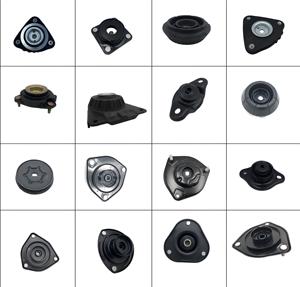
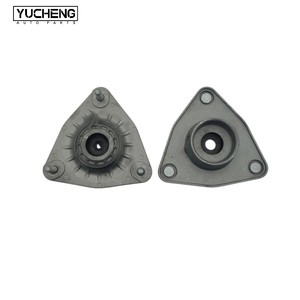
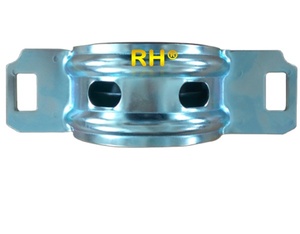
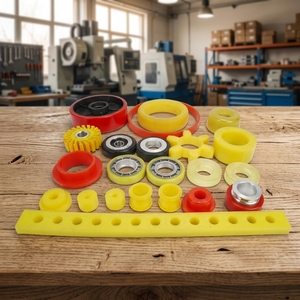
Source high-performance OEM-spec driveshaft center bearings, dynamic dampers, strut mounts, and precision polyurethane bushings manufactured strictly to ISO 9001 and CE-compliant European tolerances.

9,485+
Catalogued Tooling Dies
31+
Global Auto Makes Covered
100%
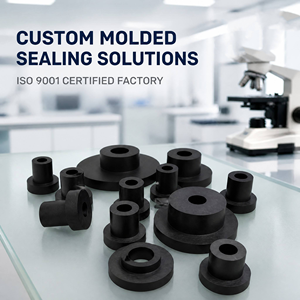
In-House Elastomer Molding
< 0.05%
Field Defect Rate Threshold
1. Automotive Engineering Overview: Center Support Bearing Architecture
In multi-piece propeller shaft configurations—commonly specified across rear-wheel-drive (RWD), all-wheel-drive (AWD), and four-wheel-drive (4WD) light commercial vehicles, heavy haulers, and performance passenger platforms—the driveshaft center support bearing acts as the pivotal operational axis. Its core purpose is to split driveshaft length, circumventing rotational natural frequency harmonics that induce high-speed torsional whipping, while sustaining absolute shaft alignment under variable torque distribution.
A premium CE-certified center support bearing assembly comprises three functionally critical layers: a cold-stamped or cast structural steel bracket casing, an elastomer isolation damper collar, and a sealed-for-life deep groove precision ball bearing unit. The engineering synergy of these components determines whether an automotive platform exhibits smooth linear acceleration or succumbs to structural fatigue precipitated by unmitigated Noise, Vibration, and Harshness (NVH).
| Engineering Parameter | Commercial Grade Benchmark | Our CE Certified Enterprise Standard | Test Protocol / Verification |
|---|---|---|---|
| Elastomeric Matrix | Recycled SBR / Basic Natural Rubber | Virgin High-Grade Natural Rubber (NR) & EPDM Blends | ASTM D2000 Material Profiling |
| Shore A Durometer | 50 ± 10 Shore A (Inconsistent) | 58 ± 3 Shore A (Optimized for Damping) | ASTM D2240 Durometer Calibration |
| Rubber-to-Metal Bonding | Single-stage solvent glue adhesive | Thermoset Chemlok® Primer with Phosphatized Metal | ASTM D429 Method B (90° Peel > 12 N/mm) |
| Bearing Grade & Seal | Standard Carbon Steel, Single Lip | High-Carbon Chromium GCr15 / Dual-Contact NBR Seals | DIN 625-1 / ISO 281 L10h Life Rating |
| Thermal Operating Range | -20°C to +80°C | -40°C to +125°C (Extended Extreme Envelope) | ISO 188 Accelerated Thermal Aging |
2. Dynamics of Driveline NVH & Elastomer Damping Mechanics
The driveline of a modern vehicle is subjected to continuous dynamic articulation driven by suspension travel, universal joint (U-joint) angularity variance, and transmission load shifts. If the elastomer damper in a center bearing lacks proper viscoelasticity, secondary vibrations resonate directly into the vehicle's floor pan.
By utilizing specialized compound mixing protocols in our dedicated production facilities, we match the loss factor (η) of the rubber compound to absorb typical driveline excitation bands (30 Hz to 150 Hz). The rubber ring isolates high-frequency radial deflections while resisting excessive lateral displacement during high-torque take-off situations. This delicate balance eliminates driveline shudder, protects universal joints from premature brinelling, and guarantees passenger cabin acoustical comfort.
3. Why CE Certification & IATF 16949 Standards Matter for Importers
For international distributors, tier-2 suppliers, and fleet replacement procurement directors, CE certification serves as verified legal evidence of compliance with strict European mechanical directives, safety protocols, and chemical material restrictions (such as REACH and RoHS regulation sets). Inferior non-certified center bearings frequently fail across three critical inspection points:
- Premature Elastomer Shear Delamination: Inadequate surface sandblasting and subpar chemical priming result in structural separation between the metal casing and rubber under dynamic shear loading.
- Bearing Core Contamination: Low-grade dust shields allow abrasive road grime, water, and salt brine to breach the raceway, washing out lubrication grease and inducing bearing seizure.
- Structural Bracket Buckling: Inadequate bracket metal tensile strength leads to micro-bending under extreme shock torque, forcing the driveshaft permanently out of true rotational concentricity.
Market Intelligence
Strategic Procurement Trends in Driveline Support Systems
How Tier-1 automotive procurement agents and global parts wholesalers are reshaping their supplier qualification strategies for 2025–2030.
Consolidated Platform Sourcing
Purchasing managers are transitioning away from fragmented suppliers. Single-source factories capable of providing full chassis elastomer packages—from engine motor mounts to sway bar links and center support bearings—drastically cut logistics costs and documentation overhead.
Demands for High-Tolerant Synthetics
With vehicle operational life expectancies extending beyond 15 years in key consumer markets, buyers demand hybrid compounds utilizing modified EPDM, HNBR, and microcellular polyurethane to resist thermal ozone decay, motor oil splashing, and road salts.
Electrification & Instant Torque Resilience
Commercial EV and hybrid delivery vans feature instantaneous peak torque curves. Modern support bearings must withstand severe torsional shock loads without plastic deformation, making high-integrity vulcanized bonding and reinforced cages mandatory.
R&D Pipeline
Future Development Trajectories in Center Bearing Technology
Innovative manufacturing paradigms elevating driveline component longevity.
PHASE 01
Active NVH Cancellation
Integration of magnetorheological (MR) fluids and piezoceramic sensors inside the bracket collar to adapt damping stiffness dynamically based on real-time vehicle RPM and road feedback.
PHASE 02
Lightweight Bracket Matrix
Replacing traditional stamped structural carbon steel with high-strength structural polymers and die-cast aluminum alloys to shed 35% of unsprung chassis weight while preserving shear fatigue thresholds.
PHASE 03
Nano-Ceramic Greasing
Next-generation polyurea lubrication grease enriched with ceramic nanoparticles to minimize micro-friction inside bearing races across extreme ambient ranges (-50°C to +160°C).
PHASE 04
Predictive Telematics Seals
Embedded conductive micro-traces in elastomer dust boots that monitor tear propagation and notify fleet dispatch operators before driveline failure occurs.
Manufacturing Authority: The NISTO Integrated Advantage
Rooted in world-class manufacturing facilities in Thailand, NISTO RUBBER MANUFACTURING CO., LTD. has engineered a vertically integrated production infrastructure that eliminates reliance on outsourced third-party molders. Controlling the complete lifecycle from compound formulations to metal bracket treatment ensures uncompromised quality for every component leaving the facility.
100% In-House Elastomer Molding
From raw virgin polymer mixing through to high-pressure vulcanization presses, every parameter—temperature, cycle duration, and curing pressure—is digitally recorded and audited.
9,485+ Comprehensive Reference Die Molds
Covering 31 Japanese, European, and American vehicle makes—from classic workhorse platforms like Toyota Cressida/Chaser to modern light commercial trucks and high-volume SUVs.
Ready-Stock Global Warehousing
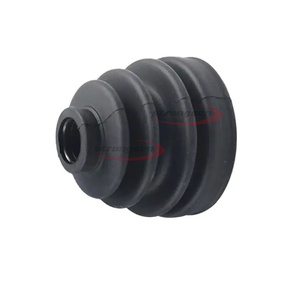
Extensive inventory across engine mountings, suspension bushings, CV joint boots, and center support bearings enables swift dispatch, cutting lead times for international importers.
Procurement Guidance
Frequently Asked Questions for B2B Importers & Fleet Buyers
Essential criteria when vetting CE certified center support bearing manufacturing partners.
What specific testing validates the CE compliance of your center support bearings?
Our products undergo comprehensive mechanical stress testing compliant with European automotive safety and reliability directives. This includes dynamic radial and axial load tests up to 1.5 million cycles, rubber-to-metal bond peel testing (ASTM D429), ozone cracking resistance tests in specialized chambers (ASTM D1149), and environmental salt-spray corrosion resistance on bracket finishes surpassing ASTM B117 240-hour benchmarks.
Can you manufacture center bearings and bushings to custom technical drawings or non-standard dimensions?
Yes. Our engineering division specializes in non-standard, drawing-based mold manufacturing. Whether you require specific internal bearing clearances (C2, CN, C3), customized Shore A durometer hardness ratings for performance track use, or proprietary bracket geometries for specialized EV retrofits, our in-house CNC toolmaking facility can produce custom pilot tooling within 20 working days.
How do you prevent premature rubber-to-metal bond separation during high-torque operation?
Bond failure occurs when metal surfaces are poorly prepared. We employ automated grit-blasting followed by zinc-phosphate chemical conversion coating to eliminate oxidation. Metal surfaces are then robotically spray-coated with authentic Lord Chemlok® vulcanization primers. During compression molding, chemical cross-linking occurs between the elastomer and the primer, creating a structural bond stronger than the tensile strength of the rubber itself.
What is the standard production lead time and Minimum Order Quantity (MOQ) for catalogued items?
For stocked SKUs among our 9,485 standard references, orders ship within 5 to 10 working days. For built-to-order batches requiring full vulcanization runs, standard manufacturing turnaround is typically 30 to 45 calendar days. Flexible MOQ thresholds are available depending on whether packaging is standard export-neutral or customized OEM private label branding.
How does NISTO guarantee fitment cross-referencing against original OEM part numbers?
Each part in our catalog is engineered through 3D coordinate scanning and reverse engineering of pristine original vehicle components. Our technical catalog indexes exact OEM part numbers alongside vehicle chassis codes, production years, engine displacement variants, and driveline models, ensuring 100% direct-fit replacement without bracket modification.