
CE Certified Propeller Shaft Bearing Manufacturers & Exporters

Precision Engineering, OEM Dynamic NVH Dampening & Heavy-Duty Driveline Center Support Solutions for Global Commercial and Passenger Fleets.

9,485+
OE-Matched Toolings
31+
Global Vehicle Makes Covered
≤ 0.015 mm
Radial Runout Tolerance
100%
In-House Elastomer Molding
Technical Insight Whitepaper

Engineering Architecture of CE Certified Propeller Shaft Bearings

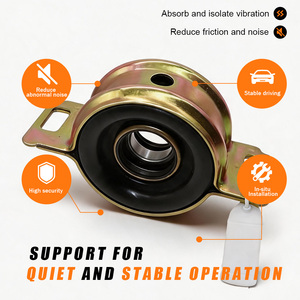
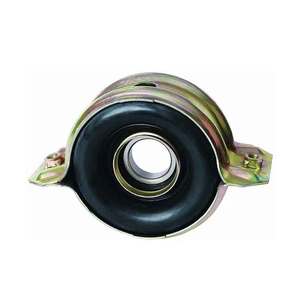
In modern split-driveline architecture, the propeller shaft center support bearing (also known colloquially as the cardan shaft intermediate hanger bearing) serves as the primary harmonic and angular dampening element connecting longitudinal driveshaft segments to the vehicle underbody. Driveline engineers recognize that high-torque multi-piece propshafts induce substantial torsional deflection, high-frequency rotational vibrations, and non-linear axial loads. The failure of non-certified or poorly bonded center bearings results in catastrophic chassis resonance, accelerated universal joint galling, and premature transmission seal wear.

Key Engineering Metric: Propeller shaft center bearings must balance two fundamentally opposing dynamic objectives: radial isolation flexibility (to arrest high-frequency NVH from propagating into the vehicle cabin) and torsional-axial restraint rigidity (to keep the driveline operating angle within a strict +/- 1.5-degree envelope across throttle transitions).

Elastomeric Cushion Rheology and Rubber-to-Metal Bonding Mechanics

Our production facilities utilize proprietary compounded Natural Rubber (NR) and Styrene-Butadiene Rubber (SBR) blends engineered for critical damping (loss factor tan δ optimized between 0.12 and 0.20 at 25°C to 70°C). Unlike basic commercial rubber mountings that embrittle under continuous thermal dissipation from the exhaust systems routing adjacent to the center tunnel, our compounds integrate thermal anti-ozonants and high-dispersion carbon black matrices capable of maintaining dynamic durometer ratings (Shore 55A to 65A) across severe operating thresholds (-40°C to +120°C).

Rubber-to-metal delamination is the primary mode of catastrophic failure in inferior aftermarket bearings. To eliminate inter-surface separation, our process implements an automated seven-stage chemical phosphating and silane-based priming wash before vulcanization. The structural steel bracket housing (stamped from high-yield cold-rolled steel or precision ductile iron) undergoes robotic electrostatic adhesive application, guaranteeing minimum bonding peel strength ratings that exceed 12 N/mm under ASTM D429 Method B standards.

Core Bearing Construction & High-Velocity Tribology

At the center of each support assembly resides a deep-groove ball bearing manufactured from premium vacuum-degassed GCr15 (SAE 52100) high-carbon chromium bearing steel, heat-treated through precise martempering to achieve core hardness levels of 60 to 64 HRC. Precision raceway superfinishing reduces arithmetic average surface roughness (Ra) to below 0.08 μm, minimizing internal drag torque and friction-induced thermal degradation at rotational velocities up to 6,500 RPM.

To resist harsh underbody exposure—including saline spray, abrasive gravel impacts, and deep standing water—the internal deep-groove bearing features dual-lip Nitrile Butadiene (NBR) contact seals (2RS / LLU profiles) supplemented by external stamped steel flinger labyrinths. Internal lubrication is permanently sealed with polyurea-thickened synthetic lubricating grease formulated with extreme pressure (EP) zinc additives, rated for continuous L10 life expectancies surpassing 150,000 kilometers.

Comparative Specification Matrix: CE-Certified vs. Conventional Commercial Grade

The table below highlights critical metallurgy, polymer properties, and structural testing tolerances observed during procurement quality audits:

Evaluation Parameter NISTO / CE Certified Spec Generic Aftermarket Spec Operational Impact
Raceway Metallurgy GCr15 High-Carbon Chrome (Martempered) Low-Carbon Q235 or Re-melt Steel Prevents raceway spalling & rolling micro-fatigue
Dynamic Runout Tolerance ≤ 0.015 mm (P5 Precision Standard) ≥ 0.045 mm (Standard Industrial) Eliminates high-speed chassis vibration harmonics
Bonding Adhesion (ASTM D429) 100% Rubber Tear (> 12 N/mm) Partial Metal Exposure (< 6 N/mm) Prevents cushion separation under peak shock torque
Thermal Range Stability -40°C to +125°C continuous -15°C to +80°C continuous Maintains elastomeric damping near hot exhausts
Sealing Architecture Dual-Lip NBR + Steel Labyrinth Flinger Single-Lip Dust Cover Hermetic exclusion of water, mud, and dust contamination
Procurement Intelligence

Emerging Trends in Driveline Bearing Sourcing

Strategic market analysis for category managers, parts importers, and tier-tier global aftermarket supply distributors navigating the 2026–2030 automotive supply chain landscape.

1. High-Torque Hybrid & EV Commercial Fleets

Instantaneous torque curves in modern electrified light commercial vehicles (e-LCVs) subject center support dampers to aggressive shear stress peaks. Importers are standardizing catalogs toward micro-cellular polyurethane and enhanced Shore A formulations designed specifically for sudden regenerative braking shock loads.

2. Direct Factory Audits & Traceability Mandates

Global regulatory developments like the EU Corporate Sustainability Due Diligence Directive (CSDDD) require complete batch documentation. Importers are bypassing multi-layer trading middlemen, demanding direct engagement with manufacturing facilities controlling 100% in-house compound blending and ISO-certified vulcanization.

3. Complete Chassis & Driveline SKU Consolidation

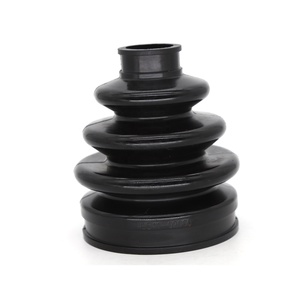
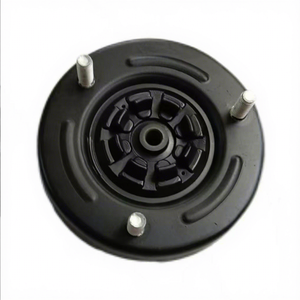
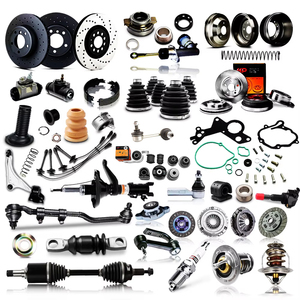
To reduce multi-vendor logistics overhead and optimize 40ft container freight payloads, distributors increasingly favor manufacturers capable of co-shipping propeller bearings alongside companion components such as sway bar bushes, strut top mounts, and precision CV joint dust boot assemblies.

Why Partner With Us

Direct-from-Source Industrial Mastery

Based in Thailand's premier automotive manufacturing corridor, our fully integrated operations eliminate supply friction for cross-border parts distributors. By retaining absolute ownership over raw elastomer formulation, metal stampings, precision casting, and final robotic vulcanization, we guarantee unbroken metallurgical and dimensional continuity across production runs.

  • 9,485+ Catalogued Part Numbers: Deep technical documentation with clear cross-reference codes.
  • Broad Vehicle Coverage: 31 vehicle marques spanning Japanese, European, and American platforms.
  • 100% In-House Mold Tooling: Proprietary rubber injection molds ensuring zero radial runout variation.
  • Zero Intermediary Margins: Factory-direct container and LCL consolidation pricing with full CE compliance.

Comprehensive Quality Verification Protocol

Every production cycle of propeller shaft center bearings undergoes rigorous physical testing prior to batch release:

• Dynamic Radial Endurance Test: 1,000,000 cycles under variable harmonic loading.
• Bond Shear Verification: Destructive peel testing to ensure pure elastomer tear.
• Salt Spray Atmospheric Chamber: 500-hour ASTM B117 anti-corrosion paint verification.
• Acoustic Vibration FFT Spectrogram: Zero audible chatter within 10–2500 Hz frequency bands.
Knowledge Base

Propeller Shaft Center Bearing Procurement FAQ

Essential guidance addressing engineering tolerances, container shipment terms, and catalog mapping for professional wholesale importers.

Q: How do you prevent rubber hardening and crack failure near hot vehicle exhausts?
Our compounds are formulated using high-grade vulcanized synthetic elastomers paired with anti-degradants and high-purity carbon black. This maintains polymer elasticity and prevents micro-fissuring even when exposed to radiant floor-pan temperatures of up to 125°C.
Q: Can our procurement team order mixed-item container loads across multiple categories?
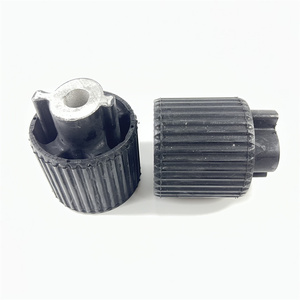
Yes. We regularly assemble mixed 20ft and 40ft HQ ocean containers combining center support bearings, CV joint boots, engine motor mounts, control arm bushings, and sway bar links, significantly reducing our partners' per-unit landed shipping costs.
Q: How is precise alignment guaranteed across varying OEM shaft diameters?
All inner bearing races are ground to strict ISO P6/P5 dimensional tolerances. When matched to your vehicle's OEM part number (e.g., 37230-34010, 37230-35090), the shaft seat maintains an interference fit within 0.010 mm, preventing inner-ring slippage.
Q: What documentation is provided for customs clearance and European import compliance?
We supply CE conformity certificates, Mill Test Reports (MTR) for bracket metals, rubber formulation safety data sheets (MSDS/REACH), and comprehensive factory Certificates of Analysis (COA) along with bill of lading and packing documentation.
Q: How do we verify part fitment if our catalog team only has physical sample cores?
Our in-house metrology center features optical coordinate measuring machines (CMM) and laser scanning equipment. You can dispatch physical samples to our Thailand engineering center for rapid reverse-engineering, hardness profiling, and tooling allocation.
Q: What is the typical production lead time for full production runs?
For items within our active tooling catalog of 9,485 parts, standard factory lead time spans 30 to 45 business days. We also maintain a rotating ready inventory of high-velocity fast-mover SKUs for immediate order dispatch.

Accelerate Your Driveline Parts Supply Chain

Direct factory supply, fully cataloged vehicle coverage, and zero quality compromises. Connect directly with our engineering and export team to request wholesale price lists, verify technical OE cross-references, or review production facility audits.

Contact Us