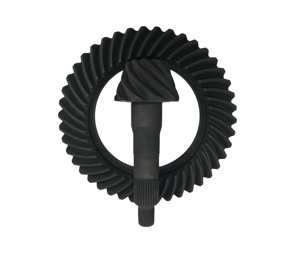

Engineered to original dimensional tolerances and reinforced for extreme torsional stress. Explore our high-demand differential support mountings, carrier isolators, and heavy-duty drivetrain components.
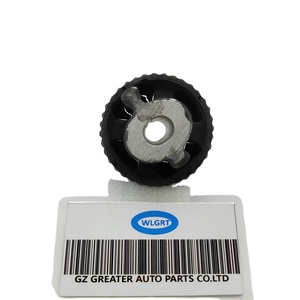
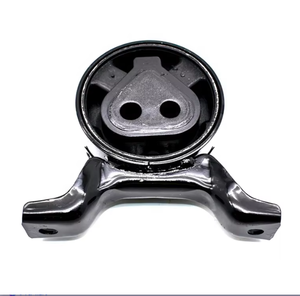
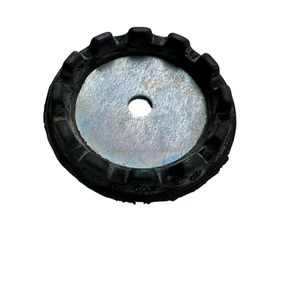
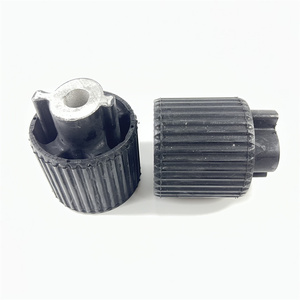
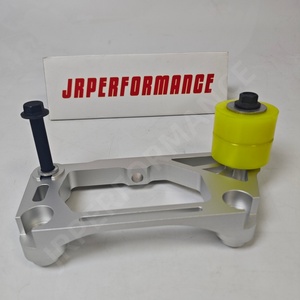
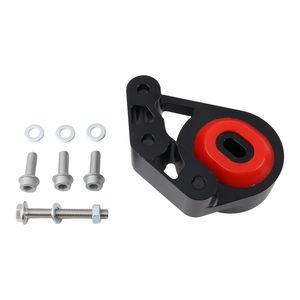
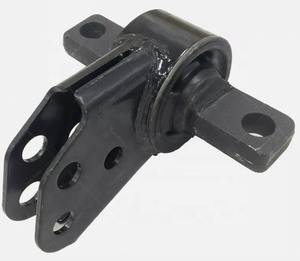
In modern automotive drivelines, the differential mount serves as the critical damping junction between the final drive carrier and the chassis subframe. As a premier Chinese manufacturing and exporting consortium, our technical processes are calibrated to eliminate common failure modes such as rubber delamination, dynamic oil rot, and excessive axle hop.
Delamination under high instantaneous torque is the leading cause of differential mount premature failure. We utilize multi-stage grit blasting, degreasing, and automated Chemlok® primer application to achieve rubber-to-metal bonding strength exceeding 12 MPa.
Drivetrain harmonics require nuanced dampening: too soft creates excessive gear lash and driveshaft misalignment; too hard induces high-frequency gear whine into the cabin. We offer custom natural rubber formulations strictly modulated within ±3 Shore A tolerances.
All stamped outer shells and inner core sleeves are fabricated using high-yield structural steel or 6061-T6 billet aluminum, electro-coated with black cathodic E-coat or zinc-nickel plating capable of surpassing 720 hours of ASTM B117 neutral salt spray testing.
Strategic purchasing managers must navigate changing automotive architectures. Here is how shifting market dynamics are transforming aftermarket orders and OEM supply contracts.
Electric drive units (EDUs) deliver maximum torque at 0 RPM, magnifying shear stress on differential and gear reducer mounts by 300%. Sourcing is rapidly shifting toward hydraulic isolators and microcellular polyurethane composites capable of dampening high-pitch inverter whine.
Tier-1 distributors no longer purchase standalone mounts. Procurement teams prioritize suppliers capable of offering complete rear differential mount sets—combining front nose snubber bushings, rear bridge mounts, and subframe isolators under a single unified SKU.
With global sustainability mandates, OEMs are phasing out legacy rubber compounding in favor of low-PAH, ozone-resistant EPDM and thermoplastic elastomer (TPE) matrices paired with cast aluminum brackets to strip weight from unsprung drivetrain assemblies.
| Damping Technology | Static/Dynamic Ratio | NVH Isolation Rating | High-Torque Durability | Best Application Match |
|---|---|---|---|---|
| Natural Rubber (NR Composite) | 1.2 - 1.4 | ✓ Excellent Low-Freq | Standard OEM Duty (>150,000 km) | Passenger Sedans, SUVs, Light Pickups |
| Hydraulic Fluid-Filled Mounts | 1.8 - 2.5 | ✓ Superior Full-Spectrum | High Fatigue Endurance | Luxury AWD Vehicles & Premium EV Units |
| Polyurethane (70A - 85A) | 1.1 - 1.2 | Moderate (Transfers Road Noise) | ✓ Extreme Torsional Load | Track/Performance Tuning & Drift Applications |
| Billet Reinforced Dual Brackets | 1.0 | Structural Reinforcement | ✓ Eliminates Subframe Flex | BMW M-Series, AMG High-Output Rear Ends |
From raw compounding chemistry to automated vulcanization lines, our integrated manufacturing plants represent the highest tier of Chinese drivetrain rubber-to-metal production.
Every step of differential mount fabrication adheres to automotive standard IATF 16949. Statistical process control (SPC) monitors rubber batch plasticity, vulcanization temperature, and curing curemeter curves in real time.
We handle volume logistics across North America, Europe, Australia, and the Middle East. Standardized pallet packaging, barcode scanning integration, and automated container loading guarantee zero freight deformation.
Need a discontinued OEM mount or a customized performance variant? Our CMM digital optical scanners and CAD/CAM engineering team can design prototype molds within 18 working days, backed by dynamic simulation modeling.
Direct technical and commercial answers designed for aftermarket wholesalers, fleet buyers, and overseas importers.
We utilize an automated 4-stage surface pretreatment line including steel grit blasting to Sa 2.5 cleanliness, phosphate coating, and precision spray Chemlok adhesive application. Our dynamic testing involves 500,000 cycles of multidirectional fatigue testing to verify 100% rubber failure rather than bond separation.
Yes. Our laboratory uses digital Shore A durometers and rheometers to inspect every raw rubber batch. We compound natural rubber to your exact engineering drawings (typically 55 to 70 Shore A for passenger comfort; 75 to 85 Shore A for heavy commercial or performance applications).
For catalogued standard items (covering Toyota, BMW, Chrysler, Audi, Jeep, etc.), MOQ starts as low as 50 to 100 units per SKU. For bespoke or customized tooling development, initial batch requirements typically range from 300 to 500 pieces with mold fee amortization terms.
Because differential mounts sit near axle housings and differential fluid fill plugs, standard natural rubber can soften if exposed to gear oil. We incorporate anti-ozonants, antioxidant wax additives, and specialized chloroprene/EPDM exterior coatings to guarantee superior resistance against oil contamination and road salts.
Accelerate your automotive chassis program. Request instant factory-direct quotations, technical 2D/3D CAD validation, or complete cross-reference OE matching tables.
Inquire Now