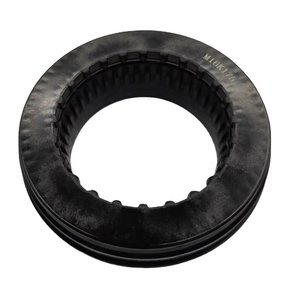
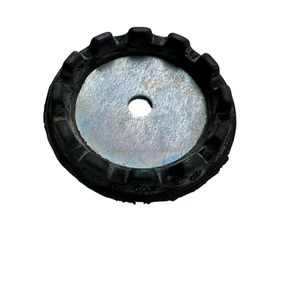
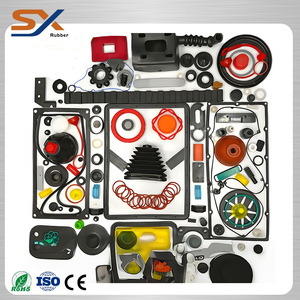
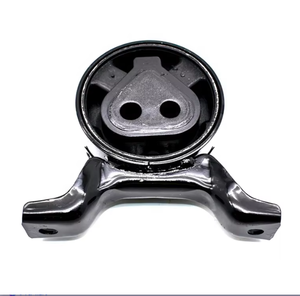
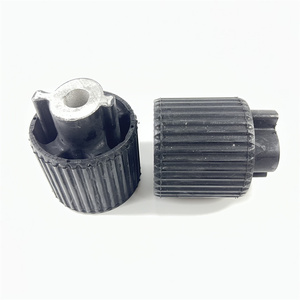
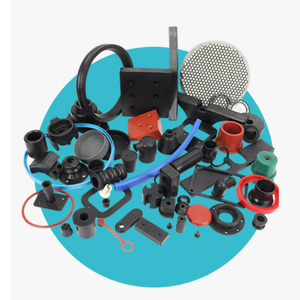
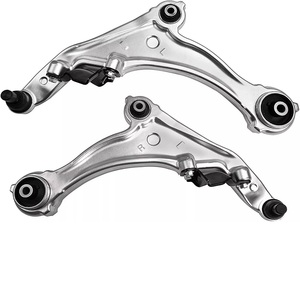
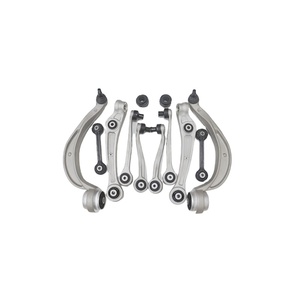
Precision-engineered track bar bushings, differential snubbers, and multi-link mounting solutions tested under high dynamic torsional loads to ensure zero chassis play and maximum dampening performance.
In solid-axle and multi-link independent suspension systems, the track bar (Panhard rod) governs lateral axle location. The track bar bushing is the critical damping interface absorbing intense transverse sheer loads, road shocks, and torsional deflection while maintaining kinematic alignment.
We blend grade-A ribbed smoked sheet rubber with reinforced carbon black matrix fillers. This structural configuration provides an ideal balance of elastic rebound, tensile strength (>18 MPa), and damping capacity across severe road shocks.
Eliminating elastomer-to-steel delamination is vital under extreme torsional shear. We utilize automatic phosphate pre-treatment followed by dual-coat Chemlok adhesive thermal vulcanization, guaranteeing rubber tearing failure before bond interface degradation.
Inner and outer bushing sleeves are CNC-machined from DOM/ST52 seamless structural steel tubing with anti-corrosion zinc phosphating or trivalent cathodic electro-coating, resisting up to 720 hours of ASTM B117 salt spray exposure.
Evaluating the trade-offs between OEM vulcanized natural rubber, synthetic polyurethanes, and heavy-duty hybrid formulations for heavy suspension applications.
| Evaluation Parameter | OEM Vulcanized Natural Rubber | Aftermarket Polyurethane (PU) | Engineered High-Damping NR (NISTO Spec) |
|---|---|---|---|
| Shore Hardness Range | 55 – 65 Shore A | 75 – 90 Shore A | 65 – 75 Shore A (Calibrated) |
| NVH Isolation Efficiency | High (Excellent acoustic damping) | Low (Harsh ride, road noise transfer) | Superior (Optimized damping frequency) |
| Torsional Compliance | Free angular flex without binding | Requires grease, prone to binding | Zero maintenance, fully bonded twist |
| Bond Shear Strength | > 3.5 MPa | Mechanical fit only (Non-bonded) | > 5.2 MPa (100% Rubber Tear) |
| Working Temp Envelope | -40°C to +80°C | -30°C to +85°C | -45°C to +105°C (Heat Stabilized) |
| Fleet Service Life | 60,000 – 80,000 km | Variable (Dependent on relubrication) | 120,000+ km under heavy load |
Strategic shifts in the global supply chain, electrification requirements, and digital logistics reshaping commercial wholesale sourcing.
Battery electric platforms (BEVs) exhibit a 25–35% gross vehicle weight increase and sudden high-torque delivery. Modern procurement tenders mandate track bar bushings capable of resisting elevated lateral deflection while filtering high-frequency inverter vibration.
International importers no longer tolerate ambiguity in chassis fitment. Procurement is pivoting toward manufacturers offering comprehensive API-ready TecDoc datasets, OE cross-referencing for over 30 makes, and verified dimensional blue-printing.
Tier-1 distributors are establishing strict warranty return thresholds below 200 PPM. Direct factory-controlled mixing and automated post-vulcanization durometer sorting are now vital supplier qualifying criteria.
How modern polymer science and manufacturing automation are redefining durability and dynamic performance for export chassis components.
Automated internal mixers control temperature, shear rotor speed, and dispersion time. This eliminates batch-to-batch polymer variations and guarantees uniform vulcanization cure times.
By simulating finite element hyperelastic material behaviors (Mooney-Rivlin & Ogden models), our tooling engineers sculpt elastomer geometries with anti-stress voids to prolong fatigue life.
Precision vacuum injection and compression presses prevent trapped air blisters, providing micro-tolerance outer sleeve concentricity within ±0.05 mm for press-fit stability.
From raw elastomer formulations to integrated stamping and machining lines, our direct production capability eliminates middleman markups and technical discrepancies.
Unlike trading outfits that outsource vulcanization, we oversee every phase: raw polymer compounding, automated metal tube cut-off, shot blasting, phosphating, adhesive application, and curing.
Extensive off-the-shelf inventory covering 31 global passenger, pickup, SUV, and commercial truck platforms (Toyota, Ford, Chrysler, Dodge, Jeep, Hyundai, Nissan, and more).
Every batch undergoes rigorous radial, axial, and torsional dynamic fatigue cycle testing up to 500,000 cycles, coupled with durometer checks and cold-temperature impact resistance validation.
Comprehensive technical and commercial answers addressing common considerations during distributor sampling and volume procurement.
For items in our 9,485 active inventory database, containerized orders ship within 15–25 business days. For OEM customized development, mold tooling and first-article pilot samples (PPAP Level 3) require 25–35 days, with volume production following within 20 days post-sample approval.
We employ automated grit blasting and chemical zinc phosphate etching on inner/outer metal sleeves, followed by precisely controlled Chemlok primer and cover coat spraying. Vulcanization bonding is routinely subjected to destructive ASTM D429 90-degree peel tests requiring >95% rubber cohesive failure.
Yes. While OEM applications typically utilize a 60±5 Shore A durometer to optimize ride suppleness and quiet operation, we frequently engineer reinforced compounds between 70 to 80 Shore A for heavy-duty commercial fleets and off-road lift applications demanding enhanced lateral axle stability.
Every shipment is backed by material mill test certificates (MTC) for steel sleeves, compound rheometer cure sheets, salt-spray test logs, dimension inspection reports, and certificates of origin (CO / Form E / Form F) for duty concessions.