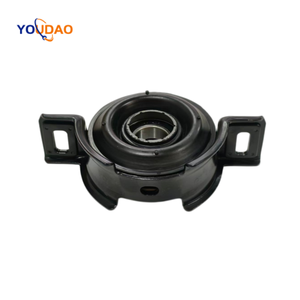

Engineered to eliminate multi-piece propeller shaft vibrations, radial runout, and high-torque torsional flex across passenger, commercial, and off-road applications.
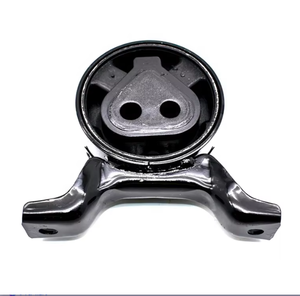
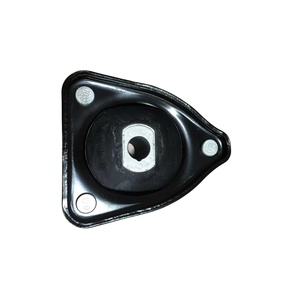
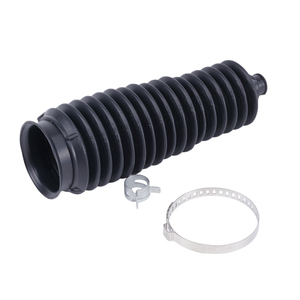
In multi-piece propeller shaft architectures, the driveshaft center support bearing acts as the critical harmonic stabilizer and rotational pivot between the transmission output shaft and the rear final drive. As modern combustion, hybrid, and light commercial vehicles produce higher instantaneous low-end torque, driveshaft assemblies face aggressive torsional oscillations, cyclic angular misalignment, and harsh chassis harmonic feedbacks. Sourcing reliable center support assemblies is no longer a matter of basic dimensional tolerance; it requires comprehensive mechanical cohesion between high-grade deep groove ball bearings and dynamic vulcanized rubber cushions.
A premier center bearing assembly comprises three integral components: the cold-rolled deep drawn steel mounting bracket, an isotropic elastomeric cushion, and an internal sealed deep-groove bearing unit (typically 6000 or 6200 series) pre-lubricated with high-temperature polyurea or synthetic lithium complex grease. Inferior aftermarket suppliers routinely compromise on the elastomeric compound by introducing excessive calcium carbonate filler to cut costs. This degrades fatigue life, increases natural resonance frequencies, and triggers severe Noise, Vibration, and Harshness (NVH) within 15,000 to 20,000 kilometers of road operation.
At our manufacturing centers, the structural integrity of the rubber-to-metal interface is reinforced using automated multi-stage surface phosphating, abrasive shot blasting, and genuine Lord Chemlok adhesive vulcanization. This guarantees cohesive failure—where the rubber itself ruptures under extreme shear loads exceeding 25 MPa prior to any adhesive peeling along the metal collar interface. Our synthetic and natural rubber formulations (NR/EPDM/NBR blends) are chemically tuned to retain specified shore durometers (typically 50 to 65 Shore A) across temperature swings from -40°C to +120°C, delivering zero-sag support and optimal drivetrain alignment under maximum towing loads.
How Tier-1 importers, parts wholesalers, and commercial fleets are mitigating supply chain vulnerabilities and transitioning toward engineered driveline components.
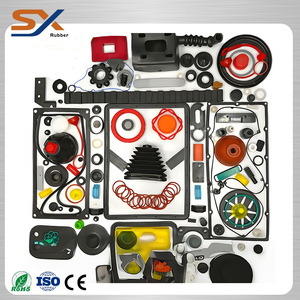
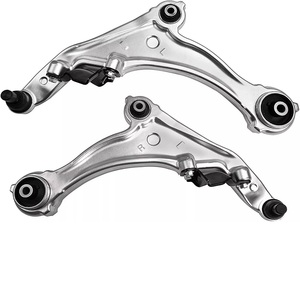
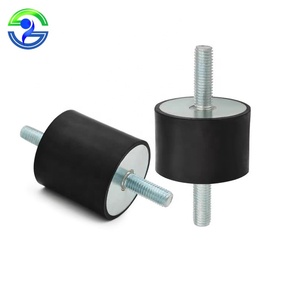
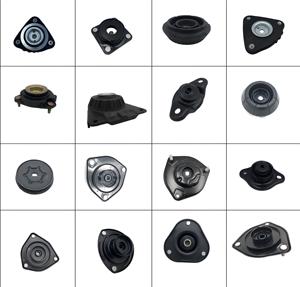
Global procurement teams are moving away from fragmented sourcing. Rather than purchasing center bearings, rubber mountings, control arm bushings, and strut mounts from disparate small workshops, distributors are consolidating orders with comprehensive manufacturing hubs that maintain thousands of standardized, ready-to-ship tooling matrices under unified ISO/IATF quality audits.
Stringent warranty governance in European and North American markets has elevated compliance standards. Modern procurement contracts now mandate ASTM D2000 elastomer testing certificates, salt-spray chamber documentation (minimum 240-480 hours white rust resistance), and steel metallurgical assays to guard against catastrophic driveline fractures in commercial transit fleets.
Wholesale distribution margins are increasingly driven by kitted solutions. Procurement managers are prioritizing suppliers capable of bundling center support bearings with matched universal joints (U-joints), rubber boot clamps, and spline boots into custom-branded, private-label packaging to maximize aftermarket bay efficiency and simplify distributor inventory management.
Adapting center bearing assemblies for high-torque commercial vehicles, hybrid powertrains, and severe off-highway thermal cycles.
With electric and hybrid commercial chassis introducing sudden, step-function torque shocks, conventional symmetrical circular rubber cushions are being superseded by finite element analysis (FEA) optimized honeycomb, slotted, and progressive dual-rate elastomer bridges. These provide compliant low-amplitude vibration isolation while preventing excessive lateral displacement under heavy acceleration.
Contamination remains the primary culprit behind premature bearing seizure in unpaved and mining environments. Next-gen center bearings feature heavy-duty multi-lip labyrinth fluoroelastomer seals coupled with integrated pressed-steel dust slingers, shielding the internal rolling elements from water ingress, abrasive road grime, and road de-icing salts.
To reduce unsprung driveline weight and improve chassis fuel economy, structural sheet brackets are evolving toward stamped micro-alloy high-strength steels and structural die-cast aluminum alloys. This shift delivers up to 35% weight reduction while maintaining identical yield strength and dynamic torsional fatigue resistance during high-torque towing cycles.
Uncompromising quality control from virgin polymer mixing to robotic bracket stamping and high-speed dynamic balancing verification.
We do not outsource rubber compounding. Controlling our own dedicated mixing mills, internal Banbury mixers, and vulcanization presses enables precise shore hardness calibrations, superior thermal aging resistance, and total consistency between development prototypes and multi-container mass production batches.
Covering Japanese, American, European, and Asian commercial platforms—from Toyota Hilux, HiAce, RAV4, to Ford F-Series, Transit, BMW, Mercedes Sprinter, Isuzu D-Max, and Hino heavy transport. Our fully catalogued OE database ensures drop-in fitment with verified dimensional accuracy.
Every center bearing unit undergoes axial runout verification, radial deflection testing, and high-speed spin cycle tests to detect harmonic micro-resonances. With anti-corrosion e-coating and zinc trivalent plating, our products easily surpass standard ISO salt spray benchmarks.
Direct technical and commercial answers designed for parts importers, automotive distributors, and fleet procurement specialists.
Premature failure is typically caused by four factors: improper driveshaft phasing/alignment during installation, degradation of low-grade recycled rubber cushions unable to dampen harmonic resonances, seal failure leading to water and dirt ingress, and grease breakdown due to excessive driveline operating temperatures. Choosing bearings equipped with high-grade synthetic grease, reinforced elastomer dampening cushions, and Chemlok bonding prevents these issues.
Our manufacturing protocol employs a rigorous automated surface preparation process: components undergo steel-grit blasting to achieve proper mechanical anchoring profiles, followed by multi-stage degreasing and automated application of genuine Lord Chemlok primer and cover adhesives. The elastomer is vulcanized under controlled temperature and pressure windows, ensuring a chemical cohesive bond stronger than the tensile strength of the rubber compound itself.
Yes. Our engineering department specializes in reverse engineering and custom OEM development. Given a physical sample, 2D/3D CAD drawings, or OE specifications, we design custom stamping dies, molding tooling, and formulate rubber durometers (from 45 to 80 Shore A) tailored for specific vibration spectrums, extreme payload requirements, or performance suspension setups.
For cataloged center support bearings with tooling already established, our flexible MOQ is typically 50 to 100 pieces per part number. Standard production lead times range between 30 and 45 days. In-stock replacement models can be dispatched within 7 business days for consolidated container orders.
All center bearings are built to 1:1 OEM geometric tolerances, guaranteeing direct bolt-on installation without shaft modification. Internal deep groove ball bearings meet ABEC-1/ISO Class 0 running clearances, and rubber compounds are tested in accordance with ASTM D412 (tensile strength), ASTM D2240 (durometer hardness), and ASTM D624 (tear resistance).
Connect directly with our engineering and export team for complete catalog access, bulk distributor price sheets, and rapid OEM sample development.
Contact Us