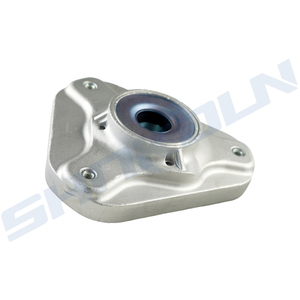

Comprehensive catalogue featuring multi-axis elastomeric dampening mounts, hydraulic stabilizers, and structural bushing solutions matched strictly to OE parameters.
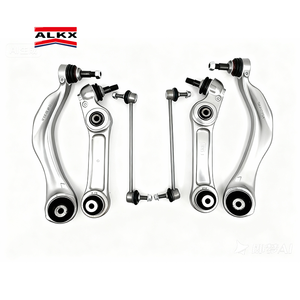
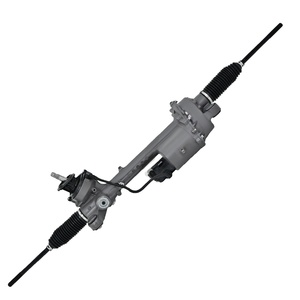
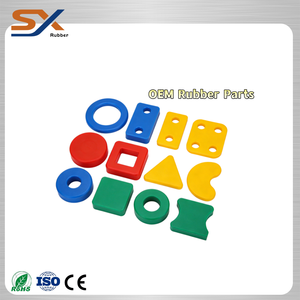
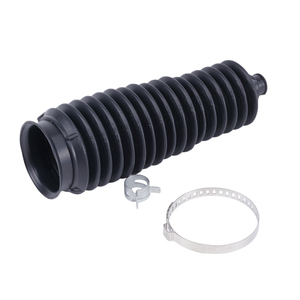
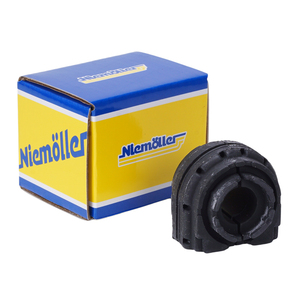
The automotive front engine mount operates under one of the most mechanically demanding environments in a vehicle's chassis dynamics. Tasked with supporting substantial deadweight while damping high-frequency vibrations induced by engine combustion and low-frequency chassis shock from irregular road topographies, the modern engine mounting unit must achieve balanced multi-directional elastomeric compliance. As engines undergo displacement downsizing coupled with turbocharging, torque peaks have amplified substantially, increasing rotational displacement along the transversal and longitudinal axes.
When sourcing from premier Chinese suppliers and exporters, enterprise procurement departments look far beyond external metal casing tolerances. Genuine structural performance relies on three core engineering pillars: Elastomer Compound Chemistry, Chemiluminescence Surface Priming for rubber-to-metal bonding integrity, and Dynamic Cavity Fluid Simulation in hydro-mount configurations.
| Evaluation Parameter | Commercial Grade Mount | OEM-Matched Chinese Exporter Spec | Test & Qualification Protocol |
|---|---|---|---|
| Base Polymer Matrix | Recycled Reclaim / Standard SBR | 100% Virgin NR / EPDM Blend (Resin Cured) | ASTM D297 Chemical Composition Analysis |
| Rubber-to-Metal Bond Strength | 3.2 – 4.5 MPa (Adhesive Failures Common) | > 9.8 MPa (Cohesive Rubber Failure Only) | ASTM D429 Method B (90° Peel Test) |
| Dynamic Stiffness (K* @ 100Hz) | Non-linear Drift (> ±28%) | Calibrated Drift (< ±6% Target Range) | MTS Multi-Axis Elastomer Test System |
| Thermal Aging Endurance | Deformation post 70h @ 70°C | Stability verified post 168h @ 100°C | ISO 188 Accelerated Air Oven Aging |
| Fatigue Endurance (Cycles) | < 300,000 cycles under dynamic peak load | > 1,200,000 cycles without structural tear | DIN 53513 Dynamic Stress Cycling |
Front engine mounts act as physical isolation barrier filters. If static durometer stiffness is dialed too soft to subdue idle vibrations, engine roll during sudden torque shifts will overextend CV joint plunge depths and cause excessive steering rack feedback. Conversely, if durometer levels are calibrated excessively firm, cabin NVH (Noise, Harshness, and Vibration) metrics escalate rapidly, leading to acoustic drumming. Our precision-calibrated formulations maintain optimal Shore A hardness windows between 55 and 65, providing seamless road performance across broad temperature thresholds (-40°C to +120°C).
Strategic analysis of technological migrations transforming the engine mount supply ecosystem across tier-1 replacement networks and international fleet distributors.
Electric powertrains lack cyclic internal combustion masking frequencies, meaning chassis high-frequency road drone and instant rotor torque shocks are transferred instantly to the subframe. Future procurement mandates shift toward dual-rate compound isolators and switchable active electro-magnetic damping configurations designed specifically for high tare-weight EV architectures.
Heavy cast-iron brackets are rapidly being superseded by high-pressure die-cast aluminum alloys (A380/ADC12) and continuous glass-fiber reinforced polyamides (PA66-GF50). Global buyers demand cradle-to-gate carbon transparency, pushing export manufacturers to implement closed-loop recycled aluminum processing and low-VOC adhesive bonding agents.
Aftermarket buyers increasingly require complete digital transparency: 3D CAD step files, batch-traceable vulcanization cure curves, dynamic resonance frequency charts, and automated cross-referencing across multiple OE numbering regimes (Toyota, VAG, Stellantis, Ford). Supply resilience relies heavily on supplier tooling agility for swift small-batch retooling.
Integrated manufacturing control spanning raw chemical polymer blending, proprietary tooling design, and state-of-the-art robotic stamping cell operations.
Unlike assembly operations that outsource vulcanization to varied third parties, we prepare rubber batches on internal Banbury mixers. Every compound is verified for rheological cure velocity, tensile plasticity, and durometer consistency before entering transfer or injection molding presses.
Mount longevity hinges completely on metal preparation. Inner sleeves and cast housings undergo robotic zinc-phosphate degreasing, ultrasonic cleaning, and dual-layer Chemlok primer coating to eliminate bonding separation even when subjected to intense torsional shear stress.
Spanning 31 vehicle marques across Japanese, European, American, and Asian light commercial platforms. With our dedicated mold-making workshop, new customer reference samples can be laser-scanned, reverse-engineered, and prototyped within 25 working days.
Essential guidance for commercial automotive buyers evaluating technical compliance, testing parameters, and minimum volume arrangements.
Download our complete multi-brand engine mount and chassis bushing catalog containing over 9,485 active SKUs, full dimensional matrices, and OE fitment cross-referencing.