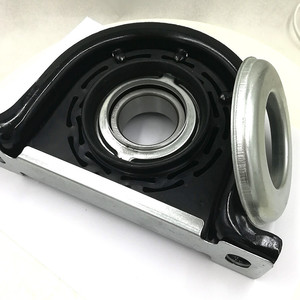
Precision-machined, molded in-house with certified elastomers, and calibrated to exact durometer specifications. Explore our top exported suspension and chassis anti-vibration components engineered to eliminate body roll, NVH resonance, and premature fatigue.
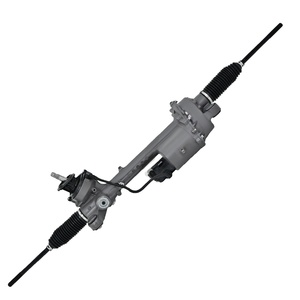
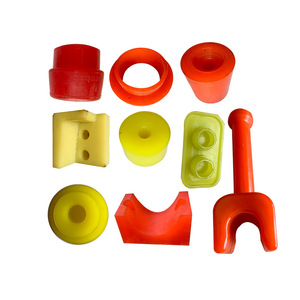
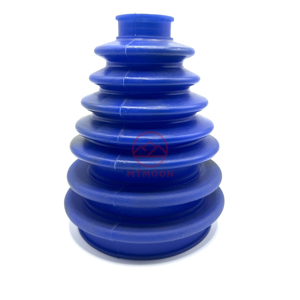
In-depth technical review of elastomeric compliance, radial stress distribution, and mechanical bonding for global suspension procurement specialists.
The sway bar bushing (stabilizer bar cushion) is the primary load-bearing interface between the vehicle's sprung chassis subframe and the unsprung anti-roll torsion bar. As a vehicle navigates lateral transitions, cornering loads force the stabilizer bar to twist along its longitudinal axis. The bushing must permit controlled angular torsional deflection while resisting radial displacement and lateral migration under dynamic cyclic loads exceeding 15 kN.
When an inferior sway bar bushing experiences excessive radial compliance, dynamic roll stiffness decreases by up to 28%, introducing steering lag, imprecise turn-in response, and increased body lean. Conversely, excessive static radial stiffness without calibrated internal lubrication ribs transmits high-frequency road vibrations directly through the subframe into the passenger cabin. As a premier China exporter and manufacturer, our engineering team formulates proprietary polymer compounds designed to achieve non-linear hysteretic damping: supple micro-compliance for acoustic comfort paired with rapid progressive stiffness under heavy cornering loads.
Formulated with premium carbon black reinforcement to prevent irreversible ovalization and bore deformation over 250,000 cyclic compression sequences.
Engineered internal bore knurling, micro-grooves, and molded PTFE liners eliminate low-frequency stick-slip friction squeaks under dry and wet operating conditions.
Optimized Shore A durometer (60–75 for OE compliance; 80–95 for track/performance PU) preserves factory roll control without compromising ride quality.
Procurement teams must accurately weigh chemical resilience against mechanical elasticity when specifying stabilizer bar bushings for different vehicle operating segments, regional climates, and suspension designs. Below is our engineering comparison benchmark:
| Property / Parameter | Natural Rubber (NR) Vulcanizate | EPDM Synthetic Compound | Cast Polyurethane (PU) |
|---|---|---|---|
| Torsional Fatigue Life | Exceptional (> 1.5M cycles) | High (1.0M - 1.2M cycles) | Moderate to High (0.8M - 1.0M) |
| Operating Temp Range | -45°C to +85°C | -40°C to +135°C | -30°C to +90°C |
| Ozone & UV Degradation | Requires antiozonant waxes | Inherent, outstanding immunity | High resistance, UV-stabilized |
| Hydrocarbon Oil / Grease Splash | Poor (swelling risk) | Moderate | Superior chemical & oil barrier |
| Primary Application Target | Mass Passenger OEM direct fit | Heavy truck, extreme climate fleet | Performance aftermarket, track tuning |
For volume B2B distributors, balancing OEM direct-fit quietness with longevity requires precise sulfur-cure compounding and zinc-oxide activation in Natural Rubber formulations. For severe duty, heavy commercial vehicles, and utility pickups, our vulcanization lines utilize high-density EPDM to resist road salts, transmission leaks, and extreme ozone exposure.
Key technological advancements, supply chain transformations, and engineering challenges shaping the next decade of anti-vibration procurement.
Battery Electric Vehicles (BEVs) increase vehicle curb weight by 20% to 35%, generating unprecedented peak cornering shear forces. Next-generation sway bar bushings require higher tensile polymers with low compression set to avoid accelerated degradation under intense regenerative braking and instant low-end torque.
To fulfill automaker requirements for "Maintenance-Free / Lube-Free" chassis assemblies, modern bushings integrate co-molded internal PTFE or ultra-high molecular weight polyethylene (UHMWPE) fabric liners. This eradicates the dependency on chassis grease, eliminating cold-weather squeaks permanently.
Modern anti-roll bars increasingly utilize bushings vulcanized directly onto the steel torsion bar itself. By eliminating relative friction at the inner diameter entirely, rotational force is absorbed solely through elastic torsional shear, providing sharper steering feedback and zero contamination ingress.
Leading aftermarket importers demand complete cross-reference integration. Sourcing partners must deliver standardized TecDoc/OE mapping alongside high-resolution physical photos, preventing inventory bloat while expediting order fulfillment across multinational vehicle fleets.
With EU REACH regulations tightening and Scope-3 emissions audits expanding, tier-1 suppliers in China are transitioning toward bio-based elastomers, silicate-filled vulcanizates, and non-aromatic process oils to achieve circular economy compliance without sacrificing mechanical damping.
Combining vertically integrated compounding, high-precision vacuum mold tooling, and rigorous metallurgical rubber-to-metal bonding control.
We control internal Banbury mixer lines directly from raw natural rubber sheets and synthetic EPDM polymers. Durometer hardness, tensile strength, and elongation at break are strictly verified per batch before pressing.
Our automated ultrasonic degreasing, zinc phosphating, and multi-coat adhesive application lines ensure 100% rubber-tearing failure mode under ASTM D429 Method B peeling tests—zero adhesive interface detachment.
Unmatched cross-reference database spanning 31 global automotive makes (Toyota, Nissan, Honda, Ford, GM, Hyundai, Isuzu, Chrysler, Hino). Complete chassis coverage from sway bar bushes to engine mountings and center bearings.
Dedicated tool-and-die department for rapid prototyping. Thousands of fast-moving line items held in ready warehouse stock to support mixed-pallet consolidated shipments and low minimum trial orders.
Direct technical answers addressing production controls, testing certifications, custom durometers, and export logistics.
Our engineers utilize two proven solutions: For standard OE replacements, we mold proprietary internal longitudinal grease reservoirs with micro-textured cross-hatching, pre-lubricated with synthetic lithium-silicone grease resistant to water washout. For premium applications, we co-mold woven PTFE fabric sleeves directly onto the inner diameter, producing a dry, zero-maintenance contact surface that retains quiet operation at -40°C.
Yes. We formulate and mix rubber compounds in-house. Standard passenger car applications are calibrated to Shore A 60±5 for maximum NVH vibration dampening. For commercial fleets, armored vehicles, or tuning brands, we routinely compound high-density Shore A 75–85 rubber formulations or cast Shore A 80–95 polyurethane bushings tailored to specific roll-gradient requirements.
Every production batch undergoes rheometer cure verification, tensile testing (ASTM D412), compression set testing (ASTM D395 Method B, 22 hrs at 70°C), and automated CMM optical dimension verification. For rubber-to-metal parts, we execute ASTM D429 90-degree adhesion peel tests. Full 3.1 Material Test Reports (MTR) and Certificates of Analysis (CoA) accompany export documentation.
Our in-house tool shop utilizes 3D optical laser scanning and coordinate measuring machines (CMM) to reverse-engineer physical benchmark samples. We calculate elastomer shrinkage rates (typically 1.8% to 2.4% depending on filler load) to cut precision P20/Cr12MoV vacuum vulcanization steel molds within 18–25 working days, ensuring precise OEM tolerance compliance.
For catalogued line items with ready molds, our standard MOQ is typically 100 to 300 pieces per part number. For high-volume consolidated container orders (combining sway bar bushings, control arm bushes, engine mounts, and CV boots), production lead times average 30 to 45 days. Items in our ready stock warehouse can be picked, packed, and palletized for export within 7 business days.
Metal brackets and inner steel collars undergo comprehensive surface pre-treatment, including zinc-nickel plating or cathodic electrodeposition (E-coating) achieving over 720 hours in neutral salt spray testing (ASTM B117) without red rust formation. This level of protection satisfies both Scandinavian and North American heavy-salting winter fleet requirements.