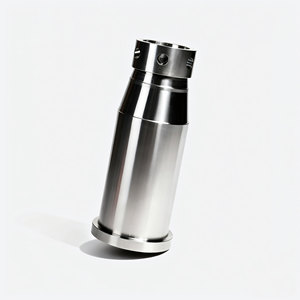

Direct from fully integrated tooling, casting, and vulcanization lines. Explore high-performance anti-vibration OE replacements built for Tier-1 supply chains and wholesale distribution.
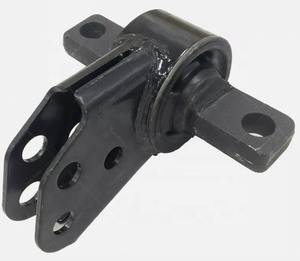
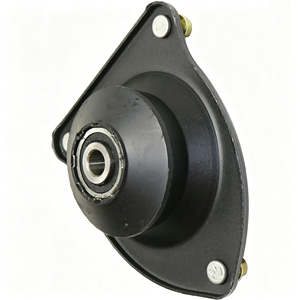
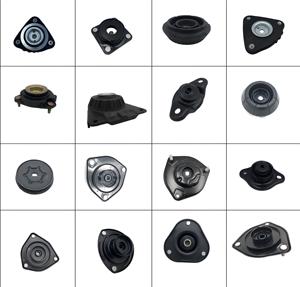
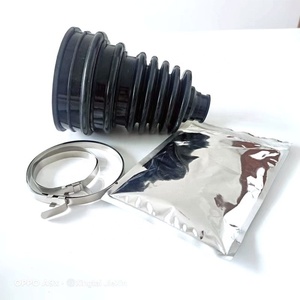
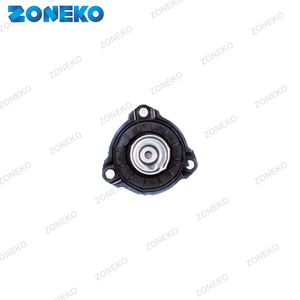
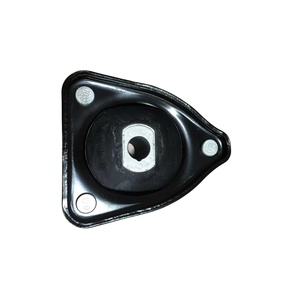
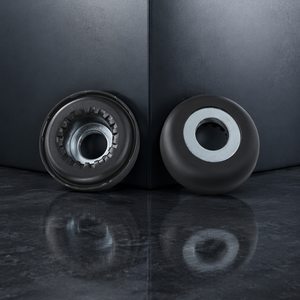
Modern internal combustion engines, turbo-downsized powertrains, and hybrid vehicle platforms operate under severe mechanical constraints. As automotive designers push for higher power density and reduced chassis curb weights, isolating high-amplitude engine shake (1–15 Hz) during idle or rough road inputs while mitigating high-frequency acoustic boom (30–250 Hz) poses a severe challenge that conventional solid elastomeric mounts cannot solve. Hydraulic Engine Mounts (HEMs) bridge this performance gap by combining the elastic supporting characteristics of natural rubber with fluid viscous dissipation.
Within a China-based wholesale manufacturing environment, the fabrication of top-tier hydraulic motor mounts hinges on micro-scale fluid dynamics and sophisticated rubber-to-metal bonding chemistry. A standard OEM-spec hydraulic mount consists of an upper rubber main spring, a decoupling membrane (or plunger), an inertia track orifice, and a lower compliant fluid reservoir filled with a low-viscosity, non-freezing glycol-water mixture. Sourcing from a verified manufacturer ensures that both the dynamic stiffness (K*) and loss angle (phase lag δ) match the vehicle platform's original NVH modal profile, effectively avoiding chassis drone and cabin resonance.
Dual-chamber design utilizing inertia track oscillation provides extreme damping ratios at low engine frequencies while decoupling at high acoustic frequencies.
Proprietary Chemlok® adhesive pre-treatment under high-pressure vacuum molding guarantees shear peel strength exceeding 12 MPa without delamination.
Ultra-smooth aluminum alloy die-cast orifices calibrate viscous fluid flow velocity, delivering razor-sharp tuning against harsh engine transient jolts.
Automotive parts procurement directors across North America, Europe, Southeast Asia, and Latin America are facing evolving supply chain paradigms. Procurement trends demonstrate a sharp migration from transactional unit cost purchasing to Total Cost of Reliability (TCR). Key procurement shifts include:
The quiet operation of Electric Vehicles (EVs) and Hybrid Electric Vehicles (PHEVs/HEVs) removes the masking effect of mechanical engine noise. Powertrain mounts must now isolate higher frequencies generated by high-RPM e-axles and sudden start-stop shocks of internal combustion kick-ins, driving demand for switchable vacuum-actuated and active electronic hydraulic mounts.
Global distributors are bypassing third-party trading intermediaries in favor of vertically integrated factories that maintain in-house raw compound compounding, tooling creation, precision stamping, casting, and robotic vacuum injection lines. Direct engineering interaction prevents costly catalog mismatch errors.
| Performance Dimension | Solid Rubber Mounts | Passive Hydraulic Mounts | Active / Switchable Vacuum Mounts |
|---|---|---|---|
| Primary NVH Focus | Static structural support, basic isolation | Low-freq shake damping + high-freq isolation | Real-time vibration cancellation across all RPMs |
| Damping Ratio (η) | Low (~0.05 - 0.15) | High (~0.35 - 0.65 at resonant frequency) | Variable / Electronically Modulated |
| Manufacturing Complexity | Low (Single-shot rubber molding) | High (Multi-chamber, sonic sealing, glycol fill) | Extreme (Solenoids, vacuum diaphragms, sensors) |
| Service Life Expectancy | 80,000 - 100,000 km | 120,000 - 160,000 km (Premium compound) | 100,000 - 140,000 km (Component dependent) |
| OEM Applications | Budget passenger cars, rear trans mounts | Mid-to-luxury passenger sedans, SUVs, Light Trucks | Flagship luxury vehicles, cylinder-deactivation engines |
The transition toward vehicle electrification and lightweight structures has catalyzed intensive innovation in mount technology:
Magnetorheological (MR) Fluid Integration: The implementation of smart fluid chambers embedded with micro-iron particles whose viscosity alters instantaneously within a magnetic field allows milli-second damping adaptation during aggressive acceleration or lane shifting.
Eco-Formulated Bio-Polymers: European corporate ESG directives are pushing factories to adopt sustainably sourced natural elastomers and recycled synthetic EPDM bases without reducing tensile strength, flex-fatigue life, or ozone aging resistance.
Digital Fatigue Predictive Modeling: Advanced Chinese manufacturing facilities increasingly adopt finite element analysis (FEA) combined with dynamic thermo-mechanical rheology to predict dynamic stiffness shifts and vulcanization flow flaws prior to physical mold creation, shortening tooling turn-around time by over 45%.
Drawing on decades of elite manufacturing mastery, our facilities operate as the premier OEM-matching powerhouse for global automotive rubber-to-metal and hydraulic vibration isolation products:
From initial NR/EPDM compound mixing to computerized mold-making, stamping, robotic shot-blasting, and vacuum filling—no single step is subcontracted.
Holding over 9,485 cataloged cross-reference parts across 31 global vehicle brands, delivering immediate stock fulfillment for high-frequency OE numbers.
Every batch undergoes MTS dynamic characterization, tri-axial endurance cycling, low-temperature (-40°C) brittleness checks, and 500-hour salt spray exposure.
Solid rubber engine mounts rely entirely on the mechanical deformation of the rubber compound to absorb vibrations. While effective at high frequencies, they compromise on engine shake control. Hydraulic mounts feature sealed internal fluid chambers connected via an inertia track; fluid displacement produces hydraulic resonance damping that actively crushes low-frequency chassis judder during idle, rough road bumps, and hard gear shifting.
Hydraulic leakage is the most common failure in low-quality aftermarket mounts. Our manufacturing facility uses high-precision ultrasonic bonding, laser welding for internal orifice partitions, and multi-lip crimped aluminum outer casings. Furthermore, 100% of finished hydro-mount units undergo vacuum pressure decay testing before packaging to eliminate micro-porosity defects.
Yes. Our in-house R&D engineering department is equipped with coordinate measuring machines (CMM), 3D optical scanning, and CAD/CAM software. We can reverse-engineer OE samples, calibrate rubber Shore A hardness, simulate flow channels, and fabricate production tooling within 25–35 days with full PPAP Level 3 documentation.
For items available in our regular inventory program, our minimum order quantity starts as low as 50–100 pieces per reference to support flexible stock turns. For custom-compounded or bespoke production runs, standard MOQs are 300–500 pieces. Standard container orders typically ship within 30–45 days from order confirmation.