
Browse our core inventory of heavy-duty polyurethane and vulcanized elastomer suspension parts, engineered for direct OEM dimensional equivalence and extreme operating life.
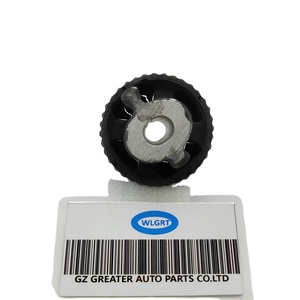
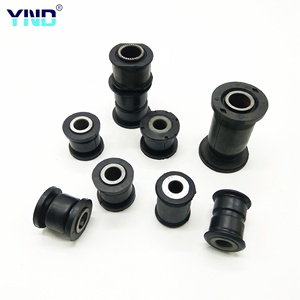
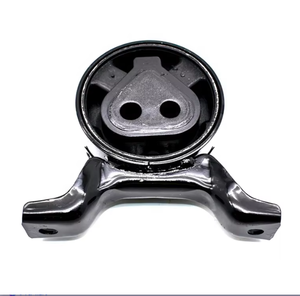
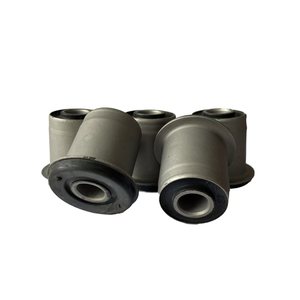
Modern fleet reliability, commercial freight corridors, and high-performance tuning demand mechanical tolerances that standard vulcanized natural rubber (NR) cannot sustain long term.
Engineering Note on Dynamic Hysteresis: Natural rubber exhibits progressive softening and micro-cracking when subjected to hydrocarbon fluid contamination and sustained torsional deflection. Thermoset cast polyurethane (CPU) and thermoplastic polyurethane (TPU) bridge this vulnerability by providing 300% to 500% higher tensile strength and tear resistance, eliminating suspension deflection under track and haul loads without sacrificing NVH (Noise, Vibration, and Harshness) suppression.
| Mechanical / Chemical Property | Conventional Molded Rubber (NR / SBR) | Engineered Polyurethane (70A - 95A PU) | Engineering Benefit for Distributors |
|---|---|---|---|
| Tensile Strength (MPa) | 12 - 18 MPa | 35 - 55 MPa | Resists tearing under sudden high-impact dynamic loading. |
| Abrasion Loss (DIN 53516) | 140 - 200 mm³ | 25 - 45 mm³ | Extended wear life on off-road and heavy commercial transport. |
| Hydrocarbon & Oil Resistance | Poor (Swelling, softening, structural breakdown) | Exceptional (Immune to mineral oils, fuels, road salts) | Prevents premature warranty claims caused by steering rack/differential fluid leaks. |
| Compression Set (70 hrs @ 70°C) | 30% - 45% (Permanent alignment drift) | 12% - 20% (Maintains geometry) | Maintains camber/toe alignment stability across thousands of driving cycles. |
| Bond Integrity to Outer Sleeve | Vulnerable to shear delamination | Chemlok-adhered silane-treated molecular bond | Zero sleeve slippage during sustained articulation. |
Strategic purchasing managers are actively recalibrating supply chains to align with powertrain transitions, automated suspension dynamics, and total cost of ownership models.
Battery packs add 300kg to 700kg of unsprung and sprung mass. OEM rubber bushings on EV platforms experience premature deflection and bushing squash within 40,000 km. Polyurethane compounds engineered between 80A and 85A Shore durometer are becoming the standard aftermarket replacement to preserve geometry under instantaneous torque delivery.
Commercial logistics operators, light truck fleets, and heavy haulers are shifting from low-ticket rubber parts to long-life polyurethane. The slightly higher initial component cost is fully offset by avoiding multi-hour suspension disassembly, wheel alignment re-calibration, and downtime costs.
Overseas distributors no longer tolerate physical reverse-engineering tolerances that introduce fitting errors. Modern procurement requires suppliers with 3D optical scanning, multi-axis CNC mold fabrication, and finite element analysis (FEA) to ensure zero-clearance press-fit dimensions.
We operate dedicated production, compounding, and CNC tooling facilities in China and Thailand, serving international automotive aftermarket brands and tier importers worldwide.
All bushings are molded using high-pressure reaction injection and vacuum transfer molding lines. We control inner sleeve concentricity within ±0.05mm, preventing installation seizing, press-fit distortion, or early inner bore ovality.
Bushings that utilize inner zinc-plated or phosphated steel tubes receive precision automated Chemlok adhesive coatings. Our vulcanized bond strength exceeds 12 MPa, preventing core separation under heavy braking and cornering shear forces.
With 9,485 active parts cross-referenced to factory OE numbers, we support consolidated container loading across engine mounts, control arm bushes, stabilizer links, differential bushings, CV boots, and center support bearings.
Clear, direct answers regarding technical specifications, minimum order quantities, compound formulation, and custom mold lead times.
We formulate multiple durometer tiers tailored to specific application zones. For passenger car control arm bushings, we utilize 70A to 75A durometer compounds engineered with internal lubrication channels to match OEM comfort levels. For performance street, track, and heavy commercial leaf springs, we apply 85A to 95A Shore durometer formulations to maximize dynamic rigidity and eliminate deflection.
For items already in our 9,485-part active tooling catalog, our baseline minimum order quantity is 50 to 100 units per line item, facilitating consolidated full-container load (FCL) or less-than-container load (LCL) shipments. For bespoke OEM/ODM parts requiring custom mold tooling, prototype production typically begins at 300 to 500 units, with tooling fees credited upon volume threshold achievement.
Rotational noise in aftermarket bushings occurs when inner sleeves lack proper grease distribution or bind under dry friction. Our polyurethane bushings are engineered with internal knurled spiral grooves that retain silicone or molybdenum disulphide synthetic lubricants. We also manufacture self-lubricating graphite-impregnated polyurethane compounds upon OEM request.
All inner and outer metal inserts undergo specialized surface prep, including zinc-nickel plating, trivalent chromium passivating, or electrostatic black electrophoretic deposition (E-coating). Our metal components withstand over 500 hours of continuous ASTM B117 salt spray testing without red rust formation, satisfying European and North American winter maintenance specifications.
Yes. Our engineering database maps interchange numbers across major Asian, American, and European applications—including Toyota, Nissan, Honda, Mitsubishi, Isuzu, Ford, GM, Chrysler, BMW, and commercial truck lines. If an OEM number is discontinued, you can send us 3D CAD step files, 2D component drawings, or an intact physical sample for reverse-engineering assessment.
Standard orders for catalog items in regular rotation are produced and packaged within 25 to 35 calendar days from deposit confirmation. Custom mold fabrication and first article inspection (FAI) samples require 20 to 25 days, with bulk production following 15 to 20 days post-sample sign-off. We support FOB, CIF, DDP, and CFR shipping terms through major ports.
Send our engineering sales desk your required OEM part numbers, technical drawings, or target vehicle coverage list. Receive comprehensive wholesale FOB/CIF pricing, technical datasheets, and sample availability within 24 business hours.
Contact Us