
Explore our precision vulcanized rubber buffer stops, leaf spring bushes, and center support bearings fabricated from high-grade natural rubber and carbon bimetal cores.
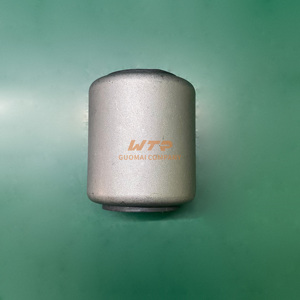
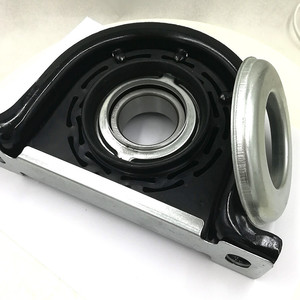
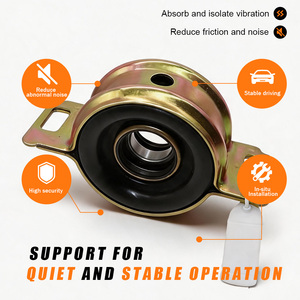
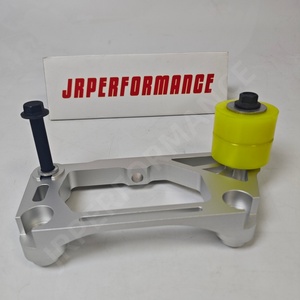
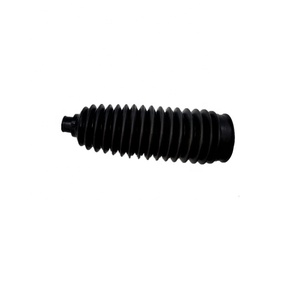
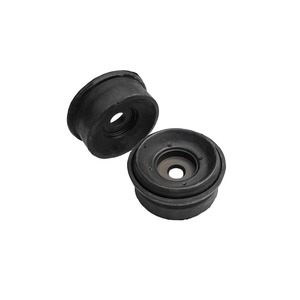
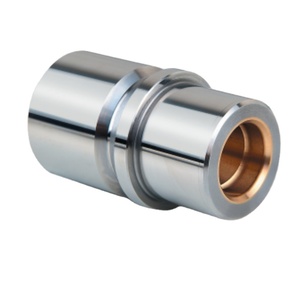
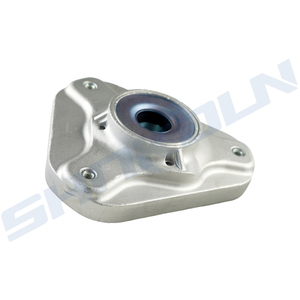
In contemporary vehicle engineering, heavy transport logistics, and rail infrastructure, the rubber buffer stop (often classified under industrial shock arrestors, progressive bump stops, or elastomeric bump springs) is not a passive rubber block. Instead, it serves as a highly calibrated kinetic damping interface. When mechanical assemblies encounter end-of-travel displacement or severe impact impulses, standard metal springs deliver linear reaction curves that transfer shock loads directly into vehicle chassis and mounting subframes. A premium-grade rubber buffer stop prevents structural deformation by delivering progressive stiffness characteristics, transforming destructive kinetic energy into controlled thermal hysteresis.
As an authoritative wholesale manufacturer in China, our compound mixing line focuses on cross-linked polymer mechanics. Natural Rubber (NR) blends are favored for high-deflection spring buffers due to their superior tensile rebound resilience (>65%) and crack-propagation resistance under dynamic loads. For aggressive operational environments involving hydraulic oil overspray, ozone decay, or elevated engine bay temperatures, our formulations integrate Ethylene Propylene Diene Monomer (EPDM), Chloroprene (CR), or Nitrile Butadiene Rubber (NBR). Metal inserts undergo sandblasting, degreasing, and silane-based adhesive priming before transfer molding, creating chemical cross-link bonds that exceed the shear strength of the rubber matrix itself.
| Elastomeric Compound | Shore A Hardness | Tensile Strength (MPa) | Working Temp Range (°C) | Primary Industrial Use-Case |
|---|---|---|---|---|
| High-Purity Natural Rubber (NR) | 55 ± 5 to 70 ± 5 | ≥ 21.5 | -40°C to +85°C | Leaf spring eye bushings, suspension bump stops, dynamic buffer stops |
| Hydraulic EPDM Formulation | 60 ± 5 to 75 ± 5 | ≥ 14.0 | -45°C to +135°C | Automotive strut mounts, steering boots, high-ozone weathering stops |
| Polyurethane Elastomer (Cellular PUR) | 65 ± 5 to 85 ± 5 | ≥ 28.0 | -30°C to +80°C | Progressive jounce bumpers, crane end-buffers, high-load industrial stops |
| Oil-Resistant NBR / Steel Bonded | 70 ± 5 to 80 ± 5 | ≥ 16.5 | -25°C to +110°C | Differential mounts, gearbox dampers, center bearing pillow rings |
The micro-structural cellular composition allows the buffer to compress axially without excessive lateral bulging. This design maintains tight clearance thresholds inside strut towers and commercial leaf spring shackles. When choosing wholesale rubber buffer stop components, procurement directors must evaluate compression deflection curves, loss factor (&tan;δ), and the permanent set ratio under persistent compressive fatigue cycles.
How electrification, automated logistics, and global environmental mandates are transforming industrial rubber part supply chains from 2026 to 2030.
Battery electric vehicles (BEVs) and electric heavy haulers generate axle curb weights that are 20% to 35% heavier than traditional combustion vehicles. Sourcing protocols are shifting toward progressive micro-cellular polyurethane and dense vulcanized dual-stage buffer stops to control secondary bounce frequencies without compromising chassis fatigue life.
Global wholesale buyers are transitioning away from trading intermediaries and consolidating procurement with vertically integrated Chinese manufacturers. Direct factory lines control raw rubber compound mixing, CNC tooling design, shot blasting, phosphating, and automated vulcanization under one roof, guaranteeing absolute traceability and reduced lead times.
Strict European Union and North American environmental directives now penalize Polycyclic Aromatic Hydrocarbons (PAHs) and heavy-metal accelerators. The future of export procurement relies on rubber compound formulas verified by RoHS and REACH protocols, alongside carbon-efficient production facilities that leverage closed-loop thermal recuperation.
We combine deep polymer materials science with high-capacity injection and compression molding facilities to deliver zero-defect rubber-to-metal bonded parts.
Over 9,485 active toolings and custom steel dies. We support custom geometric configurations, progressive parabolic contours, threaded stud attachments, and hollow-center bump configurations for passenger cars, trucks, and overhead cranes.
Our proprietary automated multi-stage degreasing and Chemlok bonding system guarantees a rubber-metal peel strength >12 N/mm. The rubber structure will tear coherently before the bonding interface releases, preventing catastrophic de-bonding under heavy shear.
Every vulcanized production run is tested for tensile strength, elongation at break, Durometer hardness consistency, dynamic axial fatigue life (exceeding 1.5 million cycles), and cyclic salt-spray corrosion resistance on metal components.
Essential guidance for purchasing agents, chassis engineers, and automotive parts distributors.
We manufacture using high-grade virgin Natural Rubber (NR) compounds for dynamic suspension bump stops and leaf spring buffers requiring superior tensile flexibility, low heat generation, and dynamic rebound. For specialized industrial, under-hood, or marine environments, we formulate custom blends using EPDM, Chloroprene (Neoprene), Nitrile (NBR), and high-density microcellular Polyurethane (PUR). All compounds adhere strictly to REACH, RoHS, and TSCA compliance standards.
Yes. Our in-house engineering and mold-making department handles precision CNC mold fabrication based on client-provided 2D/3D CAD models (STEP, IGES, DXF) or OEM reference samples. We tailor Shore A hardness from 45 Shore A (ultra-soft progressive dampers) up to 90 Shore A (heavy-duty structural stops), tuning the compression deflection curves to your exact kinetic energy absorption targets.
Metal plates and threaded studs undergo automatic shot-peening and ultrasonic chemical degreasing to maximize surface contact area. We apply high-performance bonding primers and adhesives via automated spray systems, followed by transfer vulcanization under strictly managed mold temperatures and hydraulic clamping pressures. We conduct ASTM D429 Method B 90-degree peel tests on every batch to confirm cohesive rubber-tear failure rather than adhesive separation.
For catalogued standard parts (covering our 9,485 tooling inventory, including MAN, Mercedes-Benz, Toyota, and Audi fitments), MOQs start from 100 to 300 units per line item, supported by our ready raw materials warehouse. Custom molded buffers typically require an initial trial run of 500 to 1,000 units. Mold tooling turnaround is completed in 15–20 days, followed by mass production cycles within 25–35 days.
Rubber buffer stops offer zero mechanical maintenance, no fluid leakage risk, and lower weight and production cost compared to hydraulic systems. Unlike linear steel coil springs, rubber displays progressive non-linear stiffness: load resistance climbs rapidly as displacement increases. This absorbs end-of-stroke shock smoothly without abrupt bottoming-out spikes, protecting surrounding structural assemblies from metal fatigue.
Submit your target OEM part numbers, technical specifications, or CAD drawings. Our elastomeric engineering team will provide a comprehensive DFM evaluation, compound material certification, and an itemized factory-direct quote within 24 hours.
Contact Us