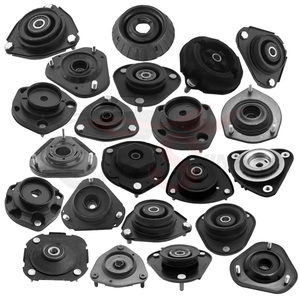

Molded Toolings in Operation
Global Vehicle Makes Covered
Dynamic Deflection Compliance
In-House Vulcanization & Fatigue Testing
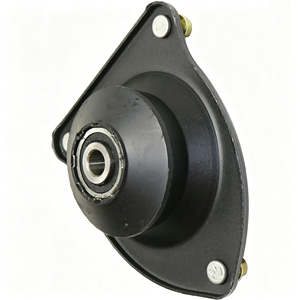
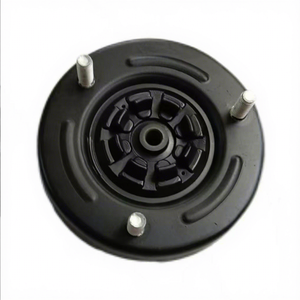
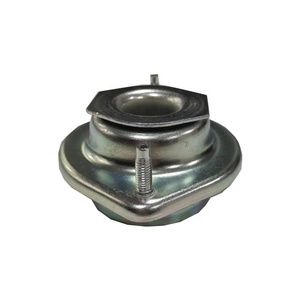
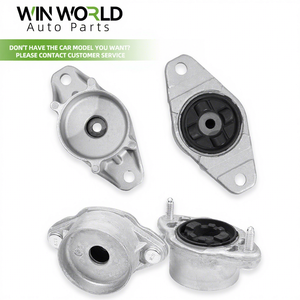
Explore our top-volume wholesale suspension strut mount assemblies. Precision-machined metal housings bonded to fatigue-resistant synthetic elastomers for maximum radial stability and acoustic isolation.
A granular examination of elastomeric formulation, chemi-thermal bonding chemistry, and structural fatigue life in chassis top mounts.
In contemporary automotive chassis engineering, the strut top mount (also classified as the upper shock absorber mounting or suspension strut isolator) serves a dual functional mandate that represents an inherent engineering paradox. Mechanically, it must offer exceptional static and dynamic stiffness along the longitudinal and lateral axes to maintain precise wheel camber and caster geometry under severe cornering and braking loads. Simultaneously, along the vertical vector, it must function as a high-loss viscoelastic dampening interface, decoupling high-frequency excitations generated by road roughness from transmitting directly into the passenger cabin monocoque.
The operational lifecycle of a top strut mount operates under grueling environmental extremes. Located beneath the inner fender wheelhouse, the elastomeric core is subjected to cyclic torsional forces from steering inputs, continuous compression rebound hammering, ozone degradation, glycol-based de-icing salts, and ambient engine bay thermal cycles running from -40°C in boreal winters to +120°C in forced-induction engine compartments. Consequently, material selection and vulcanization integrity dictate whether a mount survives its nominal 150,000-kilometer lifecycle or suffers premature debonding, tearing, and loss of acoustic damping.
We blend virgin Natural Rubber (NR) with high-density cis-1,4-polybutadiene and solution-polymerized SBR. This molecular cross-linking profile delivers outstanding tear strength (>45 N/mm) alongside exceptional low-temperature flexibility down to -45°C without glass-transition brittleness.
Every internal metal bracket, deep-drawn stamped steel plate, and aluminum alloy casting undergoes a 7-stage chemical degreasing and microcrystalline zinc phosphating cycle before automatic adhesive spraying with Lord Chemlok® elastomer bonding agents.
For MacPherson front strut assemblies, integrated angular-contact thrust ball bearings are sealed with glass-reinforced polyamide cages and PA66-GF30 synthetic races, packed with lithium-complex synthetic EP greases rated for over 1,000,000 full steering lock rotations.
| Performance Characteristic | OEM & Tier-1 High-Spec Mount (Our Factory) | Generic Commercial Tier-3 Aftermarket | Operational Impact on Suspension |
|---|---|---|---|
| Elastomeric Formulation | 100% Virgin NR / EPDM composite with high-dispersed N330 carbon black | Reclaimed rubber blends + low-grade calcium carbonate filler | Prevents micro-cracking and loss of rebound elasticity over 5+ years |
| Shore A Hardness Tolerance | 55 ± 3 Shore A (Precision laser rheometer monitored) | 55 ± 10 Shore A (Variable batch variations) | Maintains original vehicle steering returnability and precise NVH profile |
| Rubber-to-Metal Bond Strength | ≥ 10.5 MPa (100% rubber cohesive failure mode) | ≤ 4.2 MPa (Adhesive interface delamination failure) | Eliminates catastrophic upper strut detachment during sudden pothole impact |
| Dynamic Fatigue Endurance | > 1,500,000 cycles under ±12 kN multiaxial cyclic dynamic load | < 350,000 cycles under nominal vertical loading | Eliminates warranty claims, rattling knock noises, and early strut replacement |
| Corrosion Resistance (Metal Housing) | 1,000 hrs Neutral Salt Spray (ASTM B117) with zero red rust | < 96 hrs Salt Spray (Flash zinc or non-sealed black dip paint) | Survives severe northern road salting and tropical coastal humidity |
Strategic intelligence for wholesale importers, parts distributors, and automotive brand procurement managers navigating the transition to electrified and software-defined chassis.
The global automotive aftermarket for suspension shock mount components is experiencing a massive structural realignment driven by three concurrent dynamics: the rapid market share growth of Battery Electric Vehicles (BEVs), stringent vehicle emissions and weight reduction imperatives, and digital inventory consolidation among multi-branch warehouse distributors across North America, Europe, and the Middle East.
Electric vehicles (EVs) present a fundamental engineering hurdle for shock mount longevity. The inclusion of heavy high-voltage traction batteries increases gross vehicle mass by 25% to 40% compared to equivalent internal combustion platform sizes. Concurrently, the instant low-end torque delivery of electric traction motors induces massive fore-aft chassis pitch and instant roll moments. As a result, standard ICE-rated top mounts deployed on BEV models suffer accelerated compression set and rubber shearing within 30,000 kilometers.
Procurement directors are rapidly shifting PO specifications toward dual-stiffness hydraulic shock mounts and microcellular polyurethane (MCU) cell jounce bumpers embedded inside the top mount cavity. As an agile manufacturing partner, our tooling lines already incorporate these high-load architectures, offering reinforced die-cast aluminum brackets designed for Tesla Model 3/Y, BYD, VW MEB platforms, and Ford Mustang Mach-E.
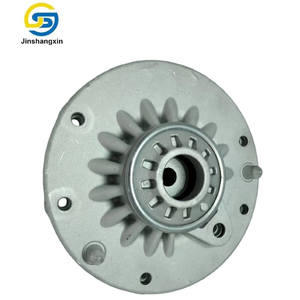
Fuel efficiency targets and EV range optimization have made un-sprung and semi-sprung chassis mass reduction a primary OEM goal. Cast aluminum strut top mounts reduce component weight by approximately 35% compared to multi-piece welded steel brackets while improving structural dimensional stiffness. In our manufacturing facility, high-precision high-pressure die casting (HPDC) machines allow for integrated multi-bolt top mount topologies that combine the upper spring perch, bump stop seat, and bearing retainer into a single monolithic unit.
While geopolitical factors encourage nearshoring discussions, wholesale buyers realize that tooling agility, raw natural rubber procurement speed, and chemical formulation expertise remain concentrated in mature Asian industrial clusters. Professional procurement directors are mitigating regional risks by selecting high-tier manufacturers that maintain direct backward integration into synthetic compounding, precision mold manufacturing, and automated stamping lines, ensuring unshakeable delivery schedules and price stability.
Without engine ICE noise masking road roar, tire tread vibration and road harshness between 150 Hz and 400 Hz become acutely noticeable. Next-generation procurement demands tuned dynamic mass dampers integrated directly within the shock mount elastomeric core.
Modern parts distribution networks rely on automated digital catalogs (TecDoc, MAM, Epicor). Importers demand comprehensive multi-brand OE cross-reference validation to maximize cross-fitment coverage across Toyota, Honda, VAG, BMW, Nissan, and Hyundai lineups.
Global regulatory bodies require total elimination of SVHCs (Substances of Very High Concern), carcinogenic plasticizers, and high-aromatic extender oils. Wholesale suppliers must provide verifiable eco-compliant compounding data sheets.
Decades of dedicated rubber compounding mastery, dedicated tooling facilities, and complete in-house quality verification remove all sourcing uncertainties.
From initial high-precision CAD/CAM mold manufacturing to automated rubber injection vulcanization presses, every stage is executed on our own shop floor. No subcontracted molding, ensuring exact repeatability across batch sizes.
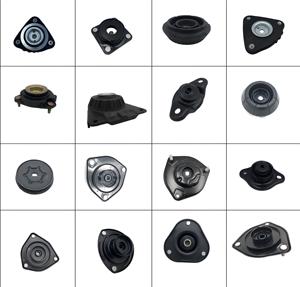
Our expansive production catalog covers 31 vehicle makes across Japanese, European, American, and Korean platforms. Whether sourcing rare classic components or fast-moving MacPherson assemblies, we hold comprehensive toolings.
We formulate tailored durometer elastomeric recipes precisely matched to original engineering drawings. Advanced multi-stage Chemlok® phosphating systems ensure absolute rubber-to-metal bonding strength under extreme shear.
Every lot passes rigorous multi-axial servohydraulic fatigue endurance testing, Shore A laser durometer validation, and 1,000-hour ASTM salt fog resistance before custom labeling and shipping.
Clear technical, operational, and commercial insights to help distributors, brand holders, and importers execute efficient procurement decisions.
Our factory utilizes premium Grade-1 Virgin Natural Rubber (NR) sourced directly from verified rubber plantations, combined with high-grade synthetic elastomers (such as EPDM for superior ozone/thermal resistance or SBR for high dynamic dampening). For metal sub-components, we utilize structural hot-rolled pickling steel plates (SAP370 / SPFH590) or A380/ADC12 aluminum alloy, treated through a certified 7-step phosphating bath and Lord Chemlok® bonding agent.
We enforce a strict zero-recycled-rubber policy across all OE and Tier-1 replacement grades to guarantee low compression set and eliminate catastrophic premature delamination under cyclic road impact.
Our internal testing lab is equipped with tri-axial MTS servohydraulic dynamic testing systems capable of replicating real-world track profiles across frequencies ranging from 0.1 Hz to 200 Hz. Standard production validation protocols require parts to complete 1,500,000 dynamic load cycles without elastomer cracking, permanent plastic deformation exceeding 1.8 mm, or bond line failure.
Furthermore, random batch samples undergo 1,000-hour continuous salt spray chamber exposure (ISO 9227 / ASTM B117) to verify corrosion resistance on electro-deposited paint, zinc-nickel plating, and bearing seals.
For existing catalog items where tooling is readily available, our standard production MOQ is typically 100 to 300 pieces per SKU. We also offer consolidated container flexibility, enabling distributors to mix and match multiple fast-moving suspension items (including engine mountings, control arm bushings, link rods, and shock mounts) to fulfill 20ft or 40ft HQ container orders without tying up excessive capital in single part numbers.
For custom mold development from customer-provided OE samples or technical 3D CAD data, mold tooling requires 25 to 35 days, followed by sample PPAP Level 3 documentation within 10 days. Mass production cycles range between 30 and 45 days upon sample approval.
Yes. We provide complete Private Label OEM services for global aftermarket brand owners. This encompasses custom color packaging, anti-counterfeit holographic labeling, customized barcode labelling (EAN-13, Code 128), and precision fiber-laser part number etching directly on the steel casing or rubber mantle.
Furthermore, our digital catalog department supplies complete cross-referenced data files compatible with TecDoc, MAM Software, and Epicor to ensure seamless integration into your enterprise ERP and distribution channels.
Steering stiffness, friction notchiness, and grinding noises in front suspension struts almost universally stem from sub-standard internal bearing tolerance or grease washout. Our MacPherson shock mount assemblies utilize ultra-sealed angular contact ball bearings or nylon-caged multi-ball thrust assemblies packed with low-temperature synthetic polyalphaolefin (PAO) grease rated from -45°C to +150°C.
Dual-lip elastomeric dust boots prevent ingress of water, sand, and road grime, maintaining buttery-smooth steering rotation and effortless steering wheel return throughout the vehicle's lifespan.
Access our comprehensive wholesale catalog featuring over 9,485 OEM-matched suspension rubber parts, complete technical drawings, and factory direct container pricing.
Get Catalog