
Source laboratory-validated, vulcanized vibration dampers, bronze bushings, and micro-machined suspension components with full traceability.
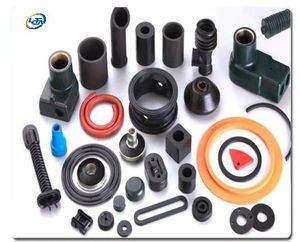
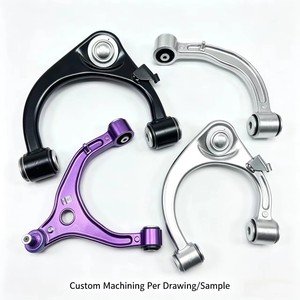
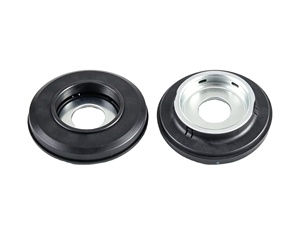
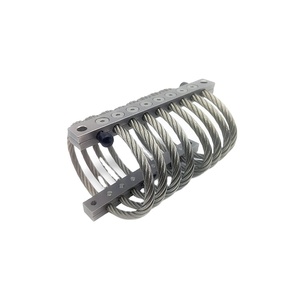
The global automotive aftermarket and Tier-1 OEM manufacturing channels have witnessed a systemic transition in NVH (Noise, Vibration, and Harshness) suppression technologies. As independent double-wishbone and multi-link suspension architectures become the de facto baseline for internal combustion engine (ICE) and electric vehicle (EV) applications, upper arm bushings serve as critical pivots that directly govern camber stability, dynamic toe angles, and longitudinal compliance.
Procuring wholesale upper arm bushings from China and Southeast Asian industrial corridors requires a comprehensive comprehension of chemical metallurgy, vulcanization dynamics, and polymer elasticity. Tier-1 OEM distributors, automotive workshop conglomerates, and commercial fleet managers are no longer evaluating suppliers purely on base pricing. Instead, strategic procurement relies on thermo-oxidative resistance, adhesive rubber-to-metal bonding tensile strength, and kinematic life expectancy under multidirectional fatigue stresses.
The mechanical efficiency of an upper control arm bushing relies fundamentally upon the molecular morphology of the compound. Upper control arm bushings endure substantial torsional oscillation combined with radial and axial load forces during cornering, braking, and terrain adaptation:
Premature upper arm bushing failure rarely stems from bulk rubber disintegration; rather, it is initiated by interfacial adhesive failure between the inner steel/aluminum sleeve and the elastomeric body. Premium manufacturing requires a rigorous, automated multi-stage metal treatment protocol:
Inner and outer metal sleeves undergo precision CNC micro-machining or cold drawing to tolerances within ±0.015mm, followed by zinc-phosphate chemical surface passivation. This conversion coating enhances mechanical interlock capabilities before automated spraying of dual-coat primers (such as Lord Chemlok® or Megum® systems). During automated compression or transfer molding, high-pressure vulcanization creates an irreversible chemical co-vulcanization bridge between the metal and elastomeric interfaces. The resulting cohesive bond exhibits ultimate tensile yield strengths exceeding 12 to 15 MPa, ensuring zero debonding under extreme angular deflection cycles.
| Performance Metric | OEM Requirement (ISO/TS Standard) | Factory Benchmark (Our Production) | Testing Validation Standard |
|---|---|---|---|
| Durometer Hardness | 55 - 75 Shore A (±5) | 60 ± 3 Shore A (Customizable) | ASTM D2240 / ISO 7619-1 |
| Tensile Strength | ≥ 14.0 MPa | ≥ 18.2 MPa | ASTM D412 (Die C) |
| Elongation at Break | ≥ 380% | ≥ 450% - 520% | ASTM D412 |
| Bonding Adhesive Strength | 100% Rubber Tear Failure | 100% Rubber Tear (> 14 MPa) | ASTM D429 (Method B) |
| Dynamic Radial Fatigue | 500,000 cycles without failure | 1,000,000 cycles validated | Multi-Axis Dynamic Servo Rig |
| Ozone Aging Resistance | 50 pphm, 40°C, 20% strain, 72h | No cracking observed at 168h | ASTM D1149 / ISO 1431-1 |
Procurement directors navigating the 2026–2030 automotive component landscape must anticipate significant structural market transformations:
Heavier Curb Weight and Immediate Torque Output: Battery electric vehicles (BEVs) frequently present curb weights 25% to 35% heavier than their ICE platform predecessors, alongside instantaneous torque delivery. Consequently, upper control arm bushings are subjected to exponentially elevated cyclic stress amplitudes. The manufacturing trend is rapidly converging on void-free asymmetric hydraulic bushings (hydro-bushings) and high-density aluminum composite sleeve integration to optimize unsprung mass without sacrificing structural damping.
Digital Traceability & Cross-Catalog Precision: Global distributors face rising storage costs for slow-moving parts. Leading Chinese and Thai manufacturers are solving this through integrated catalog management systems—providing accurate OE cross-referencing across American, European, and Asian platforms (Toyota, Ford, Chevrolet, Hyundai, Isuzu, and BMW) directly matched with real-time CAD models, minimizing warehouse return rates to fractions of a percent.
Leveraging internal tooling workshops, rubber compounding facilities, and ISO/IATF quality controls.
From primary rubber masterbatch mixing to vulcanization accelerator adjustments, we control compounding lines directly to guarantee lot-to-lot mechanical consistency.
Equipped with high-precision CNC machinery and EDM centers, our mold engineering department delivers bespoke tooling turnarounds within 15 to 20 calendar days.
Every shipment is backed by dimensional coordinate measuring machines (CMM), vulcanization rheometer curve logging, dynamic durometer tests, and salt-spray corrosion reports.
Direct technical answers addressing lead times, material formulation, testing validations, and custom orders.
Access our complete engineering specifications, OE cross-reference indices, and volume factory-direct quotation sheets right away.
Get Catalog