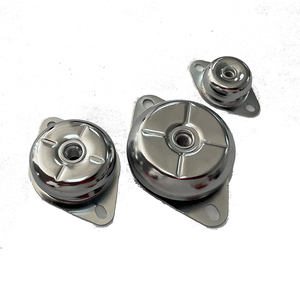
Direct-from-mold automotive rubber solutions, precision-compounded to mitigate NVH frequencies, withstand thermal gradients, and deliver extended fatigue lifecycles across commercial and passenger applications.
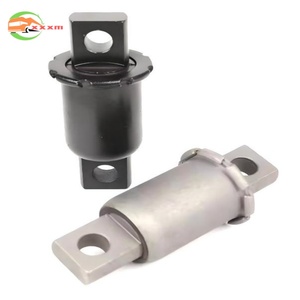
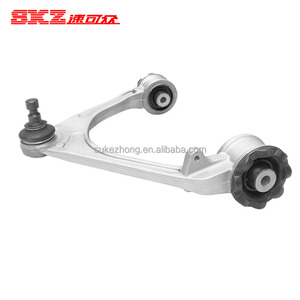
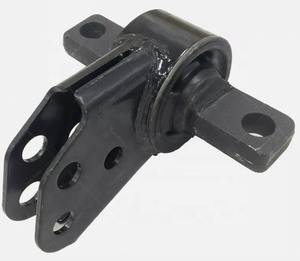
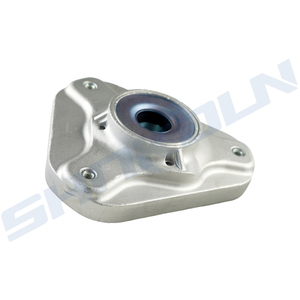
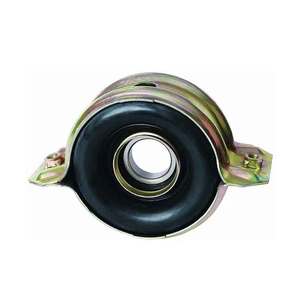
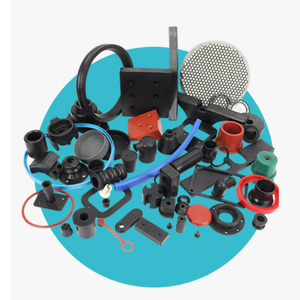
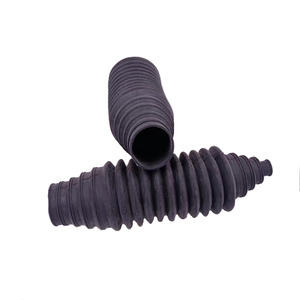
Automotive exhaust rubber hangers serve as the critical dynamic decoupling link between the vehicle's oscillating powertrain exhaust line and the rigid passenger chassis frame. In contemporary internal combustion, hybrid, and heavy-duty commercial vehicles, the exhaust hanger operates within an exceptionally demanding operational corridor. It must concurrently mitigate severe acoustic harmonics (NVH attenuation), bear static suspended weights across dynamic multiaxial shear and tensile loads, and withstand brutal environmental factors such as ozone oxidation, stone impingement, sub-zero road salt brine, and intense radiant heat spikes exceeding 160°C.
Selecting the optimal elastomeric substrate is the pivotal engineering decision when configuring custom OEM exhaust isolators. The table below delineates the empirical trade-offs evaluated by our internal chemical engineering laboratory:
| Polymer Class | Operating Temp Range | Tensile Strength (MPa) | Ozone & UV Aging Resistance | Dynamic Loss Factor (tan δ) | Target Applications |
|---|---|---|---|---|---|
| Vulcanized Natural Rubber (NR) | -40°C to +85°C | 18.0 - 24.5 | Moderate (Requires Antidegradants) | 0.05 - 0.10 (High Resilience) | Cold-end rear tailpipe hangers, legacy passenger vehicles |
| High-Grade EPDM Terpolymer | -45°C to +150°C | 10.5 - 16.0 | Exceptional (>1000h ASTM D1149) | 0.12 - 0.22 (Superior Damping) | OEM mid-pipe, DPF & SCR emission assembly suspension |
| Fluoroelastomer (FKM) / AEM | -25°C to +185°C | 11.0 - 15.5 | Impervious to Hydrocarbons/Ozone | 0.15 - 0.28 (Broad Spectrum) | High-performance turbo downpipes, manifold isolators |
| High-Consistency Silicone (VMQ) | -60°C to +200°C | 7.0 - 10.5 | Outstanding Non-Oxidizing | 0.08 - 0.16 (Stable NVH curve) | Severe racing exhausts, high-heat diesel regeneration zones |
Vibration transmission from internal combustion engines exhibits broad-band frequency characteristics ranging from 20 Hz low-frequency engine idling shudder to 1,500 Hz high-frequency gas pulsation hiss. An effective exhaust rubber hanger must not merely support mass—it must behave as a tuned viscoelastic isolator. By controlling the polymer cross-link density and blending fine-particle furnace carbon blacks (N330/N550 series), our compound engineers achieve an optimal balance between static spring rate (Ks) and dynamic stiffness (Kd), sustaining a dynamic-to-static stiffness ratio (Kd/Ks) of less than 1.35 across critical excitation bands.
As the automotive and transport supply chains evolve under rigorous global ESG mandates and lightweighting directives, the criteria for sourcing exhaust rubber hangers are undergoing systemic transformation. Global buyers must evaluate long-term tier partnerships through these key developmental trajectories:
Hybrid powertrains introduce abrupt ICE stop-start cycles that induce severe torque shudder through the exhaust line. Sourcing demands custom isolators with non-linear progressive stiffness curves to cushion high-amplitude startup torque.
Global procurement teams in Europe and North America increasingly specify vulcanizates featuring recycled carbon black and bio-based EPDM polymers without sacrificing tensile elongation at break or cyclic fatigue endurance.
Strict Euro 6e and EPA Tier 4 emission standards demand sustained particulate regeneration cycles. Exhaust hangers positioned within 100mm of emission canisters must endure radiant temperatures exceeding 150°C without plastic deformation.
Combining full internal compounding capabilities with high-capacity compression and injection tooling lines in Thailand to eliminate aftermarket fitment variance.
Unlike third-party packagers, every exhaust rubber hanger and suspension bushing is mixed, molded, and cured on our proprietary production lines in Thailand. We control polymer molecular consistency from raw polymer crumb to the finished boxed component.
With an active tooling inventory covering 9,485 line items across 31 vehicle makes (including Toyota, Nissan, Honda, Ford, Isuzu, Chrysler, Mercedes-Benz), our cross-reference database allows procurement officers to consolidate their chassis procurement under a single verified manufacturer.
Our automated degreasing, phosphating, and multi-coat adhesive application systems guarantee rubber-to-metal bonding peel strength exceeding 12 MPa, preventing adhesive rupture under high dynamic shear and severe torque stress.
All batches undergo automated rheometer vulcanization testing, durometer verification (Shore A 45 to 80), ozone chamber degradation trials (ASTM D1149), tensile rupture testing, and thermal aging assessments prior to packaging release.
Equipped with internal CNC machining facilities, we manufacture custom compression molds and transfer tooling within 15–20 days from CAD/STP submission, shortening vehicle aftermarket product launch cycles.
Our expansive warehousing logistics handle mixed container consolidate orders, custom palletization, barcoded labeling, and fast lead-time dispatch to commercial vehicle distributors and Tier-1 replacement importers worldwide.
Direct technical answers formulated by our application engineering and international trade departments for procurement officers, technical buyers, and wholesale distributors.
Upgrade your chassis and dynamic exhaust line component catalog. Contact our technical team with OE part numbers, 2D/3D blueprints, or annual volume estimates to receive competitive direct-from-mold pricing and full material test specifications.
Get Catalog