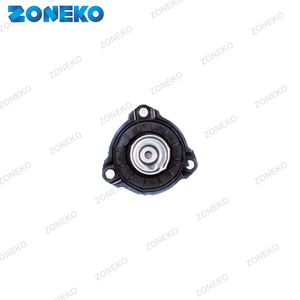
ZONEKO Auto parts Rubber shock absorber strut mount 54610F2000 High quality for Elantra 2015-2018 54610-F2000
OE: 54610-F2000 | Dynamic Axial Load Resistance

Explore our laboratory-tested, vulcanized transmission mounts, suspension struts, and chassis damping solutions built to exact OE mechanical envelopes.
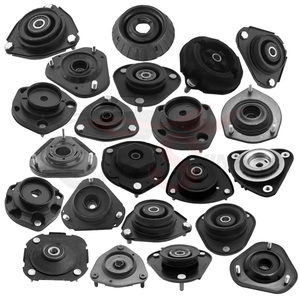
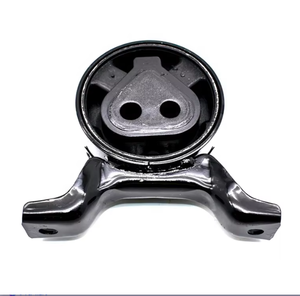
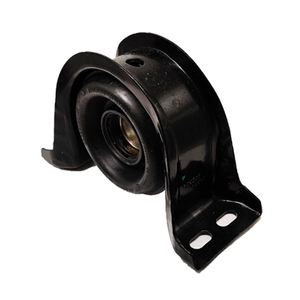
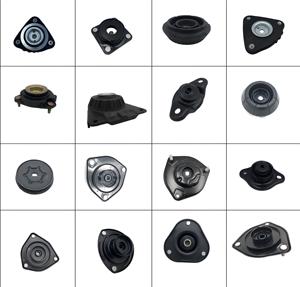
Tooling Geometries in Stock
Global Car Makes Covered
In-House Rubber Vulcanization
Assembly Line Defect Rate
In modern powertrain architecture, the gearbox mount (transmission insulator) is not merely a static structural bracket. It serves as a complex mechanical filter operating simultaneously across six degrees of freedom. Powertrain transient torques—manifested during wide-open-throttle acceleration, aggressive gear changes, and engine braking—exert extreme directional shears across the elastomeric core. Standard replacement rubber mounts frequently suffer premature structural degradation due to excessive internal thermal buildup (hysteresis loss), insufficient elastomer resilience, or mechanical delamination along the metal-adhesive interface.
At our manufacturing facility, engineering custom OEM transmission mounts requires tight multi-physics coordination. We balance Shore A Durometer hardness (typically 55 to 70 ±5) with precise static-to-dynamic stiffness ratios (Kd/Ks). When dynamic stiffness climbs unchecked at higher excitation frequencies (100 Hz to 350 Hz), high-frequency gear whine and driveline harmonics breach the passenger bulkhead. Conversely, an elastomer matrix configured with insufficient static stiffness allows excessive rotational deflection of the gearbox bellhousing, causing half-shaft misalignment, accelerated CV joint needle-bearing wear, and uncommanded pop-out gear disengagement.
| Physical Property / Test Parameter | Standard Commercial Rubber Mount | Our High-Spec OEM Elastomeric Mount | Testing Standard Protocol |
|---|---|---|---|
| Base Polymer Formulation | Reclaimed Natural Rubber (NR) / Standard SBR | Virgin High-Cis NR / EPDM Blend with Micro-Silica | ASTM D297 Chemical Composition |
| Tensile Strength (MPa) | 11.5 - 13.0 MPa | ≥ 19.5 MPa | ASTM D412 Die C |
| Elongation at Break (%) | 320% - 380% | ≥ 520% | ASTM D412 Dynamic Tensile |
| Adhesive Interfacial Shear Strength | < 6.5 N/mm (Frequent Rubber Peel Failure) | ≥ 11.2 N/mm (100% Rubber Tear Failure) | ASTM D429 Method B (90° Peel) |
| Thermal Aging Drift (70h @ 100°C) | Hardness Drift > +12 Shore A, Loss of Spring Rate | Hardness Drift ≤ +3 Shore A, Retained Spring Rate | ASTM D573 Heat Resistance |
| Dynamic Fatigue Life (Cycles to Cracking) | ≤ 250,000 Cycles under ±3.5 kN load | ≥ 1,000,000 Cycles under ±5.0 kN load | MTS Servo-Hydraulic Tri-Axial Rig |
To eliminate adhesive joint separation, our chemical preparation line utilizes an automated multi-stage grit blasting and phosphating sequence on cold-drawn steel and ADC12 die-cast aluminum outer housings. Dual-layer silane/phenolic bonding adhesives (Chemlok-equivalent systems) are applied through programmable robotic atomizers, achieving absolute film thickness uniformity within 15–20 microns. Through accurate curing pressure, temperature, and cycle timing in vacuum-assisted compression molding presses, the elastomer crosslinks directly into the primer matrix. This ensures structural cohesion where tensile failure will fracture the bulk vulcanizate long before tearing from the metal bracket.
Strategic purchasing demands are evolving beyond basic part-matching. Tier-1 buyers and national automotive importers are adapting supply chains to address emerging powertrain configurations and tighter NVH targets.
With the rapid adoption of Hybrid Dedicated Hybrid Transmissions (DHT) and Battery Electric Vehicles (BEVs), gearbox mounts must absorb near-instantaneous peak torque delivery (0 to maximum Nm within 20 milliseconds). Traditional rubber chemistries experience rapid fatigue stress under repetitive shock pulses. Procurement teams are explicitly specifying elastomer blends with modified tan delta (δ) profiles to prevent harsh shock transfers into EV unibodies.
Importers and regional distributors are migrating away from fragmented tier-3 workshops toward fully integrated factories capable of handling multiple vehicle platforms under one roof. Modern distributors minimize cross-docking friction by purchasing complete chassis bushing, engine mounting, and center bearing programs from a single OEM manufacturer holding verified cross-references for Asian, European, and American marques.
Western markets, particularly North America and the European Union, increasingly require supply chain traceability, including REACH and RoHS compliance for polycyclic aromatic hydrocarbons (PAHs) and heavy metals in synthetic vulcanizates. Purchasing audits now prioritize facilities operating closed-loop raw material compounding systems that keep Volatile Organic Compounds (VOCs) within strict cabin-air intrusion limits.
From custom compounding chemistry to automated metal forming and vulcanization, our dedicated production infrastructure delivers precision parts at scale.
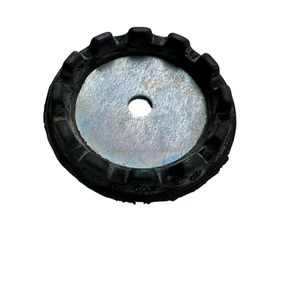
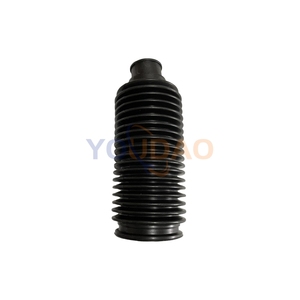
We operate our own CNC mold fabrication center, maintaining over 9,485 unique production molds. Tooling dimensions match original equipment drawings, maintaining bore tolerances to ±0.02 mm.
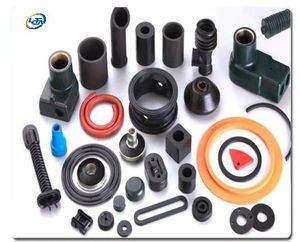
We do not use pre-mixed commercial rubber blocks. Our chemists compound NR, EPDM, NBR, and Silicone polymers in-house to tailor dynamic stiffness and chemical resistance for each application.
Our catalog covers high-volume vehicle fleets worldwide, including Toyota, Nissan, Honda, Mitsubishi, Isuzu, Ford, Hyundai, GM, Chrysler, and heavy-duty commercial lines like Hino.
From raw elastomer spectral analysis to rheometer vulcanization testing and finished batch coordinate measuring machine (CMM) verification, every production lot is traceable to its material heat.
Clear, direct answers for aftermarket category managers, OEM purchasing agents, and engineering teams.
Bond failures typically occur when surface pre-treatment is inadequate or adhesive application lacks precision. Our facility uses automated shot blasting to reach an Sa 2.5 surface roughness, followed by zinc phosphating and dual-layer phenolic adhesive coating within controlled atmospheric chambers. During vulcanization, our high-pressure presses crosslink the elastomer directly into the bonding agent, ensuring dynamic shear tests yield 100% cohesive rubber failure rather than bond separation.
Yes. Our engineering department uses high-resolution blue-light 3D coordinate scanning to map bracket geometry, bushing press-fit dimensions, and mounting bolt centers down to ±0.01 mm. Our materials laboratory performs thermogravimetric analysis (TGA) and durometer mapping to identify the original polymer blend, allowing us to generate production-ready 3D tooling models and matched compounding recipes.
For existing tooling catalog parts, standard lead time runs 25 to 35 calendar days from purchase order confirmation, supported by our ready inventory of metal stampings. For custom OEM developments requiring new mold tooling, prototype sampling and dynamic characterization take approximately 20 to 25 business days, followed by 30 days for full container-load production upon sample approval.
Static stiffness (Ks) handles mechanical powertrain retention and static deflection under weight, while dynamic stiffness (Kd) determines vibration transmission into the chassis. We measure both using high-frequency servo-hydraulic testing rigs. By optimizing carbon black morphology, oil plasticizer content, and crosslink density, we keep the Kd/Ks ratio low across critical operating frequencies (20–200 Hz), minimizing vehicle cabin vibration.
Yes. We support global distributors and aftermarket brands with custom packaging solutions, including high-resolution branded color boxes, corrosion-inhibiting VCI plastic liners, barcoding, and direct laser etching of proprietary part numbers onto the mount brackets and rubber dampers.
Our manufacturing and compounding lines operate under IATF 16949 and ISO 9001 certified quality management systems. Every shipment includes certified inspection reports covering tensile strength, elongation at break, durometer hardness, and dimensional tolerance checks using automated coordinate measuring machines.
Access our comprehensive cross-reference database of over 9,485 automotive rubber mounts, suspension bushings, and driveline assemblies. Request custom technical drawings, sample validations, or volume factory pricing from our engineering team.
Get Catalog