OEM Standard
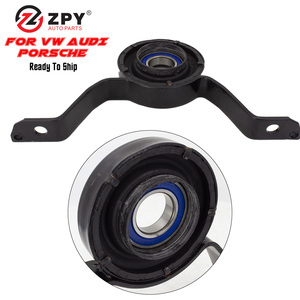

Explore our high-demand original-equipment specification bushings, strut mounts, CV dust covers, and driveshaft center supports. Engineered from premium compounds to eliminate micro-vibrations, maintain steering geometry, and withstand extreme shear forces.
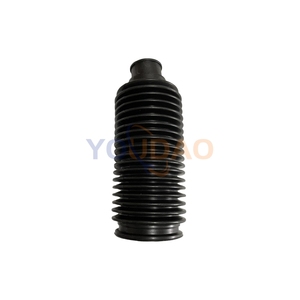
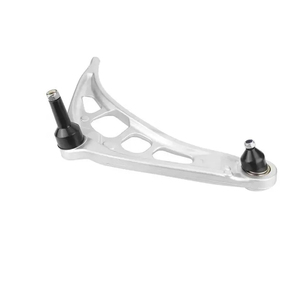
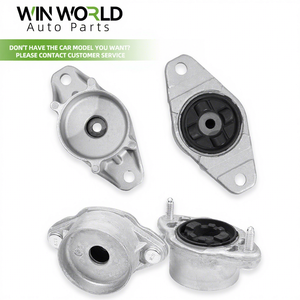
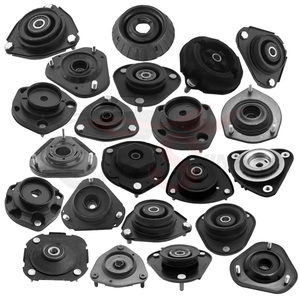
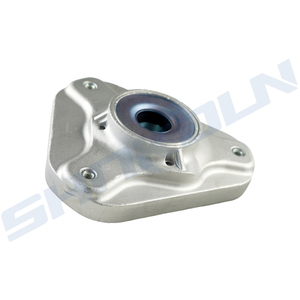
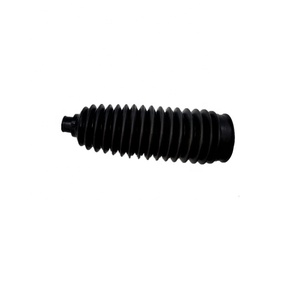
Controlling the entire supply chain guarantees zero cross-batch hardness variance, structural metallurgical integrity, and absolute alignment with strict international standards.
We blend prime natural rubber (NR) and proprietary EPDM/polyurethane elastomers in computer-regulated Banbury internal mixers, guaranteeing tailored Shore A durometer consistency within ±2 points across batches.
Metal outer and inner sleeves are CNC-machined, chemically de-greased, zinc-phosphated, and coated with primer and Chemlok bonding agents, achieving 100% rubber-tearing adhesion under ASTM D429 Method B peel tests.
Every lower control arm bushing geometry undergoes Finite Element Analysis (FEA) to optimize radial deflection, axial retention, and conical compliance, isolating structural road noise without compromising steering response.
Outer sleeve diameters are held to ISO tolerance class h7/p7 to guarantee flawless press-fit friction holding into cast iron or forged aluminum control arms, preventing axial slippage under heavy dynamic braking.
The automotive lower control arm bushing is the primary load-bearing joint connecting the wheel knuckle and suspension cradle to the subframe. It experiences complex tri-axial stress profiles: cyclic radial compression during braking and acceleration, axial loading during lateral cornering maneuvers, and torsional twisting during suspension rebound and jounce. When substandard aftermarket bushings fail, vehicle stability degrades, causing tire feathered wear, steering flutter, and severe noise-vibration-harshness (NVH) transmission into the passenger cabin.
The table below illustrates our empirical formulation parameters compared to typical low-cost aftermarket alternatives.
| Engineering Property / Standard | Standard Commercial Grade | NISTO Rubber OEM Compound | Impact on Vehicle Dynamics |
|---|---|---|---|
| Base Elastomer Compound | Reclaimed Rubber / Low-grade SBR | Premium Grade Virgin Natural Rubber (NR) / EPDM | High tensile elasticity, resistance to micro-tearing |
| Hardness (Durometer Shore A) | 50 – 75 (High deviation ±8) | 58 – 65 (Strict tolerance ±2 Shore A) | Precise balance between chassis compliance and ride comfort |
| Tensile Strength (ASTM D412) | 10.5 MPa – 12.0 MPa | > 21.5 MPa | Prevents polymer fracture under peak curb impact and potholes |
| Elongation at Break (%) | 280% – 350% | ≥ 520% | Allows severe conical displacement without inner sleeve peeling |
| Rubber-to-Metal Bond Strength | Mechanical press-only / Single primer | Two-Coat Adhesive System (Chemlok) + Phosphating | Zero separation at 100% rubber failure rating (ASTM D429-B) |
| Ozone Degradation (ASTM D1149) | Visible cracking < 48 hrs | No cracking @ 50 pphm / 40°C / 168 hrs | Maintains structural resiliency across tropical and sub-zero climates |
| Dynamic Fatigue Life (Cyclic) | ~150,000 cycles | > 500,000 to 1,000,000 cycles | Extended service life mirroring genuine OEM benchmark |
Rubber formulation accounts for only half of the structural integrity equation. The metallurgical properties of the inner and outer sleeves dictate longevity. Our factory utilizes cold-drawn seamless carbon steel pipes (JIS G3445 STKM13C or ASTM A513) for seamless inner sleeves, avoiding seam splitting under high clamping bolt torques. Outer casings receive a controlled micro-barrel surface finish prior to zinc passivation, ensuring optimum interference fit during installation into cast iron or stamped steel wishbones without galling the control arm housing bore.
Navigating electric vehicle transition loads, supply chain diversification, and automated precision molding.
Battery electric vehicles (BEVs) exhibit curb weights 20% to 35% higher than equivalent internal combustion engine (ICE) platforms, combined with instant torque delivery. This creates severe longitudinal shear stress on lower arm trailing bushings. Procurement departments are demanding heavy-duty hydro-bushings (fluid-filled dampers) and dual-durometer composite elastomers to control high-frequency road vibrations while resisting severe braking deflection.
Tier-1 automotive parts importers in North America and Western Europe are actively shifting sourcing away from single-source manufacturing territories to mitigate geopolitical risks and punitive tariffs. Thailand has cemented its stature as the global nexus for rubber components, offering abundant virgin latex supplies, modern infrastructure, and deep OEM automotive supply chains (Toyota, Isuzu, Ford, Honda).
Manual cross-referencing causes high return rates in the independent aftermarket. B2B buyers now mandate digital catalogs containing CAD geometry, vehicle fitment tables, and interchange indices covering 30+ makes. Sourcing partners that provide comprehensive digital asset matching reduce warehouse picking errors and accelerate turnover across international dealer networks.
Answers to key technical, manufacturing, tooling, and minimum order questions for wholesale distributors, private label brands, and fleet contractors.
Generic bushings frequently use reclaimed scrap rubber with uneven vulcanization, leading to early hardening, cracking, and bonding failure within 15,000 km. Our OEM-grade bushings are manufactured from virgin grade natural rubber and specialty synthetic polymers, bonded to seamless carbon-steel sleeves treated with zinc phosphating and genuine Chemlok adhesives. Each SKU is engineered to exact OEM durometer specifications to preserve chassis suspension geometry, wheel alignment, and NVH damping characteristics.
Yes. We provide complete Reverse Engineering and OEM Tooling services. With 2D/3D CAD drawings (STEP, IGES, DXF) or a sample part, our engineering workshop can build tooling molds, analyze chemical elastomer composition, determine metal sleeve metallurgy, and deliver First Article Inspection (FAI) prototypes accompanied by dimensional CMM and durometer test reports within 20 to 35 business days.
Bonding failure is the most common reason for bushing warranty claims. We address this with an automated 5-stage metal preparation system: ultrasonic solvent degreasing, shot-blasting to establish specific mechanical anchor profiles (Ra 3.2-6.3µm), micro-crystalline zinc phosphating, followed by controlled immersion in thermal-activated Chemlok primers and topcoats. Vulcanization occurs in precision vacuum-assisted injection and transfer molding presses under constant temperature and pressure to ensure cohesive rubber tearing failure rather than adhesive separation.
For cataloged items where molds are already in our library (over 9,485 parts covering 31 makes), standard MOQ starts at 100 to 300 pieces per SKU. For bespoke or proprietary custom mold developments, MOQs typically range between 500 and 1,000 pieces depending on geometry and metal sleeve complexity. Typical production turnarounds are 25 to 40 days for full container loads (FCL), with container consolidation services available from our Thailand manufacturing hub.
Our in-house quality assurance laboratory operates rheometers to track curing kinetics (scorch time ts2, optimum cure tc90), tensile testers for elongation and break force (ASTM D412), automated durometers for Shore A hardness, and dynamic multi-axial fatigue benches that cycle bushings through 500,000+ oscillations while continuously measuring radial and axial stiffness decay.
Yes. We support global private label programs. Services include fiber-laser etching of custom part numbers, brand logos, and traceability batch codes directly onto metal sleeves, custom-printed high-density polyethylene bags, branded color retail packaging boxes, and barcode labeled master export cartons complying with international logistics standards.
Access our comprehensive database of 9,485+ cataloged parts across 60 chassis and driveline categories. Request comprehensive technical drawings, factory inspection dossiers, and wholesale volume pricing directly from our Thailand engineering team.