Custom Suspension OEM
Inquire Now
Industrial-grade elastomeric formulations, high-cycle NVH damping control, and high-precision rubber-to-metal bonding engineered for global automotive tier distributors and commercial vehicle fleets.
Discover our rigorously calibrated OE-spec stabilizer bushings, custom compression limiters, and specialized suspension link components built to withstand extreme dynamic shear stresses and environmental hydrolysis.
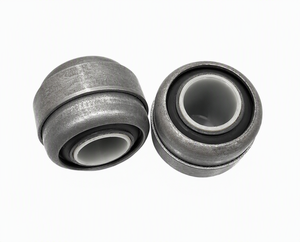
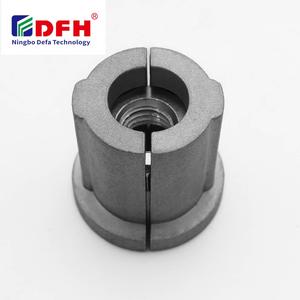
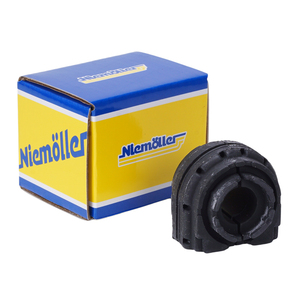
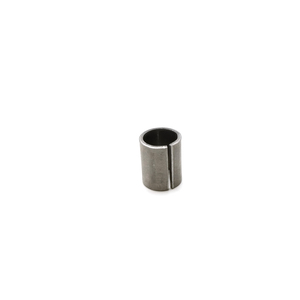
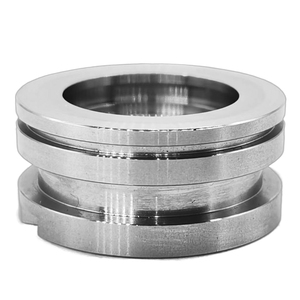
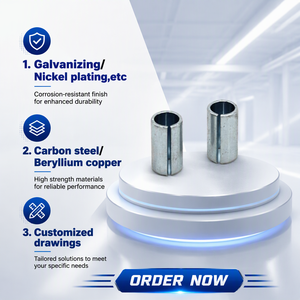
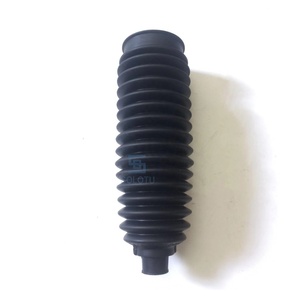
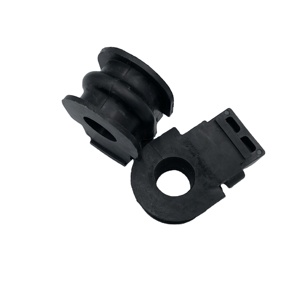
Anti-roll bar stabilizer bushings operate under severe multidirectional dynamic loading. As an engineering-driven OEM/ODM exporter, we formulate compound chemistries that eliminate common aftermarket failure modes such as creep fatigue, adhesive peel, and abrasive squeaking.
We calibrate Natural Rubber (NR) blends for high elastic resilience and low dynamic stiffness damping, paired with synthetic EPDM polymer chains for high-temperature ozone resistance (-40°C to +120°C). For extreme high-performance applications, internal PTFE liners and cast polyurethane are customized to prevent torsional stick-slip noise without wet greasing.
Sub-standard bushings fail predominantly at the rubber-to-metal bonding line. NISTO employs multi-stage ultrasonic degreasing, micro-abrasive shot peening, and robotic Chemlok® primer adhesive application. The subsequent high-pressure vulcanization guarantees a chemical bonding peel strength exceeding 12 MPa, preventing structural debonding under heavy lateral roll forces.
Utilizing non-linear Finite Element Analysis (FEA), we calculate internal strain energy densities and radial stress distribution. Our engineers design variable inner bore ribbing profiles and integrated compression limiters that stabilize axial deflection while mitigating the micro-fretting caused by grit entrapment between the sway bar and bushing wall.
| Evaluation Parameter | OEM Benchmark (ISO/TS Specification) | NISTO Factory In-House Standard | Performance Advantage |
|---|---|---|---|
| Compound Durometer (Hardness) | Shore A 55 - 70 ± 5 | Shore A 60 - 68 ± 2.5 | Optimized Rigidity Eliminates sway bar latency |
| Rubber-to-Metal Bond Peel | ≥ 8.0 MPa (ASTM D429 Method B) | ≥ 12.5 MPa (100% Rubber Tear) | Zero Debonding Extreme heavy-duty payload stability |
| Tensile Strength & Elongation | ≥ 14 MPa / ≥ 400% Elongation | ≥ 18.5 MPa / ≥ 480% Elongation | High Tensile Resiliency Maximum tear resistance |
| Accelerated Heat Aging (70h @ 100°C) | Hardness Change ≤ ±8 Shore A | Hardness Change ≤ ±4 Shore A | Anti-Hardening Prevents dry-rot cracking |
| Dynamic Fatigue Life (Cycles) | 500,000 cycles without fissure | 1,200,000 cycles verified dynamic stroke | Extended Warranty Up to 3-Year / 100,000 km reliability |
The automotive aftermarket and OEM supply chain are undergoing structural transformation. Sourcing directors must anticipate technological pivots driven by EV platform weight dynamics and global supply chain risk diversification.
Battery pack integration increases overall vehicle mass by 20% to 35%, generating instant low-end torque spikes. Suspension stabilizer bushings in EVs must handle substantially higher instantaneous cornering torsion while maintaining ultra-quiet acoustic properties to compensate for the absence of internal combustion engine masking noise. Procurement strategies are rapidly prioritizing co-vulcanized thermoplastic elastomer (TPE) and specialized low-damping formulations.
Global automotive buyers are actively de-risking single-source regional dependencies through "China+1" sourcing policies. Thailand represents the premier automotive manufacturing hub in ASEAN, boasting direct access to world-class natural latex raw materials, comprehensive infrastructure, and favorable international tariff frameworks. Procuring directly from Thailand-based manufacturing facilities eliminates geopolitical tariff volatility and reduces baseline freight lead times.
Leading original equipment manufacturers (such as VAG, BMW, and Toyota) increasingly specify sway bar bushings that are directly vulcanized and chemically bonded to the anti-roll bar itself, rather than conventional split slip-on designs. This design prevents lateral walking and eliminates the entry of abrasive grit. Aftermarket distributors must align with manufacturers capable of producing both modular replacement brackets with anti-crush sleeves and complete bonded assemblies.
Headquartered in Thailand, NISTO Rubber Manufacturing combines raw rubber material mastery, in-house tooling development, and comprehensive catalog depth to serve tier importers and distributors across 5 continents.
We operate dedicated continuous rubber-mixing and computer-controlled vulcanization press lines in Thailand. By eliminating third-party contract molding, our engineers ensure rigorous batch-to-batch polymer consistency, exact Shore hardness maintenance, and complete quality traceability from raw compounding to finished boxed parts.
Covering 31 Japanese, American, European, and Korean vehicle marques—including Toyota, Nissan, Honda, Mitsubishi, Isuzu, Ford, GM, and heavy commercial applications like Volvo and Hino trucks. Our digital catalog pairs full OE cross-referencing, multi-angle imagery, and precise chassis fitment parameters to accelerate buyer procurement workflows.
From bespoke durometer requirements to custom compression limiters, precision CNC metal sleeves, and self-lubricating graphite inserts. We support client private-label programs with full CAD/UG mold design, rapid prototype sampling within 15–20 business days, and customized laser-etched branding and industrial packaging.
Clear, definitive answers to the most common engineering, verification, and logistics inquiries raised by commercial parts buyers and warehouse distributors.
Every stabilizer bar bushing and chassis component is reverse-engineered and validated directly against genuine OEM samples. We inspect inner bar diameter, outer bracket contour geometries, and compression limiter spacing using coordinate measuring machines (CMM) to maintain dimensional variances within ±0.15 mm.
For items available in ready warehouse stock, orders can be dispatched within 7–10 days. For custom OEM/ODM production runs or high-volume sea container shipments, manufacturing cycles typically range from 30 to 45 days. Our flexible baseline MOQ starts at 300 to 500 units per line item for catalogued parts.
Squeak and chatter occur due to stick-slip friction between the sway bar steel and the rubber bore. We mitigate this through three engineering solutions: internal micro-groove reservoirs for specialized synthetic silicone grease, co-extruded low-friction woven PTFE fabric linings, or molybdenum-graphite impregnated compounds.
Yes. Our engineering department specializes in end-to-end ODM development. Simply provide 2D/3D CAD models (STEP, IGES, DXF) or mail physical reference samples. We conduct spectral chemical analysis to identify the base elastomer compound and complete mold fabrication within 20 days.
Every export container includes comprehensive Quality Assurance documentation upon request, including Material Inspection Certificates (EN 10204 3.1), Rheometer curing curves, Shore A Durometer verification reports, and salt-spray corrosion test certifications for metal brackets and sleeves.