
Factory Line Portfolio
Featured OEM-Matched Chassis Components
Direct factory-molded rubber and rubber-to-metal bonded components engineered to OEM dimensional tolerance, dynamic stiffness (Kdyn), and high thermal tolerance specifications.
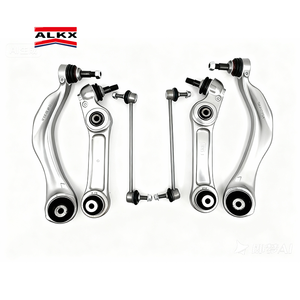
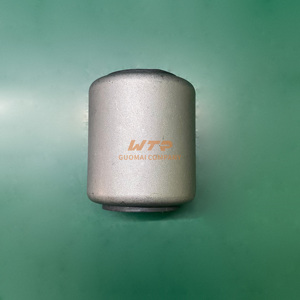
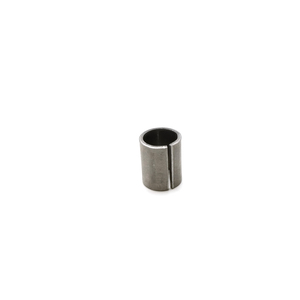
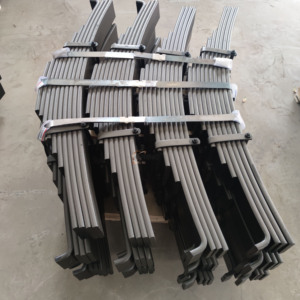
9,485+
OEM-Matched SKUs
31+
Automaker Marques Covered
100%
In-House Tooling & Vulcanizing
≤0.05mm
CNC Sleeve Precision
Procurement Intelligence Whitepaper
Engineering Principles & Manufacturing Benchmarks of Automotive Chassis Rubber
Automotive chassis elastomeric components serve as the critical dynamic interface between unsprung suspension masses and vehicle chassis architectures. Sourcing directly from high-precision manufacturers requires comprehensive technical oversight.
1. Elastomeric Rheology & Polymer Selection in Harsh Operating Environments
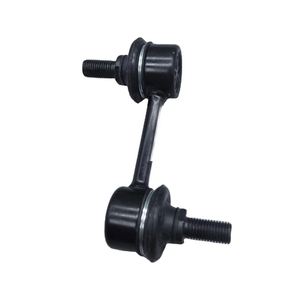
In modern chassis design, structural rubber parts such as control arm bushings, stabilizer bar bushes, strut mounts, and center support bearings are continuously subjected to complex, multi-axial strain. They endure static loads from structural vehicle weight alongside dynamic frequencies caused by uneven road topographies, braking torque, and aggressive cornering.
Standard natural rubber (NR) compounds exhibit exceptional dynamic mechanical properties, tear resistance, and mechanical resilience, but degrade rapidly under thermal oxidation and hydrocarbon exposure. Tier-1 manufacturers implement specialized chemical compounding matrices: combining NR with Ethylene Propylene Diene Monomer (EPDM), Chloroprene Rubber (CR), or Nitrile Butadiene Rubber (NBR) depending on placement:
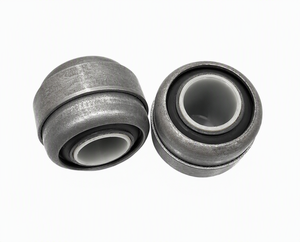
- Suspension Arm Bushings & Leaf Springs: High-purity Natural Rubber (NR) blends with customized carbon black reinforcement (e.g., N330 or N550 series) to deliver balanced tensile strength (≥18 MPa) and high fatigue life under high cyclic strain (>1,000,000 cycles).
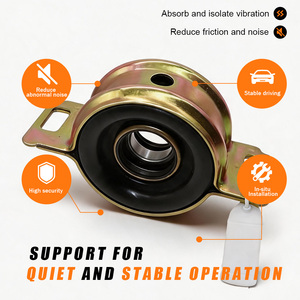
- Driveshaft Center Support Bearings: Moderate Shore A hardness (55–65°) elastomeric dampening cushions featuring optimized low compression set (≤20% at 70°C for 22h) to isolate drive-train harmonic vibrations without driveline misalignment.
- CV Joint Boots & Dust Shields: CR or thermoplastic elastomer (TPE) matrices resistant to prolonged mineral grease contact, ozone cracking, and sub-zero embrittlement (-40°C to +120°C).
2. Rubber-to-Metal Vulcanization: Phosphating, Priming, and Co-Molding Integrity
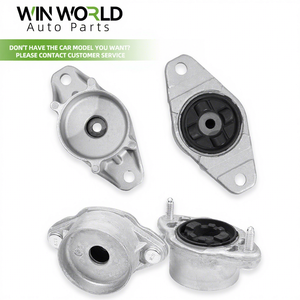
The primary point of mechanical failure in suspension bushings and upper shock mounts is rarely rubber tear; it is adhesive interface delamination between the inner metal sleeve and the vulcanized elastomer. Top-tier manufacturers eliminate delamination through rigorous multi-stage chemical pretreatment:
- Metal Sleeve Surface Preparation: Seamless cold-drawn steel or structural aluminum sleeves undergo zinc/manganese phosphating or grit blasting (Ra 2.5–3.2 μm) to remove mill scale, grease, and oxides.
- Precision Chemlok/Megum Primer & Cover-Coat Application: Automated robotic spraying applies microscopic, strictly controlled bonding films (primers at 5–10 μm, top adhesives at 10–15 μm), preventing micro-void formation and incomplete cross-linking.
- Compression & Injection Transfer Molding: In-mold vulcanization under closed-loop PLC hydraulic presses (200–500 metric tons) ensures stable cavity temperatures (±2°C) and curing cycles, triggering covalent cross-linking that yields adhesive bond strength exceeding the cohesive tear strength of the rubber compound itself.
| Test Parameter | Standard Testing Protocol | OEM Baseline Specification | Enterprise Factory Benchmark |
|---|---|---|---|
| Shore A Hardness | ASTM D2240 / ISO 48-4 | ±5 Points | ±3 Points Tight Tolerance |
| Tensile Strength | ASTM D412 / ISO 37 | ≥ 14.0 MPa | ≥ 18.5 MPa (High Purity NR) |
| Elongation at Break | ASTM D412 | ≥ 400% | ≥ 520% Non-Linear Elasticity |
| Adhesion Failure (Rubber-Metal) | ASTM D429 Method B (90°) | ≥ 9.0 N/mm (100% R) | ≥ 12.5 N/mm (Cohesive Rubber Tear) |
| Compression Set (22h @ 70°C) | ASTM D395 Method B | ≤ 25% | ≤ 18% Stable Memory |
| Ozone Resistance (50 pphm @ 40°C) | ASTM D1149 | 72 Hours No Cracking | 168 Hours Zero Surface Degradation |
Factory Advantage
Why Tier-1 Importers & Wholesalers Source With Our Thailand Production Lines
Integrated in-house formulation, tooling fabrication, rubber vulcanization, and robotic metal handling eliminate supply chain fragmentation and protect margin consistency.
Complete 9,485+ SKU Tooling Library
Our facility houses an extensive archive of hardened steel molds covering 31 global carmakers. From Asian platforms (Toyota, Nissan, Honda, Isuzu, Mitsubishi) to American heavy applications (Ford, GM, Chrysler) and European commercial haulers (Volvo, MAN), distributors gain unified single-source access without paying custom tooling premiums.
100% In-House Compound Control
We do not outsource Banbury rubber mixing. By formulating virgin RSS1/STR20 natural rubbers and synthetic polymers on dedicated mixing lines, polymer plastification, sulfur-accelerator ratios, and carbon black dispersions are continuously inspected using moving die rheometers (MDR).
Origin Advantage: Strategic Thailand Base
Strategically situated in Thailand—the epicenter of natural rubber harvesting and automotive manufacturing in Southeast Asia—our facilities offer significant supply chain resilience, tariff mitigations for Western buyers, and direct logistics connections via deep-sea ports.
Procurement Roadmap 2026-2030
Future Sourcing & Engineering Trajectories in Chassis Rubber
Shifting vehicle architectures require procurement directors and parts distributors to realign technical quality parameters around higher curb weight, high torque transients, and NVH acoustic suppression.
1. Electric Vehicle (EV) Weight Dynamics
Electric battery packs add 25%–35% more curb weight, placing extraordinary dynamic stress on suspension bushings. Sourcing trends favor heavy-duty bushings with optimized volumetric damping to prevent premature shearing during abrupt high-torque acceleration events.
2. Hydraulic & Dual-Cavity Mount Integration
Automakers are replacing solid rubber bushings with hydraulic-filled bushings (hydro-mounts) to manage low-frequency bounce and high-frequency road hash simultaneously. Factories with fluid-filled chamber sealing capabilities command prime market demand.
3. Acoustic Masking & NVH Fine-Tuning
The elimination of internal combustion engine rumble makes chassis transmission noise prominent inside modern passenger cabins. Modern aftermarket buyers prioritize low Dynamic-to-Static Stiffness ratios (Kdyn/Kstat ≤ 1.3) to isolate fine chassis vibrations.
4. Circular Polymers & Supply Traceability
Global environmental mandates are pushing procurement requirements toward devulcanized reclaimed rubber blending without degradation of tensile strength, along with verified REACH and RoHS non-carcinogenic plasticizer declarations.
Buyer Intelligence
Frequently Asked Technical & Sourcing Questions (FAQ)
Common inquiries from wholesale distributors, chassis rebuilding specialists, and overseas parts importers.
What causes premature failure in replacement chassis rubber bushings?
The primary failure modes are adhesive delamination at the metal interface and premature ozone/oil degradation. Sub-standard producers use low-grade rubber scrap with high calcium carbonate fillers, causing rubber micro-cracking under shear stress. Furthermore, incorrect tightening of suspension control arms while the vehicle is suspended on a lift (rather than at natural ride height) locks pre-twist torque into the bushing, tearing the inner sleeve within 5,000 miles.
How do you guarantee rubber-to-metal bonding integrity during mass production?
Bonding integrity relies on our three-barrier quality protocol: (1) Controlled sandblasting/phosphating to maximize substrate surface area, (2) Robotic application of organic bonding adhesives to ensure dry film thickness within ±2 μm, and (3) Destructive 90° peel testing (ASTM D429 Method B) performed on statistical batch samples, where 100% of tested parts must exhibit cohesive rubber failure rather than clean interface separation.
Can your production line cross-reference obsolete OE part numbers for legacy platforms?
Yes. With 9,485 active SKUs, our database holds direct cross-reference matrices spanning original factory equipment codes, aftermarket industry part numbers, and vehicle fitment cross-links across 31 brands. Our engineering team can reverse-engineer legacy geometries from original samples, CMM coordinate coordinate data, or mechanical blueprints.
What are standard lead times and container loading minimums for direct factory orders?
For high-rotation items in our regular catalog, we maintain steady safety stocks of molded components for fast delivery. For custom production runs or full 20ft/40ft container procurement, standard manufacturing cycles range from 30 to 45 business days. Flexible mixed-item pallet shipments allow distributors to assemble diverse chassis programs with minimal dead inventory capital.
Need Custom Tooling or Immediate OEM Cross-Reference?
Connect with our Thailand factory engineers directly. Provide your target OE number, technical drawing, or sample photos for instant dynamic capacity evaluation and competitive export quotation.