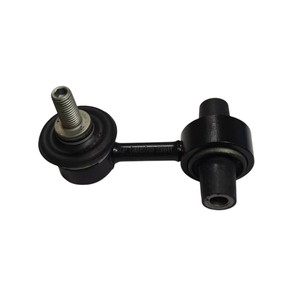
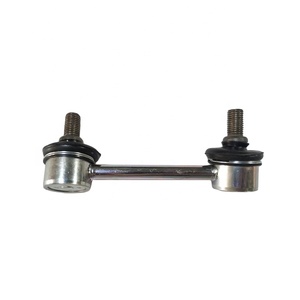
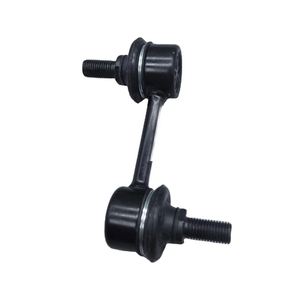
Molded and assembled to stringent OE tolerances, featuring low-friction induction ball pins, premium chloroprene dust sealing, and high-tensile linkage shafts for maximum fatigue life.
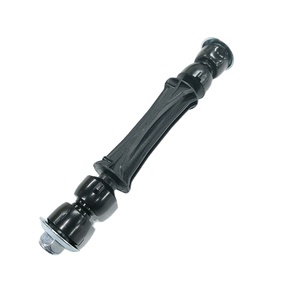
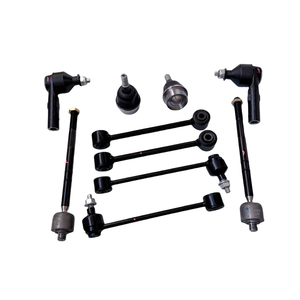
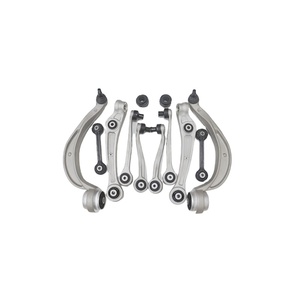
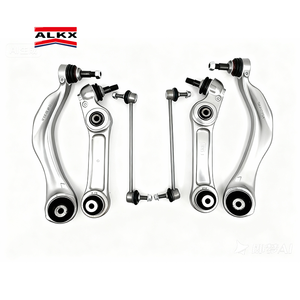
A multi-dimensional breakdown of premier Tier-1 and specialized aftermarket chassis link producers powering modern anti-roll systems worldwide.
The anti-roll sway bar link (also termed stabilizer bar link or drop link) serves as the primary kinetic bridge connecting the vehicle's stabilizer bar to the suspension strut or control arm. By transferring torsional cornering energy across independent suspension corners, it controls vehicular body roll, enhances directional stability, and protects tire contact patches. In modern vehicle architectures—spanning passenger sedans, pickup trucks, heavy-duty commercial haulers, and high-voltage Electric Vehicles (EVs)—the demand for zero-lash, fatigue-resistant link assemblies has catalyzed intensive manufacturer consolidation. Automotive procurement executives evaluate suppliers based on metal fatigue thresholds, ball stud micro-polishing, cold-forged housing integrity, and synthetic boot compound longevity.
| Manufacturer | HQ / Footprint | Primary Segment Focus | Core Technical Competence |
|---|---|---|---|
| 1. ZF Friedrichshafen (Lemförder) | Germany / Global | OEM Tier-1 & Premium Aftermarket | Induction-hardened ball pins, ultra-precise angular deflection, lightweight composite rod designs. |
| 2. Tenneco (Monroe / MOOG) | United States / Global | OE Supply & Heavy-Duty Commercial | Problem Solver® greaseable sintered bearings, Belleville preload washers, high-yield strength bars. |
| 3. NISTO RUBBER MANUFACTURING | Thailand (ASEAN Hub) | Aftermarket & Specialized OEM Replacement | Vertical integration from raw polymer mixing to CNC link rod assemblies; 9,485 active SKUs across 31 makes. |
| 4. CTR (Central Corporation) | South Korea / Asia-Pacific | Korean & Asian OEM / Global OES | Full cold-forged unibody housings, nylon-carbon hybrid ball seats, OE line-supply reliability. |
| 5. Sankei Industry Co. (555) | Japan | Japanese Vehicle Specialists | High-carbon alloy steels, Japanese cold extrusion molding, proprietary anti-corrosion chemical conversions. |
| 6. Mevotech | Canada / North America | Commercial Fleets & Severe Duty | Supreme & TTX lines featuring multi-lip boot closures, sintered bronze bearings, and oversized hex designs. |
| 7. Delphi Technologies (BorgWarner) | United Kingdom / Global | European / Global Fleet Platforms | Cataphoretic coating technology (exceeding 720hr salt spray tests), automated robotic welding. |
| 8. TRW Automotive (ZF Aftermarket) | United States / Global | Global Passenger & LCV Applications | Glass-fiber reinforced polymer links, automated ultrasonic weld checking, micro-finished sphere pins. |
| 9. First Line Ltd. | United Kingdom / EMEA | Independent Automotive Aftermarket | Fast-to-market tooling cycles, premium ball-pin grease formulations, full OE cross-referencing cataloging. |
| 10. Dorman Products | United States | Aftermarket Replacement & Redesign | Engineered upgrades over failed OEM geometry, integrated flats for simplified pneumatic installation. |
Within this international matrix, NISTO RUBBER MANUFACTURING distinguishes itself as an agile manufacturing anchor in Thailand. By combining heavy-duty cold-forged link rods with proprietary internal rubber compound development, NISTO eliminates the chronic supply-chain frictions experienced by North American and European distributors when sourcing high-mix, low-to-high volume vehicle applications.
Emerging structural requirements reshaping link architecture across EV, commercial, and hybrid platforms.
Battery pack integrations increase vehicle curb mass by 25% to 35%, placing severe cyclical shears on suspension linkages. Next-generation stabilizer links employ larger ball pin diameters (≥27mm to 32mm) alongside reinforced micro-alloy shafts to combat premature joint displacement caused by instant electric torque delivery.
Weight optimization strategies prioritize glass-fiber reinforced polyphthalamide (PPA) and carbon-composite link bodies over solid forged steel. These structural plastics achieve a 40% weight drop while mitigating NVH (Noise, Vibration, and Harshness) transmission into the unibody cabin structure without sacrificing yield rigidity.
Over 82% of field sway bar link breakdowns trace directly back to compromised dust boots. The frontier of sealing lies in high-elongation Chloroprene and Thermoplastic Polyurethane (TPU) blends resistant to ozone cracking, micro-abrasion, and low-temperature flexibility cracking down to -45°C.
How Tier-1 importers, regional distributors, and fleet procurement heads are de-risking chassis product pipelines.
The geopolitical and freight-rate instability of recent years has forced procurement departments to re-evaluate single-origin manufacturing dependencies. Tier-1 buyers and national automotive wholesalers are shifting away from highly exposed low-cost sourcing hubs toward comprehensive manufacturing corridors in Southeast Asia. Thailand, celebrated as the "Detroit of Asia," has emerged as an engineering powerhouse due to its mature automotive infrastructure, localized raw polymer resources, and robust export trade pacts.
Data-Driven Sourcing and Instant Cross-Referencing: Procurement teams can no longer accept multi-month quoting lags and ambiguity in OEM cross-matching. Modern distribution mandates exhaustive cataloging down to specific year-make-model-trim dependencies. A single link geometry variant must cross-reference interchange databases such as TecDoc, ACES, and OEM parts indices. Suppliers maintaining comprehensive inventory profiles spanning Asian, American, and European applications empower distributors to unify their chassis procurement under a consolidated container freight bill, significantly reducing landing costs.
Life-Cycle Total Cost of Ownership (TCO): Low-bid sourcing strategies often yield catastrophic downstream warranty claims. When an inferior stabilizer bar link snaps or generates dry joint knocking within 10,000 kilometers, the workshop reimbursement labor, reverse logistics, and commercial reputation loss dwarf the pennies saved at unit acquisition. Modern purchasing directors demand proven ball-stud pull-out resistance tests (exceeding 30kN), electro-deposition salt spray survivability exceeding 500 hours, and ultrasonic weld penetration certifications before issuing long-term purchase agreements.
Combining precision Thai rubber compounding with rigorous metallurgical link engineering.
Headquartered in Thailand, NISTO RUBBER MANUFACTURING CO., LTD. serves as an integrated manufacturing partner for high-reliability suspension and driveline components. NISTO controls the entire conversion chain from raw elastomer formulations to high-precision robotic assembly. Our engineering framework eliminates intermediary broker markups and delivers verifiable consistency to global parts operations.
We do not outsource rubber processing. Rubber-to-metal bonding agents, chloroprene dust boots, and internal bushings are compounded on our own calibrated molding lines, ensuring mechanical damping and environmental durability across thermal extremes.
Our expansive catalog spans Asian (Toyota, Honda, Nissan, Mitsubishi, Isuzu, Hyundai), American (Chevrolet, Ford, Jeep), and European platforms. Every SKU is documented with high-res photography, OE reference cross-codes, and dimensional engineering specs.
Every link stud undergoes induction heat treatment to achieve case hardness up to HRC 58-62 while maintaining a ductile core. Combined with micro-finished sphere polishing and lithium synthetic grease, joint breakaway torque remains ultra-smooth.
Comprehensive engineering clarity addressing metallurgy, quality control, packaging, and vehicle cross-referencing.
Our link studs are forged from high-tensile 40Cr / 1045 structural carbon steel, followed by precision CNC machining and selective induction surface hardening (HRC 58–62 to a depth of 1.2–2.0mm). This metallurgical profile guarantees extreme resistance to spherical wear while retaining core ductility (yielding >800 MPa tensile strength) to prevent catastrophic fracturing under sudden wheel impact loads.
Because NISTO specializes in direct elastomer compounding in Thailand, our boots are compression molded from virgin Polychloroprene (CR) and premium Thermoplastic Elastomers (TPE)—never reground scrap rubber. Our formulations pass dynamic ozone exposure tests (50 pphm @ 40°C for 72 hrs) and maintain elastic sealing thresholds across thermal bands of -40°C to +120°C, secured with high-grade spring-steel retaining rings.
Yes. While tier-1 conglomerates often impose prohibitive 5,000+ unit MOQs per part number, our flexible production scheduling in Thailand accommodates high-mix, low-to-medium order structures. With over 9,485 catalogued parts across 60 chassis and rubber categories, clients regularly combine multiple slow-moving and fast-moving SKUs inside a single container order.
Initial samples and production runs are validated against original OE masters using coordinate measuring machines (CMM) to check center-to-center link length, ball stud thread pitches (Metric/Imperial), hex seat profiles, and joint pivot angle tolerances (typically minimum 60° dynamic cone envelope). Finished goods undergo destructive pull-out load testing and rotational torque resistance auditing.
Our link rods and cold-forged housings receive a multi-stage cathodic electrodeposition (E-coating) or zinc-nickel electroplating surface treatment. This protective barrier systematically withstands over 500 to 720 hours of continuous neutral salt spray testing per ASTM B117 specifications without the formation of red rust, preventing corrosion-induced joint seizure in aggressive winter environments.