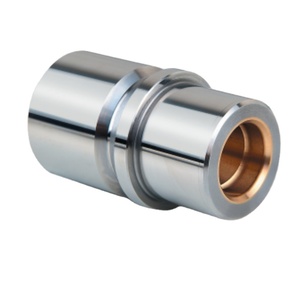

Manufactured on high-pressure vulcanization lines with dynamic fatigue testing to guarantee direct OE fitment, durability, and vibration damping across extreme driving environments.
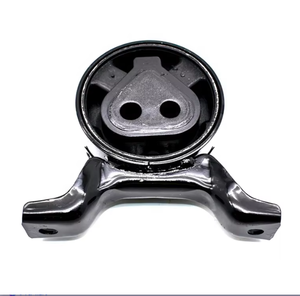
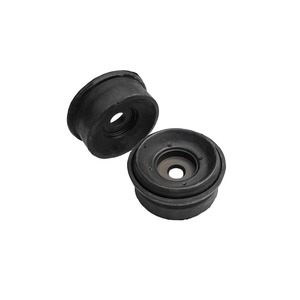
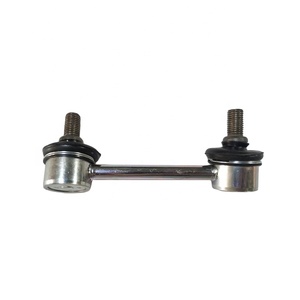
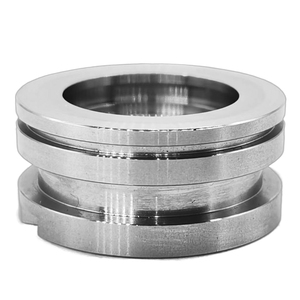
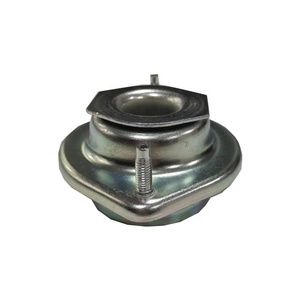
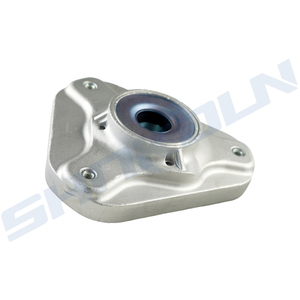
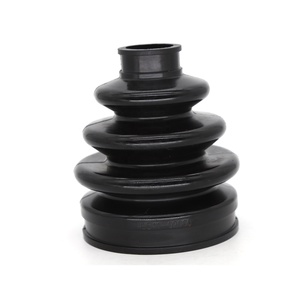
From compound compounding and chemlok adhesive application to multi-cavity injection molding, we maintain end-to-end control across our manufacturing lines.
We synthesize bespoke elastomer matrices—including Natural Rubber (NR) for extreme resilience, EPDM for thermal ozone endurance, and Chloroprene (CR) for grease-impermeable boot applications. Every compound is tuned to meet precise Shore A durometer, elongation, and tensile strength standards.
Delamination failure is eliminated via automated sandblasting, phosphating, and Chemlok adhesive dipping. Our rubber-to-metal bonding processes undergo 90-degree peel tests and pull-out stress testing exceeding 15kN, ensuring superior mechanical performance under sudden dynamic chassis shock loads.
With proprietary CNC machining centers, our engineering workshop designs, refines, and maintains multi-cavity injection and transfer molds in-house. This internal capability reduces new prototype lead times to under 21 days while ensuring exact dimensional tolerances within ±0.05mm across volume runs.
Matching the correct polymer composition with chassis operating conditions is critical to avoid premature fatigue, vibration intrusion, and hardening.
| Elastomer Compound | Hardness (Shore A) | Working Temp (°C) | Tensile Strength | Fatigue Resistance | Primary Application |
|---|---|---|---|---|---|
| Natural Rubber (NR) Blend | 55 – 75 ±5 | -40°C to +90°C | ≥ 18.5 MPa | Exceptional (Dynamic NVH) | Engine Mounts, Control Arm Bushings |
| EPDM Formulation | 60 – 80 ±5 | -45°C to +140°C | ≥ 14.0 MPa | High (Weather & Heat) | Exhaust Mounts, Radiator Dampers |
| Chloroprene / Neoprene (CR) | 50 – 70 ±5 | -35°C to +115°C | ≥ 16.0 MPa | Superior (Flex Fatigue) | CV Joint Boots, Steering Rack Gaiters |
| Hydraulic Fluid Dampers (NR+Glycol) | 50 – 65 ±5 | -30°C to +100°C | Dual-Rate Damping | Optimized Resonance Cutoff | Active / Passive Powertrain Mountings |
| Thermoplastic Polyurethane (TPU) | 75 – 95 ±5 | -40°C to +110°C | ≥ 28.0 MPa | Extreme Wear & Torsion | Stabilizer Bushings, Performance Links |
Key technological shifts reshaping automotive rubber sourcing, supply chain risk management, and component architecture.
Without internal combustion engine rumble masking high-frequency chassis disturbances, EV drivetrains demand ultra-precise damping. Sourcing trends favor dual-chamber hydraulic bushings and low-damping silicone hybrid mounts designed to filter motor whine between 800 Hz and 2,500 Hz.
Chassis lightweighting initiatives are driving demand for composite and aluminum inserts in place of traditional cast iron. Leading Tier-1 exporters are adopting lightweight, stamped aeronautical-grade alloys to deliver 25–40% mass reduction per bushing assembly without losing torsional yield capacity.
International automotive distributors are increasingly adopting "China+1" and diversified OEM replenishment strategies. To mitigate supply shocks, enterprise buyers select integrated factories that operate full tooling reserves, comprehensive testing labs, and rapid-dispatch regional inventory hubs.
Every batch undergo rigorous rheometer, tensile, and dynamic axial cycling tests to prevent batch drift and field failures.
Each batch is tested on moving-die rheometers for cure time, scorch safety, and Mooney viscosity to confirm uniform vulcanization characteristics.
Metal sleeves and stamped brackets undergo shot-blasting, chemical washing, and multi-stage adhesive primer application under humidity-controlled conditions.
Automated vacuum injection molding presses apply heat and pressure to eradicate micro-voids, flash defects, and incomplete cavity fills.
Finished mounts and bushings run through multi-axis endurance benches up to 1,000,000 cycles, verifying real-world stiffness, yield, and recovery.
Essential guidance on customization, minimum order quantities, compound compliance, and logistical arrangements for global distributors.
Looking for reliable OEM cross-references, customized molding formulations, or consolidated container shipments? Share your required OE numbers or technical drawings with our engineering team today.
Send an Inquiry