
High-tensile natural rubber, polyurethane formulations, and metal-to-elastomer vulcanization calibrated to resist dynamic shear, thermal extremes, and harmonic hysteresis fatigue.
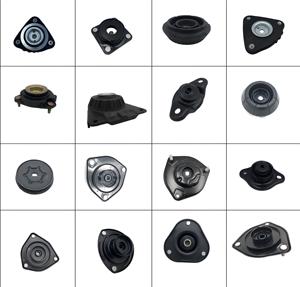
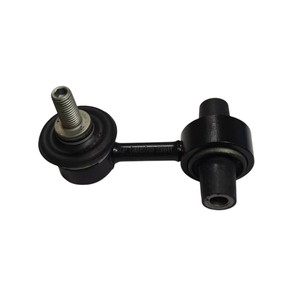
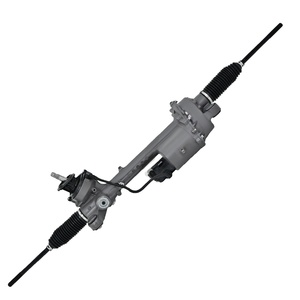
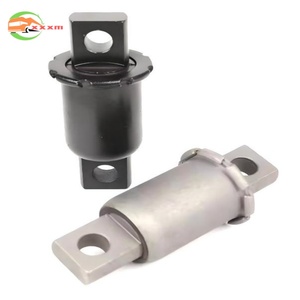
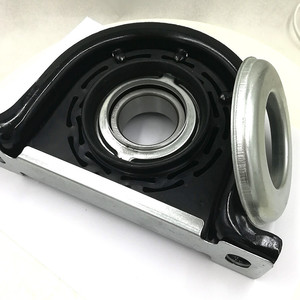
Mechanical vibration dampers serve as the front-line barrier against torsional oscillations, acoustic resonance, and structural fatigue in automotive chassis, internal combustion engines, battery electric vehicle (BEV) e-axles, and heavy industrial drivelines. When engineering vibration isolation assemblies—ranging from torsional vibration dampers (TVD) to hydraulic engine mounts, control arm bushings, and propeller shaft center bearings—the primary engineering objective is achieving precise dynamic stiffness (Kd) and phase-angle loss factor (tan δ) control across broad frequency spectra (10 Hz to 2,500 Hz).
In modern high-speed powertrains, mechanical harmonics originate from reciprocating piston kinetics, cylinder combustion pulses, planetary gear mesh backlash, and high-frequency electric motor electromagnetic ripple. Unmitigated, these vibratory energies manifest as severe Passenger Noise, Vibration, and Harshness (NVH), early metal fatigue in subframe brackets, and drivetrain bearing race brinelling. As a dedicated manufacturer with end-to-end tooling, compounding, and testing facilities in China and regional Southeast Asian production hubs, our facilities eliminate common third-party assembly compromises through absolute control of elastomer chemistry and structural metal substrate bonding.
A critical metric separating Tier-1 OEM-grade vibration isolators from generic aftermarket components is the ratio of dynamic stiffness to static stiffness (Kd / Ks). While standard vulcanized rubber satisfies static load deflection (Ks) within typical Shore A durometer ranges (45 to 75 Shore A), poorly formulated compounds exhibit dramatic hardening under dynamic excitation (Kd), transferring harsh road shock and structural micro-vibrations into the passenger cabin. Our proprietary natural rubber (NR) and hydrogenated nitrile (HNBR) masterbatches incorporate advanced carbon black distribution patterns and silane coupling agents that stabilize Kd/Ks ratios between 1.15 and 1.35, preserving smooth isolation without sacrificing cornering or load-bearing firmness.
| Damping Parameter | OEM Tier-1 Target Standard | Generic Commercial Grade | Our Facility Engineering Benchmark |
|---|---|---|---|
| Dynamic / Static Ratio (Kd/Ks) | 1.15 – 1.35 @ 100 Hz | 1.60 – 2.10 (Severe Hardening) | 1.18 – 1.28 Controllable Range |
| Rubber-to-Metal Bond Strength | ≥ 10.5 MPa (100% Rubber Tear) | < 5.5 MPa (Adhesive Delamination) | ≥ 12.8 MPa (ASTM D429 Method B) |
| Ozone & Thermal Resistance | 70h @ 100°C, 50 pphm O³ | Surface cracking within 24h | 168h @ 125°C, 100 pphm O³ Zero Cracks |
| Fatigue Endurance (Cycles) | > 500,000 cycles ±5mm @ 3Hz | < 150,000 cycles (Void Tearing) | > 1,200,000 cycles (End-of-life Integrity) |
| Low-Temperature Glass Transition (Tg) | -40°C brittle-free flex | -20°C hardening failure | -45°C uninterrupted elasticity |
Delamination at the elastomer-metal interface is the most catastrophic failure mode for strut mounts, leaf spring bushings, and center support bearings. Our production plant implements a seven-stage ultrasonic degreasing and micro-crystalline zinc phosphating conversion coating line for all forged steel and cast aluminum armatures. Following conversion treatment, computerized robots spray dual-layer polymeric bonding agents (Chemlok / Megum systems) with micrometer dry-film thickness consistency. During thermal compression transfer molding at 165°C to 185°C, cross-linking sulfur bridge chains chemically bond with the metallic oxide lattice, ensuring tensile shear destruction occurs strictly within the elastomer body rather than at the joint boundary.
How electrification, lightweight chassis metallurgy, and geopolitical supply chain nearshoring are fundamentally transforming B2B purchasing criteria.
Electric vehicles introduce 25%–35% heavier curb weights due to battery packs, coupled with instantaneous low-speed torque delivery. Procurement contracts are shifting rapidly from static bushings toward active hydraulic suspension mounts and composite elastomeric dampers capable of neutralizing low-amplitude high-frequency (500–1,500 Hz) electromagnetic whine while supporting heavy static loads.
B2B automotive clients now demand predictive non-linear Finite Element Analysis (FEA) data files prior to physical tooling. Global purchasers favor factories that simulate Mooney-Rivlin and Ogden strain energy function parameters in-house, compressing sampling intervals from 90 days down to 14 days and eliminating costly re-tooling iterations for customized damper geometry.
Supply chain security requires dual-hub manufacturing. International Tier-1 buyers avoid single-origin reliance by sourcing from integrated manufacturers maintaining automated toolmaking and raw-material processing in China paired with large-scale molding, assembly, and global container logistics hubs in Southeast Asia, ensuring duty optimization and zero supply disruptions.
Stringent European and North American environmental directives (such as EU REACH, RoHS, and California Prop 65) now impose rigorous ceilings on Polycyclic Aromatic Hydrocarbons (PAHs), heavy metal vulcanization activators, and volatile organic degassing. Purchasing managers require lot-traceable spectrophotometer test reports proving compliance directly at container loading.
Traditional heavy cast iron brackets are being replaced across global suspension programs by lightweight high-strength polymers (PA66-GF30 / GF50) and forged high-purity aluminum alloys (6082-T6). Tier-1 purchasing focuses on damper manufacturers capable of precision insert molding without melting, blistering, or warping composite insert tolerances.
Aftermarket distributors are abandoning fragmented sourcing where boots, strut mounts, and center bearings are split across ten small suppliers. Leading procurement directors streamline procurement overhead by choosing centralized manufacturers offering over 9,000 interchangeable catalog SKUs covering Asian, European, and American marques on one unified bill of lading.
True quality leadership in automotive vibration damping requires total sovereignty over the process chain. NISTO Rubber and our partner manufacturing facilities eliminate subcontracted molding variance by operating an interconnected manufacturing infrastructure spanning CAD/CAM mold engineering, computerized Banbury internal mixing, robotic adhesive application, multi-cavity vacuum injection vulcanization, and tri-axial dynamic fatigue evaluation.
Custom compounding using high-grade Thai natural rubber, EPDM, chloroprene, and silicone polymers blended with anti-ozonants and high-dispersion carbon blacks on PLC-controlled Banbury lines to ensure consistent batch viscosity (Mooney) and cure kinetics.
Over 9,485 high-precision mold sets manufactured using 5-axis CNC machining centers, slow-wire electrical discharge machining (EDM), and mirror-surface polishing, guaranteeing flash-free parting lines and microscopic dimensional conformity.
MTS servo-hydraulic dynamic test benches calculate dynamic stiffness (Kd), transmissibility, and loss factor across -40°C to +120°C thermal chambers, complemented by 1,000-hour ASTM B117 neutral salt spray corrosion chambers.
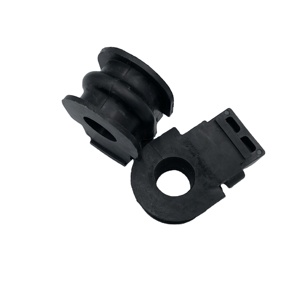
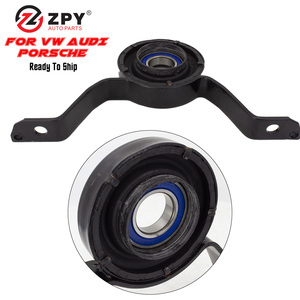
Our operational inventory provides OEM dimensional drop-in interchangeability across 31 vehicle marques. Whether supplying tier-1 replacement balance bar bushings for light vehicles, leaf spring dampening blocks for Class 8 line-haul freight tractors, or harmonic drive-shaft center bearings for luxury all-wheel-drive platforms (such as Porsche Cayenne and VW Touareg), every production lot is assigned batch-level tracking numbers cross-referenced to original OEM part identifiers including Toyota, Ford, Maxus, Honda, Nissan, GM, Chrysler, and Hyundai.
Direct answers addressing technical parameters, testing verifications, compound formulations, and international supply terms.
We perform 100% mechanical shot blasting to Sa 2.5 cleanliness, followed by computerized micro-phosphate conversion and automated dual-coat adhesive application. Adhesion is verified according to ASTM D429 Method B (90-degree peel test), with our mandatory quality gate requiring 100% cohesive elastomer tearing rather than adhesive failure at the metal interface.
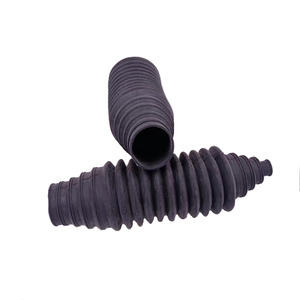
Engine mounts utilize premium natural rubber (NR) compounded with specialized anti-flex cracking agents to maintain maximum dynamic loss factor and low Kd/Ks ratios. Suspension bushings and steering dust boots utilize high-purity EPDM or chloroprene (CR) blends optimized for ozone exposure, mud immersion, road salt resistance, and mineral oil splash tolerance.
Yes. Our engineering division operates CMM optical coordinate measuring systems, 3D laser scanners, and CAD/CAM software (UG NX, SolidWorks, CATIA). We can reverse-engineer any legacy damper, analyze the original polymer via thermogravimetric (TGA) spectrometry, formulate an equivalent elastomeric compound, and deliver certified T1 tooling prototypes within 14–21 business days.
Our manufacturing sites operate under strict IATF 16949:2016 and ISO 9001:2015 quality frameworks. Prior to container loading, clients receive comprehensive PPAP Level 3 documentation including Material Test Reports (MTR), Shore A Durometer reports, tensile/elongation logs, 720-hour salt spray certifications, and dimensional CMM inspection layouts.
Because we maintain extensive ready stock across high-velocity fast-moving parts (such as strut mounts, balance bar bushings, and center bearings), standard inventory orders ship within 7–14 days. For tailored volume production runs, tooling lead time is 20 days and full production turnaround is 30–45 days. We fully support mixed-pallet consolidation covering multiple vehicle marques in single 20ft or 40ft HQ ocean containers.
We formulate specialized Arctic-grade natural rubber compounds with low glass transition temperatures (Tg down to -45°C) to prevent low-temperature stiffening and micro-fracturing. For desert and high-heat underhood applications, our polyacrylic and HNBR formulations remain fully functional and elastic up to constant operational temperatures of +135°C (peaks up to +150°C).
Whether you require rapid delivery of cataloged OEM-interchangeable replacement parts, private-label branding for regional distribution, or custom engineering for specialized suspension applications, our technical engineering sales desk is prepared to review your engineering drawings and OEM part requirements.
Contact Us