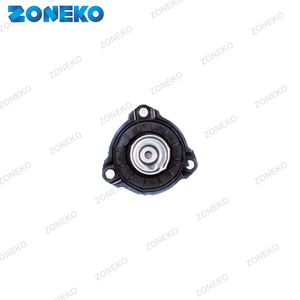

Explore our top-tier catalog selections engineered to exact OE specifications. From elastomer boot sealings to robust vibration damping bushings, each component is calibrated for critical duty life cycles.
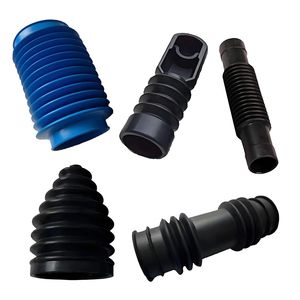
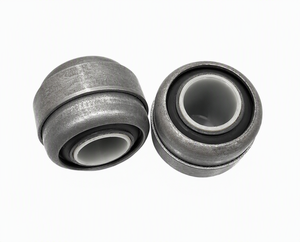
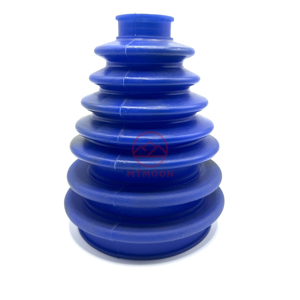
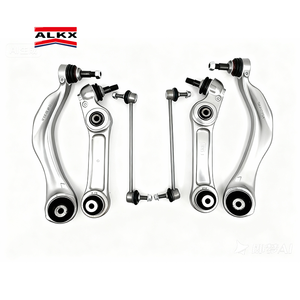
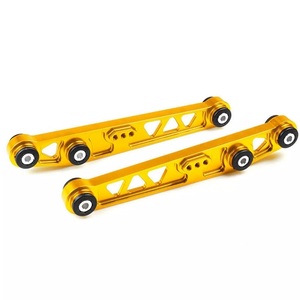
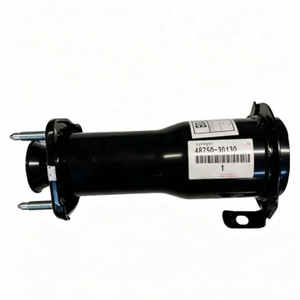
Technical breakdown of tribological sealing integrity, elastomer aging kinetics, and structural resilience in automotive driveline & steering systems.
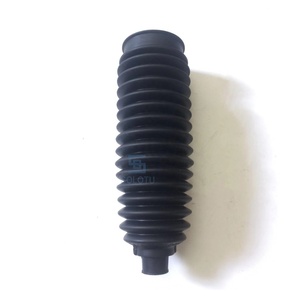
In modern automotive chassis architecture, a dust cover boot—whether deployed over a constant-velocity (CV) joint, rack-and-pinion steering assembly, ball joint, or suspension strut damper—is the critical primary barrier safeguarding tribological contact zones from catastrophic wear. While ostensibly functioning as an external sheath, its real-world service requirements necessitate an uncompromising confluence of chemical resilience, wide-temperature mechanical elongation, cyclic fatigue endurance, and micro-particle barrier capability. The premature failure of a dust boot reliably incurs severe secondary component failures: rapid loss of molybdenum disulfide lubricating grease, unimpeded ingress of hygroscopic moisture and abrasive silica, and subsequent seizure of rolling bearings or gear racks under multi-axis dynamic road shocks.
Technical Reliability Criterion: A driveline boot operates in harsh dynamic environments encountering continuous rotational speeds up to 2,500 RPM, deflection angles exceeding 45 degrees, and violent road wash exposure. Precision compounding is not an elective optimization—it is the baseline determinant of vehicle safety and brand trust.
To address rigorous global climates—ranging from sub-zero Arctic freeze conditions to arid desert road surfaces exceeding 120°C in aggregate radiative heat—suppliers must navigate precise polymer formulations. Our manufacturing center utilizes advanced thermodynamic mixing controls to formulate proprietary Chloroprene Rubber (CR), Thermoplastic Copolyester Elastomer (TPEE), Ethylene Propylene Diene Monomer (EPDM), and fluorinated silicone elastomers. Through meticulous control of filler-polymer morphology and plasticizer migration parameters, each batch attains consistent tensile strength, tear propagation resistance, and ozone oxidation defense under continuous load.
| Elastomer Matrix | Operating Temp Range | Tensile Strength (MPa) | Grease / Oil Immersion Stability | Primary Industrial Application |
|---|---|---|---|---|
| Thermoplastic Elastomer (TPEE) | -40°C to +135°C | 28.5 – 34.0 | Superior (Synthetic Grease / PAO) | High-stress outboard CV joints & heavy articulation links |
| Neoprene / Chloroprene (CR) | -35°C to +110°C | 14.0 – 18.5 | High (Mineral & EP greases) | Universal aftermarket CV boots, flexible drive axles |
| Automotive EPDM (Sulfur-Cured) | -45°C to +130°C | 12.5 – 16.0 | Moderate (Glycol & Brake Fluids) | Steering rack bellows, stabilizer sleeves, strut mounts |
| Fluorosilicone / VMQ Hybrid | -55°C to +180°C | 9.5 – 13.0 | Maximum (Broad-spectrum chemical) | Performance motorsports, high-thermal turbocharger wastegates |
Key engineering shifts shaping the next generation of chassis dust covers, driven by EV architectures, stricter emissions legislation, and total cost of ownership (TCO) benchmarks.
Electric powertrains generate instant peak torque and heightened operational rotational velocities at drive axles. Contemporary boot geometries integrate variable-thickness convolution pleats to counteract centrifugal ballooning and avoid contact wear against chassis subframes at speeds up to 16,000 electric motor RPM.
Traditional thermoset rubber is steadily transitioning toward high-modulus, recyclable thermoplastic polyester elastomers. TPEE boots deliver superior puncture resistance against road debris, a 40% reduction in tare weight, and near-zero micro-crack propagation over extended warranty intervals exceeding 150,000 kilometers.
Advanced non-linear Finite Element Analysis (FEA) dictates asymmetrical wall thicknesses across bellow convolutions. By shifting peak mechanical shear stresses away from root radii, dynamic fatigue life under combined compression-torsion cycles is lengthened by up to 2.8 times compared to legacy designs.
How category managers, tier distributors, and OEM buyers are adapting supply chain strategies for maximum reliability and reduced inventory carrying costs.
Rather than stocking thousands of vehicle-specific isolated part numbers, forward-looking procurement heads favor consolidated multi-fit boot programs equipped with universal step-diameters, OEM-grade Oetiker-style 304 stainless steel clamping bands, and application-specific lithium/MoS2 lubricant pouches.
Western trade jurisdictions (EU and North America) demand rigorous compliance documentation. Tier buyers insist on comprehensive laboratory certificates verifying zero decabromodiphenyl ether, strict RoHS compliance, and adherence to emerging global restrictions on per- and polyfluoroalkyl substances (PFAS).
Middlemen and trading brokers introduce lead-time variance and compound degradation risks. Category leaders increasingly forge strategic relationships with vertically integrated facilities in key manufacturing hubs, taking advantage of direct raw compound quality assurance and lower freight costs.
End-to-end tooling, compounding, molding, and testing under single-roof operational oversight.
With a comprehensive tooling library of 9,485+ engineered component molds across 60 specialized automotive categories, we engineer parts tailored to 31 major global vehicle platforms. Our facility maintains stringent process controls across every critical step of component manufacturing:
Every design undergoes 1,000,000 cycles on dynamic deflection testers under variable thermal ranges (-40°C to +120°C) without micro-cracking, grease weeping, or clamp-seat slippage.
Interchangeable fitments engineered for Toyota, Nissan, Honda, Mitsubishi, Isuzu, Mazda, Ford, Hyundai, GM, Chrysler, and commercial heavy platforms like Volvo Truck and Hino.
We maintain ready inventory of high-demand SKU lines, backed by dedicated production scheduling that reliably compresses custom-compound production windows to 20-30 business days.
Key procurement considerations, material specifications, minimum order sizes, and international supply terms answered by our technical specialists.
Connect with our engineering and procurement team for verified OE cross-references, comprehensive material data sheets (MDS), volume wholesale tier pricing, or bespoke tooling development.
Inquire Now