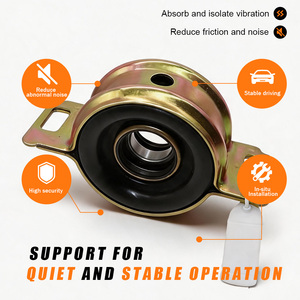
Engineered to exact OEM dimensional tolerances with specialized vulcanization compounds, offering high dynamic fatigue resistance and long service life.
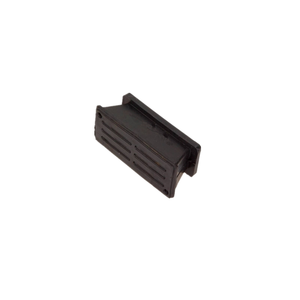
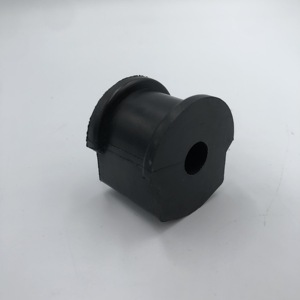
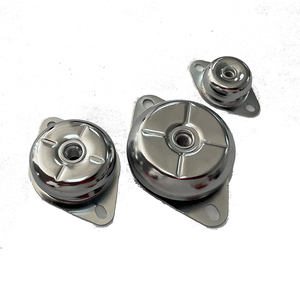
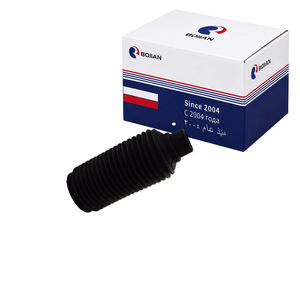
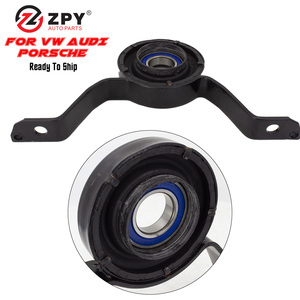
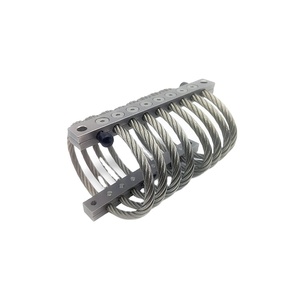
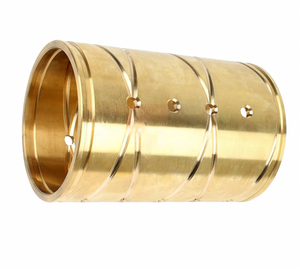
A technical examination into rubber-to-metal chemical vulcanization, elastomer compound selection, and NVH damping characteristics.
In modern chassis dynamics, heavy machinery articulation, and powertrain isolation, the metal rubber bushing serves as the definitive mechanical interface for managing multi-axis mechanical vibration, attenuating high-frequency acoustic feedback, and absorbing harsh road shocks. A high-performance elastomeric bushing is an engineered mechanical asset subject to demanding dynamic load conditions, static pre-loads, and harsh ambient exposure involving hydrocarbons, ozone, thermal stress, and de-icing road salts.
As an established global manufacturer anchored by integrated production lines in Thailand, our manufacturing methodology addresses the primary mode of premature bushing failure: adhesive debonding at the metal-elastomer interphase. By integrating chemical phosphating, multi-stage silane primer applications, and high-pressure compression/transfer vulcanization molding, we achieve high mechanical retention and cohesive bond integrity.
Formulated with high-grade natural rubber (NR) and synthetic EPDM/polychloroprene matrices. We control tensile modulus, dynamic-to-static stiffness ratio (Kd/Ks), and low compression set under prolonged thermal cycling.
Utilizing cold-drawn DOM (Drawn Over Mandrel) seamless carbon steel tubes (STKM 13C/SAE 1020) and high-yield aluminum alloys. Sleeves are micro-deburred and zinc-nickel electro-plated to withstand >720 hours of ASTM B117 salt spray exposure.
Post-vulcanization radial swaging processes compress the cured rubber between inner and outer sleeves. This eliminates tensile residual stresses, converting them to internal compressive forces, multiplying operational fatigue cycles.
Our Quality Management System meets international ISO/TS standards to deliver repeatable metallurgical and polymeric tolerances.
| Performance Metric | Test Standard | Technical Specification / Parameter | Application Impact |
|---|---|---|---|
| Rubber-to-Metal Adhesion | ASTM D429 (Method B) | > 12.0 N/mm failure threshold (100% Rubber Tear) | Prevents sleeve separation during heavy angular deflection |
| Hardness Range | ISO 48-4 / ASTM D2240 | 50 to 75 Shore A Durometer (±3 Shore A tolerance) | Maintains suspension geometry under cornering and braking forces |
| Tensile Strength & Elongation | DIN 53504 / ISO 37 | ≥ 18.5 MPa; Ultimate Elongation ≥ 450% | Prevents compound tearing under sudden shock loads |
| Dynamic Fatigue Life | MTS Dynamic Test Rig | ≥ 1,500,000 cycles (±15° torsional amplitude at 2 Hz) | Reliable lifecycle in fleet, commercial, and aftermarket use |
| Compression Set Resistance | ASTM D395 (Method B) | ≤ 22% after 70h at 70°C (100°C for specialized EPDM) | Preserves ride height and reduces alignment drift |
| Ozone & Environmental Aging | ASTM D1149 | 50 pphm ozone exposure, 20% elongation, 72h: Zero Cracking | Prevents premature dry-rot in extreme desert and coastal environments |
Anticipating structural shifts across the automotive aftermarket, OEM tier-chains, and international industrial logistics.
Procurement directors and parts distributors face changing operational variables: volatile global logistics rates, supply chain regionalization, and rising vehicle curb weights driven by vehicle electrification (EVs). Strategic sourcing for anti-vibration rubber-to-metal components requires moving beyond unverified tier-3 trading companies toward stable, integrated direct manufacturers.
Traditional solid elastomer bushings are frequently replaced by voided designs, asymmetric dual-durometer formulations, and hydraulic suspension bushings (hydro-bushes). These complex assemblies incorporate internal glycol fluid chambers that deliver frequency-dependent damping: low dynamic stiffness for high-frequency road vibrations, coupled with high hydraulic damping for low-frequency chassis oscillations. Sourcing organizations must align with manufacturers equipped with automated multi-cavity liquid-injection tooling and multi-stage leak inspection infrastructure.
Electric vehicles introduce two major engineering challenges for metal rubber bushings: battery mass (increasing vehicle weight by 20% to 35%) and the elimination of internal combustion engine masking noise. Suspension bushings must now withstand higher continuous radial loads and greater instantaneous torque while dissipating high-frequency gear whine and inverter harmonics. Suppliers must optimize natural rubber compounding to lower the Dynamic-to-Static Ratio (Kd/Ks), keeping the elastomer resilient without premature degradation.
To mitigate single-source tariff risks and avoid extended port congestions, global Tier-1 distributors are establishing multi-node sourcing models. Thailand stands out as a prime destination: it is both the world's leading producer of premium natural latex and a hub for precision automotive manufacturing. NISTO Rubber's Thai production base lets distributors avoid middlemen markups, secure verified raw material supply, and take advantage of favorable tariff rules across Western markets.
The total cost of ownership in high-volume catalog sourcing is driven by cross-referencing accuracy. A return rate of only 2% due to sleeve dimension variations or improper rubber hardness can eliminate aftermarket distributor margins. Future procurement favors factories that maintain fully mapped digital BOMs (Bills of Materials) linking internal part references directly to global OE codes, vehicle VIN applications, and precise 3D CAD dimensions.
Advancements in materials science, simulation-driven tooling, and eco-friendly chemical bonding.
The manufacturing of elastomeric suspension components has evolved from traditional press-and-bake methods into an analytical engineering discipline. As automotive platforms aim for lower emissions and extended service intervals, manufacturing methodologies must advance in parallel.
Utilizing Mooney-Rivlin and Ogden hyperelastic material models within Finite Element Analysis (FEA) software. We simulate dynamic multi-axial stress gradients prior to cutting steel tooling, eliminating premature stress risers within elastomer voids.
Transitioning from traditional solvent-borne bonding agents to eco-friendly, low-VOC aqueous silane bonding primers. This clean approach enhances cross-linking adhesion between metal sleeves and uncured compounds, even under continuous salt spray immersion.
Developing engineered glass-fiber-reinforced polyamides and high-strength extruded 6061-T6 aluminum inner cores. These lightweight sleeves reduce unsprung mass by up to 38% compared to solid steel, contributing to vehicle efficiency without reducing tensile limits.
Detailed technical answers for procurement teams, chassis engineers, and wholesale parts importers.
Adhesive debonding between the elastomeric core and metal sleeve is typically caused by four manufacturing oversights: (1) Incomplete metal degreasing or grit-blasting, leaving microscopic oil films or scale; (2) Inaccurate thermal management during primer pre-baking; (3) Exceeded vulcanization scorch time where the compound begins curing before complete mold flow; or (4) Uneven post-cure radial stress concentrations. At NISTO Rubber, our production lines prevent these issues through automated multi-stage degreasing, ultrasonic cleaning, controlled automated primer coating, and robotic mold cycling that guarantees 100% rubber cohesive failure during ASTM D429 destructive testing.
Natural Rubber (NR) provides superior dynamic tear resistance, higher mechanical resilience, and lower internal heat generation under high-frequency deflection, making it the preferred choice for control arm bushings, strut top mounts, and sway bar links. Conversely, EPDM (Ethylene Propylene Diene Monomer) provides outstanding resistance to ozone, polar hydraulic fluids, and broad temperature ranges (-40°C to +135°C), but has lower mechanical fatigue strength. We compound application-specific formulations that incorporate micro-dispersed anti-ozonants and high-grade carbon blacks into NR matrices, delivering high mechanical elasticity alongside reliable environmental resistance.
When rubber vulcanizes between inner and outer metal sleeves, natural volumetric shrinkage creates residual tensile stresses within the cured elastomer matrix. If a bushing enters service under internal tensile stress, cyclic mechanical loads quickly propagate micro-cracks into major tears. Swaging involves pressing the outer metal sleeve through a precision reduction die to compress its outer diameter by 3% to 6%. This process removes internal tensile stresses and places the elastomer under static compression, doubling or tripling its cyclic fatigue life under continuous dynamic loads.
Our quality assurance program provides full transparency before production starts. We supply Initial Sample Inspection Reports (ISIR), dimensional CMM reports, Shore A durometer verifications, and cross-reference documentation matching OEM part numbers for 31 global car makes. Furthermore, distributors can order physical prototype or production batches to verify fitment on actual control arm castings and chassis subframes before full-container volume production.
We provide flexible order minimums (MOQ) on catalog items with ready-stocked vulcanized inventory, allowing mixed-container orders across our 60 product categories. Production runs for customized OEM formulations typically follow a 30 to 45-day manufacturing cycle from tooling sign-off to port loading in Bangkok or Laem Chabang. Packaging options include our branded export boxing, heavy-duty neutral packaging, or private-label customized retail packaging featuring barcode serialization and multi-lingual fitment labels.
Connect directly with our engineering and procurement teams in Thailand. Receive rapid OE cross-referencing, factory direct pricing, full material test certifications, and personalized project quotes.