OEM & Tier-1 Technical Whitepaper

Top Trusted Rubber Bushing Manufacturers & Manufacturer

Engineering high-damping elastomeric compounds, chemical vulcanization bonding, and precision anti-vibration solutions for automotive suspension, powertrain, and heavy industrial machinery applications.

Precision Elastomer Catalog

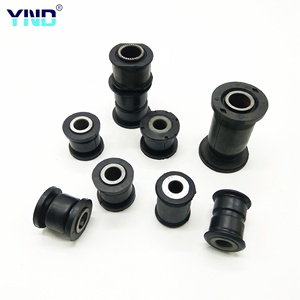
Featured Precision Rubber Bushings & Mountings

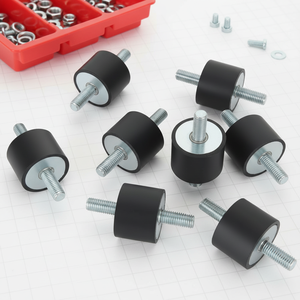
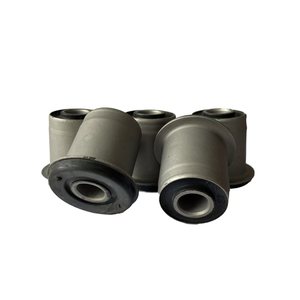
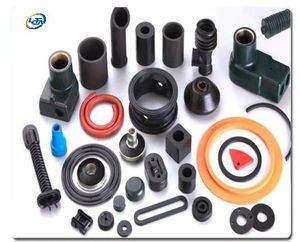
Explore our certified line of heavy-duty, high-performance elastomeric isolators. Direct drawing-based fabrication, proprietary rubber-to-metal bonding, and full OE dimensional compliance across 31+ major vehicle platforms.
9,485+
Catalogued SKUs
Fully documented OEM-cross-referenced active tooling lines for chassis & powertrain mountings.
31+
Vehicle Makes Covered
Broad fitment for Japanese, American, European, and Asian commercial and passenger applications.
100%
In-House Manufacturing
Controlled internal compounding, metal phosphating, vulcanizing, and acoustic damping validation.
60+
Component Categories
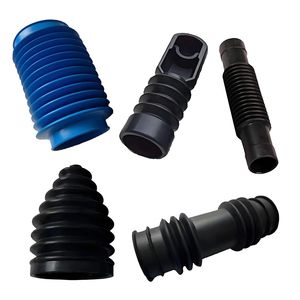
From engine mounts and arm bushings to stabilizer links, CV joint boots, and center support bearings.
E-E-A-T Manufacturing Authority

In-House Manufacturing & Elastomer Science Competency

Why tier-1 global distributors, automotive wholesalers, and industrial OEMs entrust their anti-vibration supply chains to NISTO Rubber Manufacturing.

Custom Compound Formulation

Unlike sub-tier assemblers purchasing external masterbatches, we formulate and blend virgin elastomers on internal Banbury lines in Thailand. Every batch is calibrated for specific durometer, tensile resilience, elongation, and damping coefficients ($\tan \delta$) under dynamic shear.

  • Moving Die Rheometer (MDR) vulcanization kinetics
  • Tailored polymer blends: NR, EPDM, NBR, CR, Silicone
  • Strict ASTM D2000 classification compliance

Rubber-to-Metal Chemical Bonding

The failure of a suspension silent block or engine mount almost invariably occurs at the elastomer-substrate interface. Our automated surface pre-treatment incorporates ultrasonic degreasing, micro-grit blasting, and Chemlok adhesive coatings that trigger cohesive molecular bonding during vulcanization.

  • Automated 7-stage phosphating lines
  • ASTM D429 Method B 90-degree peel resistance
  • 100% rubber cohesive rupture threshold guarantees

Tooling & Mold Cavity Precision

With an internal CNC toolmaking department holding 9,485+ tooling patterns, we control mold shrinkage compensation down to $\pm 0.02\text{ mm}$. This eliminates flash lines, internal void formation, and post-cure deformation across symmetrical, bonded, and flanged bush architectures.

  • Transfer & vacuum-assisted injection molding
  • Multi-cavity high repeatability hot-runner tooling
  • Zero internal microporosity verification via density testing
Material Engineering Matrix

Selecting the Optimal Bushing Elastomer: Technical Benchmark

Comprehensive mechanical, thermal, and chemical performance analysis across dominant industrial polymers used in rubber bushing manufacturing.

Polymer Type ASTM D1418 Hardness Range Operating Temp Dynamic Damping Oil & Fuel Resistance Primary Industrial Use-Cases
Natural Rubber NR 35 – 85 Shore A -50°C to +85°C Superior (Low Creep) Poor (Polar swelling) Automotive control arm bushings, strut top mounts, heavy truck torque rods, engine mounts where maximum fatigue life is mandatory.
Ethylene Propylene Diene EPDM 40 – 90 Shore A -45°C to +150°C Moderate / Stable Fair (Resists glycol/water) Chassis sway bar bushings, outdoor solar trackers, cooling system isolators, brake fluid exposure zones, high-ozone engine bays.
Nitrile Butadiene Rubber NBR 40 – 90 Shore A -30°C to +120°C Good Excellent (Hydrocarbons) Transmission mount silent blocks, differential mounts, oil-lubricated machinery bushings, industrial hydraulic power pack dampening.
Chloroprene Rubber CR (Neoprene) 45 – 85 Shore A -35°C to +110°C High Damping Moderate (Self-extinguishing) Marine propulsion bushings, railway suspension shock absorbing buffers, mining equipment mounts subject to weathering and light greases.
Silicone Elastomer VMQ / PVMQ 20 – 80 Shore A -65°C to +200°C Linear over broad temp Poor to Moderate Aerospace avionics vibration isolators, medical diagnostic equipment mounts, turbocharger bracket buffers, cryogenic machinery.
Polyurethane AU / EU 60A – 75 Shore D -30°C to +80°C Low (High Spring Rate) Good (Abrasion leader) Motorsport suspension upgrades, heavy crane impact stops, high-load industrial conveyor rollers (trade-off: transmit higher NVH).
Market & Engineering Trajectory

Future Procurement Trends & Bushing Technology Evolution

Strategic analysis of the shifting global supply chain landscape, Electric Vehicle (EV) NVH challenges, and smart elastomer procurement dynamics through 2030.

1. Electric Vehicle (EV) NVH Pressures

With internal combustion engine masking noise eradicated, passenger cabin acoustic engineering demands radical suppression of 1 kHz to 5 kHz motor frequencies. EV suspension bushings must handle 20–30% higher curb weights due to battery packs while preserving micro-vibration isolation.

  • Dual-durometer asymmetric profiles
  • Hydraulic fluid dampening channels
  • High dynamic-to-static stiffness ratio ($K_{dyn}/K_{stat}$)

2. Supply Chain Near-Shoring & SE Asia

Procurement teams are mitigating geopolitical risks by sourcing directly from Thailand and Southeast Asia—the heartland of raw natural rubber latex production. On-site polymer harvesting drastically cuts raw material shipping emissions, supply interruptions, and tariffs.

  • Local raw polymer cost hedging
  • Reduced carbon border taxation impact
  • Direct containerized factory shipments

3. Bio-Based & Recycled Formulations

Global ESG regulations (including EU Corporate Sustainability Due Diligence) are enforcing circular rubber sourcing. Leading manufacturers are transitioning to silica-reinforced formulations, bio-derived functionalized oils, and reclaimed carbon black without sacrificing fatigue life.

  • Zero heavy-metal nitrosamine accelerators
  • REACH & RoHS environmental compliance
  • 20% lower production lifecycle carbon footprint

4. Total Cost of Ownership (TCO) Shift

B2B buyers are abandoning low-cost, unbonded sleeve bushings. The field warranty costs, recall risks, and rapid installation failures of sub-par rubber far outweigh upfront unit savings. Modern procurement focuses on verified MTS dynamic testing and chemical bonding peel criteria.

  • Million-cycle multi-axis fatigue warranties
  • Zero-defect batch dimensional SPC control
  • Cross-reference precision with OE bill-of-materials
Quality Assurance Framework

Preventing Bushing Failure: Technical Inspection Guide for Sourcing Engineers

Evaluate suppliers using empirical laboratory criteria rather than cosmetic inspections.

1. Interfacial Bond Separation

Root Cause: Inadequate surface grit blasting of the steel sleeve or expired adhesive primer coats.

Audit Requirement: Insist on 90° peel testing (ASTM D429). The failure mode must be 100% rubber cohesive tearing (rubber ripping apart itself), NEVER adhesive detachment from the bare steel.

2. Premature Ozone & Flex Cracking

Root Cause: Absence of microcrystalline waxes and chemical antiozonants (e.g., 6PPD) in unsaturated rubber blends.

Audit Requirement: Verify ASTM D1149 chamber tests: 50 pphm ozone concentration at 40°C for 72 hours under 20% elongation without micro-fissure development.

3. Excessive Compression Set & Sag

Root Cause: Under-vulcanization, excessive filler loading (calcium carbonate dilution), or unstable sulfur cross-link networks.

Audit Requirement: Demand ASTM D395 Method B test data: Compression set after 22 hours at 70°C must not exceed 20% for prime suspension grade rubbers.

Procurement Intelligence

Frequently Asked Questions: Global Sourcing & Engineering

Detailed technical answers addressing custom mold lead times, dynamic stiffness verification, fleet fitment, and B2B order requirements.

What is the difference between static stiffness (Kstat) and dynamic stiffness (Kdyn) in suspension bushings? +
Static stiffness ($K_{stat}$) measures the bushing's deflection under slow, steady mechanical loads (such as vehicle cornering weight transfer or static engine mass). Dynamic stiffness ($K_{dyn}$) represents the component's resistance under high-frequency cyclical vibrations encountered during driving (such as 10 Hz to 200 Hz road surface harmonics). An optimal rubber bushing maintains a low $K_{dyn}/K_{stat}$ ratio (ideally between 1.15 and 1.4 for Natural Rubber). A high dynamic ratio results in severe cabin vibration and harsh acoustic booming, even if static alignment is maintained.
How does NISTO ensure accurate fitment across 31+ vehicle makes? +
Every part in our 9,485 SKU catalog is precision-engineered and cross-referenced directly against genuine OEM samples and dimensional blueprints. We verify outer sleeve press-fit diameters, inner sleeve bolt-hole chamfers, overall axial lengths, and free elastomer profiles using optical CMM coordinates. Fitment spans passenger vehicles, light pickups, SUVs, and commercial trucks from manufacturers including Toyota, Nissan, Honda, Mitsubishi, Isuzu, Mazda, Ford, Hyundai, Chevrolet, Hino, and more.
Can you manufacture non-standard, custom rubber bushings from client 2D/3D CAD drawings? +
Yes. We provide complete drawing-based custom manufacturing. Our engineering team accepts STEP, IGES, SolidWorks, and DWG files. We design tooling in-house, simulate rubber injection flow to eliminate knit lines, formulate compounds strictly to ASTM D2000 callouts or OEM material norms (such as Toyota TSM, Ford WSS, or GM GMW), and manufacture pilot prototype samples with CMM dimensional inspection reports within 15 to 25 business days.
Why is Chemlok chemical bonding superior to mechanical press-fit sleeves? +
Mechanical press-fit bushings rely solely on frictional interference between the inner steel pin and the cured rubber sleeve. Under severe torsional articulation, reverse torque, or exposure to moisture and road brine, unbonded bushings slip, squeak, and suffer premature fretting wear. Vulcanization chemical bonding via Chemlok creates covalent cross-links between the polymer chains and the primed metal oxide layer, ensuring zero rotational slippage, silent operation, and up to 400% higher torsional endurance.
What are the standard Minimum Order Quantities (MOQ) and production lead times? +
For active catalogued items where we maintain ready stock in our Thailand distribution facility, MOQs are flexible (often as low as 50 to 100 units per line item to support multi-category container consolidation). For custom mold developments or specialized rubber compounds, production runs typically begin at 300 to 1,000 units depending on geometry. Standard production lead times for consolidated 20ft/40ft ocean containers range from 30 to 45 calendar days.
How do you test and validate dynamic life cycle performance? +
Our factory testing laboratory is equipped with servo-hydraulic dynamic test systems (MTS), universal tensile/peel testers, oscillating fatigue rigs, and environmental chambers. Suspension bushings undergo multi-axis durability testing spanning 1,000,000 to 3,000,000 cycles at frequencies between 1 Hz and 5 Hz under radial, axial, and conical torsional angular deflections to guarantee zero structural fatigue, rubber cracking, or loss of damping performance.
What certifications and international standards does the manufacturing facility maintain? +
Our production facilities operate strictly under ISO 9001:2015 quality management systems, with core automotive lines compliant with IATF 16949 automotive standard quality gates. Compounds are routinely verified for RoHS and REACH SVHC chemical safety compliance, ensuring frictionless importation into North American, European, and Asia-Pacific markets.

Partner with a Trusted Rubber Bushing Manufacturer

Whether you need an immediate quote on container-load OE replacement bushings from our 9,485 SKU catalog, or require specialized drawing-based custom compounding for industrial vibration control, our engineering team is ready to assist.