OEM Tier-1 Supplier & Precision Elastomer Molding Plant

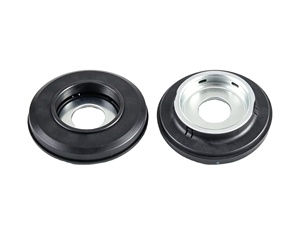
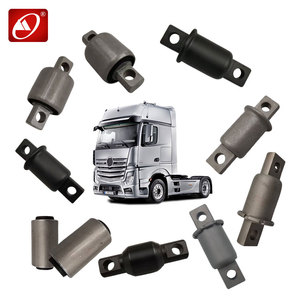
Top Trusted Shock Absorber Bushing Manufacturer & Factories

Precision-molded rubber-to-metal bonding, high-tensile polyurethane formulations, and rigorous dynamic stiffness calibration for global automotive Tier-1 importers and distributors.

9,485+

Catalogued Parts

31/31

Major Vehicle Makes

60+

Chassis Categories

100%

In-House Thailand Molding

Technical Whitepaper & Engineering Evaluation

The Critical Role of Shock Absorber Bushings in Automotive Kinematics

An exhaustive technical appraisal on elastomeric damping, rubber-to-metal chemical vulcanization, dynamic-to-static stiffness ratios, and acoustic NVH mitigation.

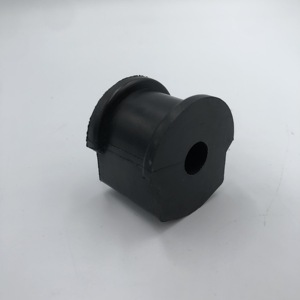
In contemporary automotive chassis engineering, the shock absorber bushing is far more than a compliant spacer; it is a fundamental multi-axis mechanical decoupling node. Operating within the vehicle suspension's primary vertical and lateral load paths, the bushing governs high-frequency dampening, isolates acoustic harshness from entering the passenger monocoque, and directly stabilizes dynamic wheel camber and toe alignment under aggressive braking and cornering loads. When tier-1 aftermarket procurement managers evaluate shock absorber bushing manufacturers, mechanical endurance, dynamic hysteresis loss factor (tan δ), and shear bonding strength represent the critical non-negotiables separating true OEM-tier factories from budget re-packagers.

1. Advanced Elastomer Tribology: Rubber vs. Polyurethane vs. Silicone

Automotive suspension dampers undergo severe cyclic deflection at frequencies oscillating between 0.5 Hz (body float and roll) and upwards of 15–50 Hz (secondary road chatter, expansion joints, gravel excitation). Selecting the optimum core elastomer directly determines the lifecycle cost and ride quality characteristics:

  • Natural Rubber (NR - Polyisoprene) Blends: The automotive OEM gold standard. Natural rubber formulations offer unparalleled mechanical fatigue resilience, low permanent compression set (<18% at 70°C after 22 hours), and superior high-frequency isolation. By incorporating specialized anti-ozonants, paraffin waxes, and silane coupling agents, NISTO rubber compounds mitigate ozone-induced surface micro-cracking and fluid erosion, preserving dampening fidelity beyond 150,000 kilometers of mixed-terrain usage.
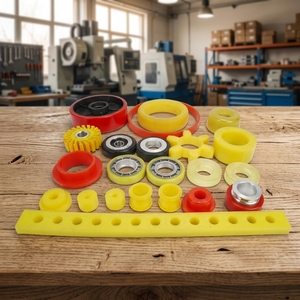
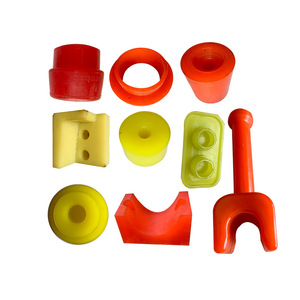
  • Cast Polyurethane (PU Elastomers): Engineered predominantly for performance chassis, motorsports, and heavy off-road commercial applications where instantaneous steering responsiveness supersedes acoustic softness. Polyurethane delivers outstanding durometer stability (ranging from 70 Shore A to 95 Shore A), superior oil/grease resistance, and four times the tensile tear resistance of standard gum rubbers. However, improper PU formulations can exhibit excessive high-frequency transmission (cabin resonance) unless engineered with micro-cellular internal voids.
  • EPDM & Hybrid SBR Formulations: Deployed extensively in extreme thermal environments or commercial fleet suspension systems exposed to continuous de-icing salts, alkali wash fluids, and ambient engine bay heat exceeding 120°C. EPDM demonstrates superior environmental longevity and low oxidative degradation curves.
  • Fluorosilicone & Silicone Rubber-to-Metal Systems: Critical for specialized sub-assemblies requiring extreme flexibility down to -50°C while maintaining structural integrity up to +180°C. Incorporating proprietary bonding primers allows silicones to maintain structural anchoring on aluminum and zinc-plated damper mount housings without adhesive delamination.
Elastomeric Compound Shore Hardness Tensile Strength (MPa) Dynamic-to-Static Ratio (Kd/Ks) Fatigue Cycle Life (@15Hz) Thermal Window Strategic Best Fit
OEM Spec High-Grade NR 55 – 65 Shore A ≥ 18.5 MPa 1.15 – 1.30 > 2,500,000 cycles -40°C to +85°C OEM Standard / High NVH
Engineered Polyurethane (PU) 75 – 95 Shore A ≥ 32.0 MPa 1.60 – 2.10 > 1,800,000 cycles -35°C to +95°C Motorsport / Off-Road Lift
Peroxide-Cured EPDM 60 – 70 Shore A ≥ 14.0 MPa 1.25 – 1.45 > 2,000,000 cycles -45°C to +130°C Heavy Commercial Trucks
SBR Composite Blends 60 – 75 Shore A ≥ 12.0 MPa 1.35 – 1.55 > 1,200,000 cycles -30°C to +90°C Economy Aftermarket
Silicone-Metal Hybrid 50 – 70 Shore A ≥ 9.5 MPa 1.10 – 1.25 > 1,500,000 cycles -55°C to +180°C Specialty EV & Defense

2. Chemlok® Rubber-to-Metal Vulcanization: Preventing Interface Catastrophe

The primary point of catastrophic failure in shock absorber eyelet bushings and strut top mounts is bond delamination between the elastomer core and the inner/outer seamless carbon steel sleeves. In inferior factories, metal sleeves are merely washed in solvent and dipped in low-cost single-coat adhesive, leading to sleeve separation under heavy shear braking torques.

Our production protocols at NISTO Rubber follow a 5-stage automated surface conditioning standard:

  • Rotary Steel Grit Blasting: Metal inner ferrules and drawn cold-rolled steel outer cases undergo automated grit blasting to achieve an anchor profile roughness of Ra 3.2 – 6.3 μm, maximizing the micro-mechanical interlock area.
  • Vapor Degreasing & Phosphating: Total elimination of residual oils, drawing coolants, and oxidation films followed by a uniform micro-crystalline zinc phosphate barrier.
  • Automated Dual-Coat Chemlok Application: Robotically metered phenolic primer (0.2 – 0.4 mil) followed by an elastomeric polymer adhesive topcoat (0.5 – 0.8 mil). Film thickness is verified by electromagnetic thickness gauges.
  • High-Pressure Compression/Transfer Tooling: High-tonnage hydraulic transfer presses mold and cure the raw compound at precisely controlled temperature profiles (165°C ± 2°C), creating chemical cross-linking bonds exceeding the cohesion strength of the rubber compound itself. Under ASTM D429 Method B (90° peel adhesion testing), failure occurs by rubber tear (100% R), never by adhesive peeling (RC).
Manufacturing Infrastructure

Why Global Buyers Partner with NISTO Rubber

Direct from our specialized molding plant in Thailand: unmatched catalog depth, internal compounding, and zero-defect precision quality control.

100% In-House Thailand Molding

We do not broker or outsource critical production steps. From raw virgin polymer Banbury mixing to vulcanization press lines and automated deburring, all processes run under our own ISO-audited facilities in Thailand.

9,485 Catalogued SKUs & 31 Makes

Comprehensive fitment catalog covering Japanese (Toyota, Nissan, Honda, Isuzu, Mitsubishi, Mazda), American (Ford, GM, Chevrolet, Chrysler, Jeep), and European marques with exact OE cross-referencing numbers.

Strict Multi-Axis Fatigue Testing

Every production batch undergoes rheometer curing curve verification, Shore A durometer audits, axial push-out load checks, and high-frequency multi-axis hydraulic durability simulations to guarantee 2,000,000+ deflection cycles.

Ready Stock & Agile Consolidation

Our central warehouse inventory holds ready buffer stocks for fast replenishment, enabling full-container and LCL consolidated shipments of mixed chassis components (shock mounts, sway bar bushes, arm bushings, engine mounts).

OEM Dimensional Tolerancing

Outer steel shells and internal sleeves are precision turned and cold-drawn to micrometer tolerances (±0.02 mm), eliminating control arm bore damage or loose press-fit interference during workshop installation.

Direct Supply Chain Resilience

Benefit from Thailand's strategic natural rubber rubber-belt positioning, reducing raw-material freight volatility and offering Western buyers an optimal tariff structure and geographical diversification.

Market Dynamics & Future Outlook

Procurement Trends & Evolution in Suspension Bushing Technology

Strategic foresight for automotive aftermarket procurement heads, fleet directors, and Tier-1 replacement distributors.

Trend Horizon 2025–2027

The Electric Vehicle (EV) NVH Paradigm

Battery Electric Vehicles (BEVs) impose 25–35% heavier curb weights combined with instantaneous peak torque delivery. Because internal combustion engine background noise is absent, secondary suspension harshness and road hum become immediately audible inside EV cabins. Aftermarket buyers increasingly demand specialized dual-rate hydraulic bushings (hydro-bushings) and tuned natural rubber compounds that offer low dynamic hardening (Kd/Ks ≤ 1.25) across wide temperature spectrums.

Trend Horizon 2027–2030

Lightweight Composite Sleeves & Coatings

To reduce unsprung chassis weight and eliminate galvanic corrosion, automakers are progressively replacing traditional drawn steel outer sleeves with glass-fiber-reinforced polyamides (PA66-GF30) and anodized lightweight aluminum alloys. This shift requires specialized low-temperature vulcanizing adhesives and modified molding press temperatures to avoid composite housing distortion during the curing cycle.

Trend Horizon 2030–2035

Circular Supply Chains & Bio-Polymers

Global regulatory bodies are instituting strict lifecycle carbon accounting (Scope 3 emissions) on automotive replacement components. Forward-looking manufacturers are shifting to de-polymerized devulcanized reclaimed rubber fractions, silica reinforcements derived from rice husk ash, and non-aromatic process oils to meet aggressive EU and North American ESG procurement mandates without compromising tensile longevity.

Strategic Procurement Shift: De-risking via Southeast Asian Production Hubs

Over the past three decades, international automotive replacement distributors concentrated chassis sourcing heavily in single geographic regions. Escalating geopolitical trade barriers, shifting tariff schedules, and freight shipping volatility have triggered a decisive relocation of tier-1 supply contracts to Southeast Asian industrial clusters. Thailand, as the world's leading producer and processor of high-grade natural rubber, has established an integrated automotive manufacturing ecosystem known globally as the "Detroit of the East." Sourcing shock absorber bushings directly from NISTO Rubber in Thailand provides global parts buyers with immediate access to raw polymer reserves, world-class vulcanization infrastructure, and long-term tariff advantages in North American, European, and Australasian markets.

Procurement Intelligence

Frequently Asked Questions for B2B Importers

Detailed technical and commercial answers regarding tooling, validation tests, custom formulations, and export logistics.

How does NISTO guarantee that aftermarket shock absorber bushings match OEM stiffness?
Every new part developed in our Thailand facility undergoes a rigorous reverse-engineering protocol against original genuine OEM samples. We measure both static radial stiffness (Ks) and dynamic multi-axis stiffness (Kd) using computer-controlled servo-hydraulic load test frames. Our proprietary compounding laboratory fine-tunes carbon black grades (N330, N550, N774) and plasticizer proportions so that durometer hardness matches OEM specifications within ±3 Shore A points, ensuring steering kinematics and ride dampening match original vehicle designs.
What specific bonding tests are conducted to prevent rubber-to-metal separation?
We employ Chemlok® and Megum™ hot-vulcanizing adhesive systems applied via automated robotic spray booths. Bond strength is continually validated through ASTM D429 Method B (90-degree peel testing) and axial push-out force tests on every production shift. Parts must demonstrate 100% rubber failure (structural tear of the elastomer itself) under extreme mechanical hydraulic press-out tonnage before any adhesive interface breakdown is permitted.
Can NISTO produce custom polyurethane or high-durometer bushings for off-road or performance applications?
Yes. Beyond our high-volume OEM natural rubber lines, we maintain dedicated casting and injection lines for performance-grade cast polyurethane (PU) suspension bushings spanning 75A to 95A durometer. These can be custom tinted, formulated with integrated internal lubrication grooves (grease channels), and supplied with knurled stainless steel or zinc-nickel plated crush tubes tailored for lifted 4x4 trucks, competition drift cars, and armored fleet suspensions.
What are standard Minimum Order Quantities (MOQs) and delivery lead times for international distributors?
For items currently in our active catalogue of 9,485 parts with available stock, MOQs start as low as 50 to 100 pieces per SKU, facilitating consolidated container orders comprising multiple product lines (engine mounts, stabilizer bushes, control arm bushes). For custom OEM-tooled components requiring dedicated compression tooling, prototype lead times typically average 25–35 days, with production batches shipping within 45 days after PPAP (Production Part Approval Process) approval.
How can buyers search and cross-reference NISTO part numbers with original vehicle OE codes?
Our comprehensive catalog database links every manufactured bushing directly to its corresponding OEM interchange part numbers (e.g., Buick 10415925, Chrysler 04782672AA, Toyota 04427-07060, Mitsubishi 4056A037), as well as TecDoc / aftermarket interchange references. Importers and workshop chains can search by make, model, chassis generation, or OEM code to immediately verify dimensional drawings, photographic proof, and vehicle application lists.
What packaging and private labeling capabilities does your Thailand factory support?
We provide full turnkey OEM and private label packaging services for major aftermarket distributors and brand owners. Options include branded individual polybags, high-graphic full-color retail boxes with custom EAN/UPC barcodes, anti-corrosion VCI wrapping for metal sleeves, laser-etched part numbers directly on inner metal ferrules, and shrink-wrapped export wooden pallets complying with ISPM 15 phytosanitary standards.

Partner with a Trusted Rubber Bushing Manufacturer

Whether you need high-volume container supply of OEM-replacement shock absorber bushings or bespoke elastomeric development for severe-duty applications, our engineering and export team is ready to assist.
Send an Inquiry