
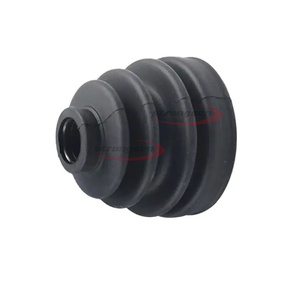
Export Grade Catalog
High-Performance Buffer Stops, Mounts & Industrial Elastomers
Engineered for high-strain cyclic deflection and aggressive UV and salt-spray resistance. Designed to fulfill high-damping OEM replacement and dynamic industrial buffering criteria.
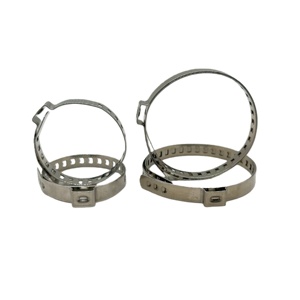
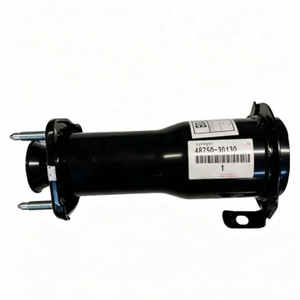
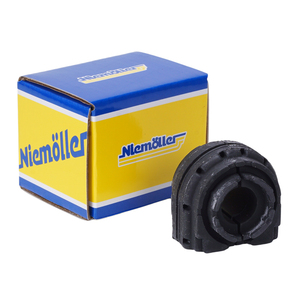
9,485+
Tooling Configurations
20-90
Shore A Durometer Control
100%
In-House Moulding & Vulcanization
ISO9001
Certified Quality Protocols
Technical Whitepaper
Engineering Elastomeric Energy Dissipation for High-Impact Loads
A technical examination into progressive deceleration, hysteretic damping factors, and rubber-to-metal shear boundary integrity under heavy industrial operations.
1. Kinetic Energy Dissipation & Progressive Spring Characteristics
Industrial buffer stops, whether utilized at end-of-track rail terminuses, maritime container gantry cranes, or heavy off-road suspension limits, operate fundamentally as elastomeric displacement dampers. Unlike mechanical coil springs that store energy elastically and release it back into the colliding structure (inducing violent rebound harmonics), high-grade vulcanized elastomers exhibit massive mechanical hysteresis. The internal molecular friction of long polymer chains converts a high portion of kinetic impact energy instantly into non-damaging thermal energy.
Our research and tooling matrices prioritize nonlinear, progressive load-deflection profiles. During initial impact, the elastomer yields with controlled elasticity, minimizing shock transmitted to structural chassis mounts or concrete foundation pylons. As the strike velocity forces maximum compression, the durometer resistance scales exponentially, arresting excessive tonnage without metal-to-metal impact or structural shear failure.
2. Rubber-to-Metal Bonding Metallurgy: The Adhesive Failure Threshold
A buffer stop is only as reliable as its molecular bond interface between the vulcanized rubber cushion and the mounting steel base plate. In heavy-duty logistics or forestry applications, bond failure under shear or cyclic peel stress presents catastrophic equipment liability. Our automated bonding workflows eliminate these operational vulnerabilities:
- Substrate Surface Profiling: Precision grit blasting of high-tensile steel plates to achieve surface roughness exceeding Sa 2.5, optimizing mechanical anchor profiles.
- Thermosetting Chemical Primers: Utilization of advanced two-coat bonding systems (phenolic/silane hybrid primers) resistant to moisture ingress, thermal cycling, and continuous marine atmospheres.
- High-Pressure Compression Moulding: In-mold cross-linking where rubber vulcanization and substrate bonding execute synchronously under monitored temperatures (150°C–175°C) and multi-ton hydraulic pressure. This achieves adhesive bond strengths surpassing the cohesive tear strength of the rubber polymer itself.
3. Compounding for New Zealand's Unique Atmospheric & Environmental Stress
New Zealand's geography presents an exceptionally harsh microclimate for elastomeric components: extreme coastal salt air, elevated ultraviolet radiation due to atmospheric clarity, and wide thermal differentials between North Island maritime conditions and Central Otago sub-zero alpine terrains. Raw natural rubber (NR) compounded without proper stabilization degrades rapidly through ozone cracking and embrittlement.
We tailor our chemical compounds using specific molecular blends: premium grade Natural Rubber (NR) for applications demanding exceptional elasticity and maximum fatigue resistance under cyclic impact; Ethylene Propylene Diene Monomer (EPDM) enriched with UV blockers and antiozonants for uncompromised exterior environmental resilience; and high-density Nitrile (NBR) where buffers interface with diesel lubricants, hydraulic mineral oils, and maritime grease residues.
Territorial Deployment
Industrial Application Scenarios in New Zealand
From the timber forests of the central North Island to maritime logistics hubs and regional rail, our rubber buffer stops and elastomeric dampeners withstand rugged local workloads.
KiwiRail & Heavy Transit Terminals
Custom-engineered end-of-track railway buffer stops and rolling stock coupling dampeners. Deployed to absorb shunt over-travel forces safely in freight yards and commuter terminuses across Auckland, Wellington, and Christchurch.
Ports of Auckland & Tauranga Logistics
Heavy crane buffer bumpers, quay wall fender stoppers, and automated container handling equipment shock isolators. Formulated to resist salt-water corrosion, high tidal humidity, and heavy 24/7 duty cycles.
Forestry Haulage & Heavy Earthmoving
Suspension bump stops, torque arm bushes, and leaf spring rebound blocks tailored for log transport traversing unpaved forestry access routes throughout the Kaingaroa and Northland regions.
Dairy & Agricultural Processing Plants
Sanitary vibration dampening buffers and conveyor transfer deceleration blocks for primary food processing operations in Waikato and Southland, providing chemical washdown tolerance.
Mining, Quarrying & Concrete Aggregate
Heavy impact buffers applied underneath vibratory screens, rock crushing stations, and skip chutes across Canterbury gravel operations, damping shock loads and suppressing structural harmonic fatigue.
Strategic Outlook
New Zealand Market Developments & Sourcing Shifts
Analysis of procurement factors influencing New Zealand fleet operators, rail maintenance contracts, and industrial logistics engineers.
Transition to Heavy Electric Fleet Assets
The steady introduction of electric heavy transport, battery-electric buses in Auckland/Christchurch, and battery-assisted shunting locomotives significantly increases static axle weight. Greater vehicle mass requires higher capacity suspension buffers with specialized energy dissipation parameters to maintain road handling and chassis longevity.
Stringent Health & Safety Compliance (WorkSafe NZ)
Under WorkSafe NZ mandates, mitigating whole-body vibration (WBV) in heavy vehicles and eliminating mechanical end-stop shock in crane handling has driven maintenance engineers toward direct OEM-calibrated elastomeric dampening solutions to protect operators and prolong asset reliability.
Factory-Direct Supply Chain Rationalization
Kiwi distributors and fleet operators are bypassing expensive multi-tiered intermediary distributors. Sourcing direct from certified precision manufacturers provides guaranteed compound integrity, full dimensional traceability, and optimized unit economics without compromising lead times.
Verified Manufacturing Capability
Why Tier-1 Importers Partner With Our Production Facilities
Direct manufacturing control from initial polymer blending to automated vulcanization, delivering consistent dimensional tolerances and extended service life.
100% In-House Moulding Lines
No outsourced vulcanization. We operate our own calibrated compression and injection moulding presses, guaranteeing complete quality governance from raw polymer mixing to final degating.
Comprehensive Part Registry
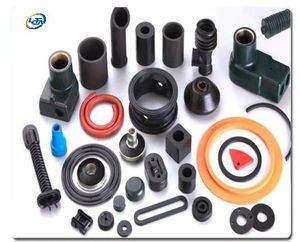
Over 9,485 precision parts spanning 60 distinct functional categories—including heavy engine mounts, leaf spring bushings, stabilizer blocks, and shock mount components matching original equipment specs.
ISO9001 Certified Processes
Standardized chemical testing routines verify tensile strength, elongation at break, durometer hardness (20-90 Shore A), and shear bond adhesion across every production batch.
Reliable Pacific Logistics
Optimized export packaging and container consolidated logistics shipping routinely into Auckland and Tauranga ports, offering direct, predictable replenishment schedules.
Procurement Guide
Frequently Asked Questions by New Zealand Buyers
Essential insights for fleet managers, workshop inventory heads, and engineering contractors importing industrial elastomeric components.
How do your rubber formulations withstand New Zealand’s high coastal salinity and UV exposure?
Our formulations use specialized synthetic polymer blends, including ozone-resistant EPDM and antioxidant-stabilized natural rubbers. Each compound undergoes salt-spray and accelerated environmental weathering tests to prevent premature surface crazing, loss of elastic modulus, or cracking under maritime conditions.
Can you provide custom shore hardness and progressive load-deflection test certificates?
Yes. We formulate rubber hardness across 20 to 90 Shore A depending on customer engineering specifications. For structural buffer stops, our testing laboratory provides full batch inspection reports including Shore durometer verification, tensile elongation, and compression-set data according to ISO standards.
How do you assist Kiwi buyers in cross-referencing OEM numbers for replacement parts?
Our technical database holds over 9,485 parts matched against OEM references across Japanese, European, and American heavy commercial makes. Kiwi buyers can provide the equipment manufacturer part number, dimensional blueprints, or physical sample measurements, and our engineers will supply the matched replacement specification.
What are the standard freight and lead times for shipments into Ports of Auckland or Tauranga?
For ready-inventory items, orders are packed and dispatched within 7–10 days. Ocean freight from primary Chinese departure ports to Auckland or Tauranga generally averages 14–21 transit days. For urgent or trial batches, air freight delivery directly to Auckland (AKL) or Christchurch (CHC) is easily arranged.
What is your minimum order policy for commercial and industrial buffer stop runs?
Because we mold in-house on dedicated tooling systems, standard catalog components carry flexible minimum order volumes to accommodate mixed container shipments. For specialized custom-profile buffers or bespoke metal-bonded components, tooling fabrication and batch minimums are determined during initial blueprint review.
Looking for Reliable Rubber Buffer Stops in New Zealand?
Consult our engineering team for technical datasheets, CAD dimensional validation, custom durometer formulations, and competitive direct factory supply pricing.
Contact Us