
Direct factory supply of precision rubber-to-metal dampers, chassis bushings, and dynamic mounts tested under cyclic dynamic-mechanical loads (DMA) for Finnish automotive aftermarket, commercial fleets, and heavy equipment.
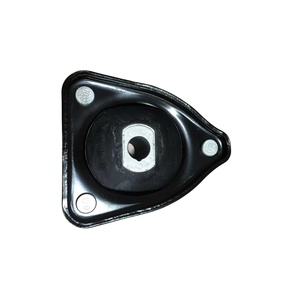
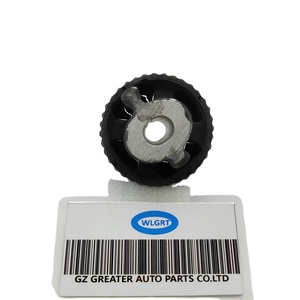
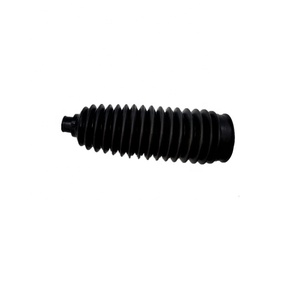
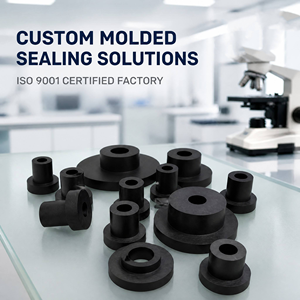
Industrial procurement teams and mechanical engineers across Finland face unique structural vibration challenges due to extreme operational conditions. Unlike standard Mediterranean or central European climates, Finnish vehicle fleets, forestry harvesters (Ponsse, John Deere Forestry), maritime installations in the Gulf of Bothnia, and wind power nacelles operate under extended thermal windows oscillating between -40°C in Lapland winter and +30°C in peak summer.
When standard commercial Natural Rubber (NR) or low-grade Styrene-Butadiene Rubber (SBR) dampers operate below -20°C, polymer chain mobility decreases exponentially. This phenomenon—known as low-temperature crystallization and glass transition hardening—results in dynamic spring rate stiffening ($K_{dyn} / K_{stat}$ ratio shifting from 1.25 to over 3.5). Consequently, the damper ceases to absorb high-frequency vibrational excitation, transferring acoustic energy directly into the vehicle chassis or industrial steel frames, accelerating structural metal fatigue and shear failure of mounting studs.
| Performance Parameter | Standard Commercial Rubber Damper | Our Arctic-Grade Formulation (Finland Spec) | Test Standard |
|---|---|---|---|
| Brittle Temperature ($T_b$) | -25°C to -30°C | -52°C Non-Brittle | ASTM D746 / ISO 812 |
| Glass Transition ($T_g$) | -40°C | -62°C (Differential Scanning Calorimetry) | ISO 11357 |
| Dynamic Stiffness Ratio ($K_{dyn}/K_{stat}$ @ -35°C) | 3.8 (Severe Stiffening) | 1.32 ± 0.05 (Linear Isolation) | DIN 53513 (15 Hz Dynamic) |
| Metal-Elastomer Adhesion Separation | Cohesive/Adhesive Failure (< 8.0 MPa) | 100% Rubber Tear (≥ 14.5 MPa) | ASTM D429 Method B (90° Peel) |
| Salt-Spray Corrosion Resistance (De-icing) | 240 Hours (Zinc White Rust) | 1,000+ Hours (Geomet / E-Coat System) | ISO 9227 NSS / ASTM B117 |
To neutralize these operational liabilities, our factory employs proprietary polymer compounding utilizing modified high-cis polybutadiene (BR) blends alongside high-purity, low-sulfur natural rubber. Our proprietary silane coupling agents and anti-crystallization plasticizers ensure the dynamic glass transition temperature is shifted far below the freezing threshold of Nordic winters.
Vibration damping solutions tailored to Finnish climatic demands, structural regulations, and machinery operating profiles.
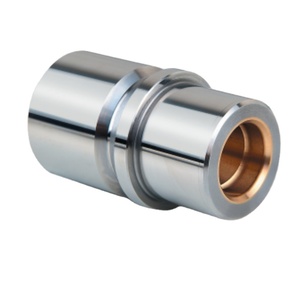
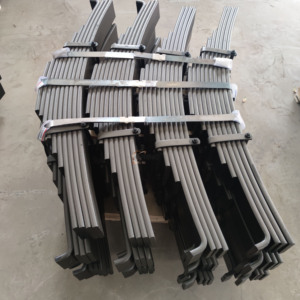
Heavy machinery operating in remote tracts in Joensuu, Jyväskylä, and Kainuu must endure immense torsional shock loading. Our hydraulic-bonded cab mounts and heavy-duty steel-bronze leaf spring bushings absorb unpaved timber track vibration, eliminating operator spine fatigue and preventing hydraulic manifold hairline fractures.
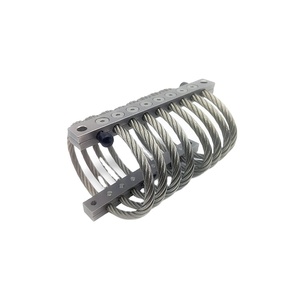
Icebreakers and maritime cargo navigating the Baltic Sea and Archipelagos require extreme isolation for propulsion generators and auxiliary pumps. Our 316 Stainless Steel & Aluminium wire rope shock isolators deliver C5M marine corrosion immunity against de-oxygenated brackish water, chemical engine oils, and violent hydrodynamic slamming.
Logistics transit between Helsinki, Tampere, and Oulu subjects tractor-trailers to continuous pavement expansion joint impacts and chemical de-icing brine ($CaCl_2$). Our E-coated differential mounts and pre-stressed suspension bushings provide uncompromising torsional deflection endurance without micro-cracking.
Key strategic shifts Finnish Tier-1 OEMs, replacement distributors, and maintenance engineering heads must navigate.
With electric buses in Helsinki Regional Transport (HSL) and rapid commercial EV adoption, the absence of internal combustion engine masking noise makes suspension and transmission NVH (Noise, Vibration, Harshness) critically prominent. Finnish engineers demand narrower elastomeric dynamic tolerance bands (±5% Shore A) to eliminate cabin droning between 200 Hz and 800 Hz.
Finnish environmental directives strictly penalize components containing Polycyclic Aromatic Hydrocarbons (PAHs), phthalates, or short-chain chlorinated paraffins (SCCPs). Modern procurement departments now mandate full Material Safety Data Sheet (MSDS) traceability from raw polybutadiene batches directly to finished vulcanized parts.
Due to the extraordinarily high labor rates for heavy fleet service and shop technicians in the Nordic region (€85–€140/hour), Finnish fleet managers explicitly reject budget-tier components that fail within 18 months. The priority has decisively shifted toward double-lifespan components with verified vulcanization bonding integrity.
Vertical compounding, automated shot-blasting, automated adhesive phosphating, and strict ISO/IATF quality loops eliminate intermediate risk.
We do not source pre-mixed commercial slabs. Every compound recipe is formulated on our Banbury internal mixers, allowing us to dial in exact carbon black dispersions, resilience agents, and cold-flow plasticizers for sub-zero performance.
The core risk of rubber-to-metal mounts is bonding peeling. Our steel inner sleeves and cast aluminium housings receive CNC robotic shot-blasting, multi-stage degreasing, zinc phosphating, and dual-layer primer/adhesive bonding before vulcanization.
Every batch of engine mounts and suspension dampers undergoes rigorous servo-hydraulic fatigue cycling up to 2,000,000 cycles under combined radial and axial dynamic loads, verifying zero bond failure and hysteresis curve consistency.
With more than 9,485 active toolings covering European, Asian, and American commercial and passenger platforms, we reduce mold design lead time for custom Finnish forestry and marine requests from months to just 14 days.
Direct technical answers concerning importation, certifications, cold tolerance, and delivery logistics to the Port of Helsinki and Vuosaari Harbour.
We formulate our rubber compounds specifically to depress the dynamic glass transition temperature ($T_g$) below -55°C through high-cis polybutadiene (BR) and high-purity natural rubber matrix compounding. Prior to volume delivery, sample units undergo ASTM D2137 low-temperature brittleness testing and ISO 812 impact flexure at -45°C.
Yes. All formulations strictly comply with EU REACH Regulation (EC) No 1907/2006, ensuring polycyclic aromatic hydrocarbons (PAHs) are below detection limits (Directive 2005/69/EC) and zero Annex XIV/XVII banned plasticizers are present. Full laboratory third-party SGS/TÜV reports are supplied with each export shipment.
We routinely execute FOB Ningbo/Shanghai, CIF Helsinki (Vuosaari Port), and DDP directly to warehouse hubs in Vantaa, Turku, or Tampere. Ocean freight transit typically takes 32 to 38 days. For urgent assembly line requirements or replacement seasons, direct air freight via Helsinki-Vantaa Airport (HEL) is available within 5-7 business days.
Yes. Our engineering division operates advanced CMM measurement machines, dynamic durometers, and 3D optical laser scanners. Send us your STEP/IGES files or a physical worn sample, and we will reverse-engineer metal geometry, evaluate polymer elasticity, build mold tooling, and deliver pilot test samples in as little as 14-21 days.
Whether you require aftermarket replacement supply, fleet maintenance inventory, or customized industrial mounts engineered for extreme Finnish winter resilience, our technical engineering team is ready to evaluate your specifications.
Get Catalog