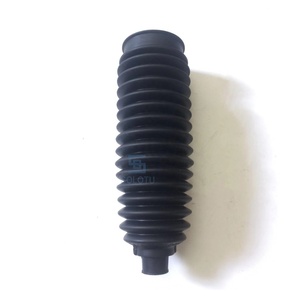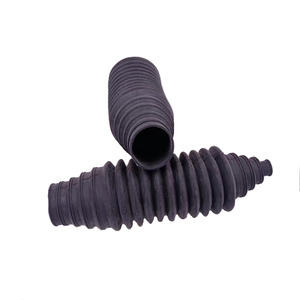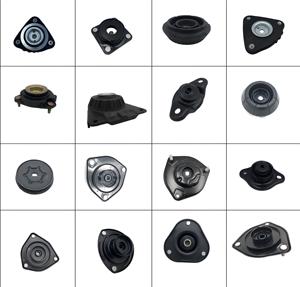
Direct OEM-matched replacements manufactured under strict polymer cross-linking controls, delivering uncompromised protection for constant-velocity joints, steering gears, and structural chassis components.
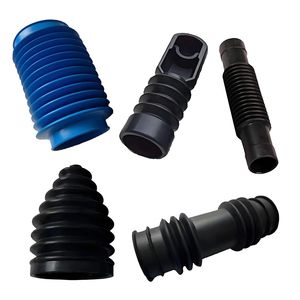
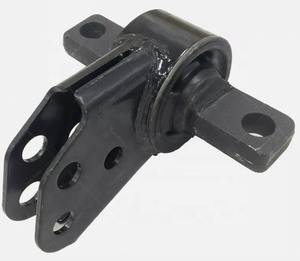
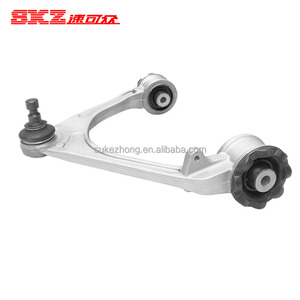
Constant-velocity (CV) joint boots operate as the principal mechanical containment boundary for drive axle articulation assemblies. In extreme continental environments like Moscow and the Central Federal District of Russia, the operational lifespan of conventional polychloroprene (CR) rubber compounds deteriorates exponentially. The simultaneous exposure to sub-zero cyclical fatigue down to -40°C, abrasive crystalline grit, and heavily concentrated chloride-based road de-icers demands a re-engineered polymer paradigm. As a premier automotive rubber-to-metal and driveline boot manufacturer exporting directly to Russian commercial hubs, our manufacturing methodology addresses the exact failure mechanisms documented across Moscow's fleet operators, parts distributors, and automotive rebuilders.
A failed CV boot results in instant centrifugal ejection of high-pressure molybdenum disulphide grease, followed by catastrophic particulate contamination that destroys the inner tripod or outer ball-type joint within less than 500 operating kilometers. Our specialized export programs provide Moscow's automotive supply chain with dual-material platforms: high-performance cryogenic Polychloroprene compounds optimized for elastic flexibility at deep freeze thresholds, and Thermoplastic Polyester Elastomer (TPEE/TPE) designs built for high-speed torsional strength on commercial vans, all-wheel-drive crossovers, and heavy freight haulers.
The standard failure mode of generic CV boots in Russian winter conditions is micro-fissuring across the convolution root diameters, triggered by glass transition temperature (Tg) embrittlement. Standard industrial rubber formulations exhibit structural vitrification at -25°C to -28°C; once glass transition occurs, steering angles and road bump oscillations snap the accordion bellows like brittle plastic. Our metallurgical and compounding laboratories formulate synthetic elastomers using vulcanized virgin Neoprene enriched with plasticizers that drive glass transition thresholds down to -45°C without compromising tensile rebound.
| Performance Indicator | Standard Commercial Rubber | NISTO Low-Temp Cryo-Neoprene | NISTO Heavy-Duty TPEE Platform |
|---|---|---|---|
| Glass Transition Temp (Tg) | -25°C to -28°C | -45°C to -48°C | -50°C |
| Tensile Strength (MPa) | 11.5 MPa | 16.8 MPa | 28.4 MPa |
| Elongation at Break (-30°C) | < 150% (Micro-cracking) | > 380% (Fully Elastic) | > 420% (Shape Memory) |
| De-icing Salt Resistance | Moderate Swelling / Hardening | Zero Volume Degradation (Grade A) | Chemical Inertness (Grade A+) |
| Bellows Flex Life (Cycles) | 100,000 cycles | 500,000 cycles | 1,200,000 cycles |
Compounded to withstand aggressive liquid and solid chemical de-icers (Bischofite, calcium chloride, and sodium chloride mixtures) applied across Moscow's MKAD and regional highways, preventing surface hardening and premature micro-fractures.
Utilizing high-precision multi-cavity injection blow-molding tooling to ensure strict wall thickness uniformity across the convolution roots, eliminating high-stress thin spots during acute steering lock angles.
Every boot kit engineered for export incorporates OE-spec 304 stainless steel low-profile ear clamps, maintaining consistent 360-degree radial clamping tension even when axle shafts contract under thermal differentials.
The aftermarket landscape across Russia has experienced a profound structural evolution over the past 36 months. Moscow, representing the largest single automotive concentration in the Russian Federation, has transitioned from historical European and Japanese OE parts availability toward high-quality, verified manufacturing partnerships based in China and Thailand. In tandem with this shift, Chinese passenger vehicle brands (including Haval, Geely, Chery, Changan, Exeed, and Tank) have captured unprecedented market shares, coexisting alongside an aging legacy fleet of Japanese (Toyota, Nissan, Mitsubishi) and European platforms that still require consistent replacement part pipelines.
This dual-fleet dynamic presents a complex stocking challenge for large wholesale warehouses along the Moscow Ring Road (MKAD) and South-Eastern logistics corridors. Russian buyers no longer accept universal-fit silicone boots that lack thermal dimensional stability. Procurement managers require precise dimensional replication matching original manufacturer codes, direct cross-reference accuracy, and turn-key boot repair kits complete with low-temperature synthetic polyurea grease cartridges and non-magnetic stainless steel clamp assemblies.
Operating dedicated molding lines, tooling workshops, and material testing facilities, our manufacturing footprint provides tier-level production transparency from crude elastomer preparation to final packaging. Unlike sourcing brokers or export aggregators, we maintain complete operational control over every stage of polymer compounding, vulcanization dynamics, and rubber-to-metal bonding.
High-precision CNC machine tooling enables rapid reverse engineering and mold fabrication within 18–25 days from physical sample verification or 3D CAD step files, accelerating catalog expansion for newly launched vehicle platforms.
Extensive catalog coverage covering 31 vehicle makes across 60 specialized automotive rubber categories, spanning engine mounts, suspension control arm bushings, strut top mounts, driveshaft center bearings, and steering dust covers.
Proprietary multi-stage phosphating, degreasing, and automated Chemlok adhesive application guarantee ultra-high bonding peel strength on vibration dampers, suspension bushings, and metal-reinforced CV boot ring seals.
Each production run destined for Russian logistics centers undergoes cryogenic embrittlement verification inside our internal environmental simulation chambers. Test specimens undergo dynamic fatigue oscillations at -40°C for 200,000 continuous cycles, verifying that zero micro-crazing, delamination, or permanent plastic deformation takes place before container loading.
Direct technical and operational answers to address common inquiries from auto parts distributors, wholesale importers, and assembly workshops across the Moscow region.