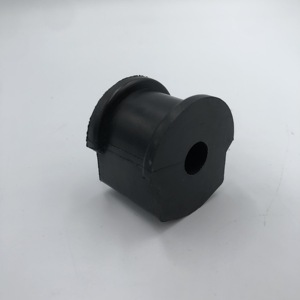

Engineered to withstand rigorous North American road conditions, extreme ozone exposure, and heavy load dynamics across light trucks, utility SUVs, and commercial fleets.
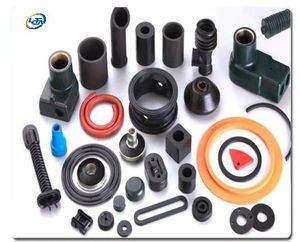
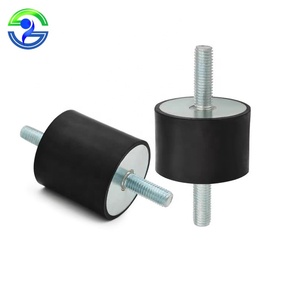
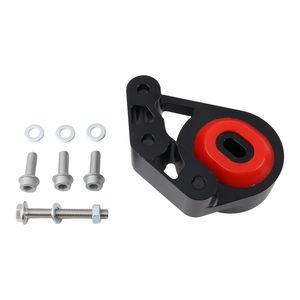
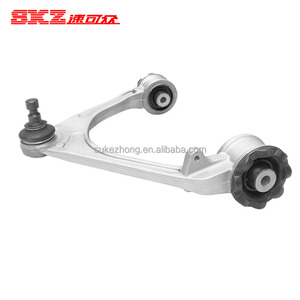
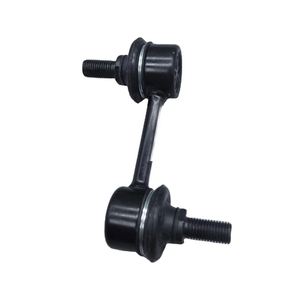
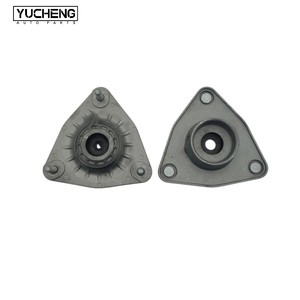
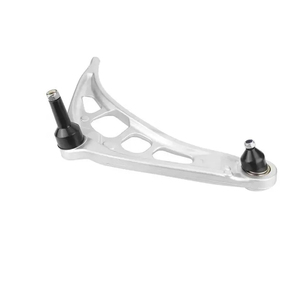
In modern automotive chassis architecture, the stabilizer bar bushing (anti-roll bar bushing) functions as an indispensable viscoelastic link between the vehicle chassis subframe and the sway bar assembly. Serving as the primary pivot point for torsional anti-roll control, the component must resolve two fundamentally competing physical demands: delivering instantaneous torsional rigidity to suppress body roll during high-speed cornering and evasive maneuvers, while simultaneously attenuating high-frequency micro-vibrations and acoustic resonance generated by road irregularities before they propagate into the passenger cabin.
For procurement directors, Tier-1 system integrators, and national aftermarket distributors within the United States market, selecting an export manufacturing partner in China demands a level of scrutiny far beyond simple unit pricing. Factors such as polymer compound purity, durometer tolerance consistency, dynamic stiffness coefficients, resistance to chemical and road-salt degradation, and environmental aging protocols dictate the total lifecycle reliability of chassis components. As a benchmark Chinese manufacturer and global exporter, our operational methodology unites materials science, advanced mold design, and stringent quality governance certified to international standards.
The operational lifespan of a sway bar bushing is defined entirely at the compound formulation stage. The harsh operational environment of North American roadways—ranging from sub-zero winter temperatures in the Midwest and salt-treated highways across the Rust Belt to desert dry-heat in the Southwest—exposes rubber components to severe thermal degradation, ozone attack, and mechanical hysteretic heat build-up. We configure our vulcanized rubber compounds according to the rigorous requirements of each localized suspension class:
| Elastomer Formulation | Hardness Range (Shore A) | Operating Temperature | Tensile Strength (MPa) | Primary U.S. Application Target |
|---|---|---|---|---|
| Pre-conditioned NR (Natural Rubber) | 55 - 65 ± 5 | -45°C to +85°C | ≥ 17.5 | Passenger Sedans, Ride-Comfort Sensitive Applications, OEM NVH Isolation |
| Synthetic EPDM Ternary Polymer | 60 - 75 ± 5 | -40°C to +135°C | ≥ 14.0 | Light Commercial Trucks, High-Ozone & Salt Belt Aftermarket Fleets |
| High-Durometer NBR Blend | 65 - 80 ± 5 | -30°C to +120°C | ≥ 15.0 | Performance Tuning, Driveline-Adjacent Bushings with High Oil Exposure |
| Engineered Polyurethane Composite | 75 - 90 ± 3 | -35°C to +105°C | ≥ 22.0 | Off-Road Suspensions, Heavy Hauling, Stiff Torsional Tracking Response |
Every compound undergoes rheological testing via automated Moving Die Rheometers (MDR) to trace cure kinetics, scorch safety margins, and crosslink density prior to injection molding. This rigid chemical surveillance keeps compression set under 18% across 1,000 continuous hours of operational cycling—eliminating the radial play that generates suspension "thumping" noises and degraded steering feedback.
The automotive landscape of the United States features extreme operating conditions and vehicle profiles that differ significantly from European and Asian domestic markets. Exporting stabilizer bar bushings to American commercial enterprises requires deep contextual awareness of fleet usage patterns:
Engineered for high-payload platforms such as Ford F-Series, Chevrolet Silverado, and RAM 1500/2500. Heavy torsional loads require split-ring bushings with internal knitted PTFE liners to eliminate squeaking without continuous relubrication under heavy bed loads.
Northern tier states utilize chemical de-icers (magnesium chloride, rock salt) that cause severe galvanic corrosion between standard steel brackets and stabilizer bars. Our EPDM bushings are formulated with passivated inner bonding sleeves and vulcanized barriers to stop road-brine contamination.
Commercial transit vehicles (e.g., Mercedes-Benz Sprinter, Ford Transit) endure continuous stop-and-go maneuvers over severe potholes and curb strikes. We produce reinforced dual-stage durometer bushings that absorb micro-impacts while preventing long-term wall thinning.
The North American chassis components sector is undergoing two historic transformations: the mass proliferation of battery electric vehicles (EVs) and consolidation across national warehouse distributors (WDs). As an exporter, aligning our manufacturing with these trends is paramount:
Acoustic Stringency Driven by EV Mass Adoption: Electric vehicles—such as the Tesla Model 3/Y, Ford Mustang Mach-E, and GM Ultium platforms—eliminate the masking acoustic signature of the internal combustion engine. Consequently, microscopic suspension stick-slip squeaks, previously masked by engine rumble, become immediate consumer warranty claims. Our technical response includes proprietary low-friction micro-ribbed bore geometries and bonded internal anti-friction fabric coatings, preventing NVH resonance across all vehicle operating speeds.
Heavier Curb Weights Requiring Advanced Dynamic Stiffness: Battery pack mass increases electric and hybrid vehicle weights by 20% to 35% compared to legacy ICE equivalents. Stabilizer bar bushings for these platforms must endure significantly elevated cyclic shear stresses. Our engineering team utilizes finite element analysis (FEA) to design progressive stiffness gradients into the elastomer body, sustaining low torsional resistance during initial deflection while ramping up lateral support under aggressive yaw angles.
Supply Chain Redundancy and Direct Factory Sourcing: Top-tier U.S. automotive parts importers are actively mitigating the risk of multi-tier trading brokers. Procurement executives prioritize direct partnerships with integrated manufacturers that own their tooling, rubber compounding lines, and precision testing facilities. This setup protects margins against tariff volatility, provides transparent lot traceability, and ensures compliance with the Uyghur Forced Labor Prevention Act (UFLPA) and North American sustainability reporting standards.
Decades of manufacturing excellence make our factory a world-class manufacturing center for anti-roll and chassis rubber components. Drawing upon extensive operational experience, our infrastructure offers distinct advantages to global procurement managers:
Our library of specialized mold toolings spans 60 distinct automotive categories, including engine mountings, suspension control arm bushings, shock absorber mounts, and center bearings across 31 vehicle platforms. This catalog minimizes tooling lead times for U.S. buyers.
Using Chemlok automated degreasing, sandblasting, and dual-layer adhesive application systems, our automated vulcanization guarantees inter-molecular bonding cohesion. Tensile separation testing confirms that rubber tears internally before the adhesive boundary fails under maximum shear.
Every production batch is backed by comprehensive 3.1 material test certificates, Shore durometer verification charts, ozone weathering chamber test logs (ASTM D1149 compliant), and automated optical inspection for bore circularity tolerances within ±0.05mm.
Comprehensive answers regarding compliance, production scheduling, compound formulations, and cross-border delivery logistics.