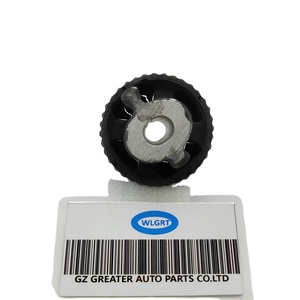
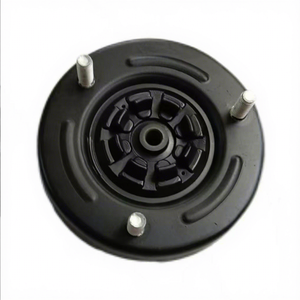
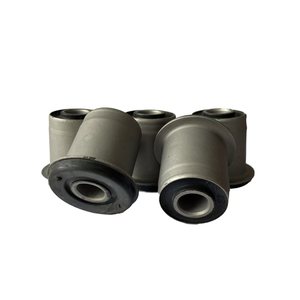
Precision-machined structural mounts, custom molded boots, and elastomer components certified to ISO 9001 and IATF 16949 international standards.
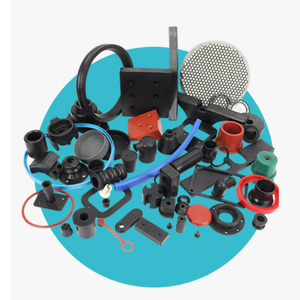
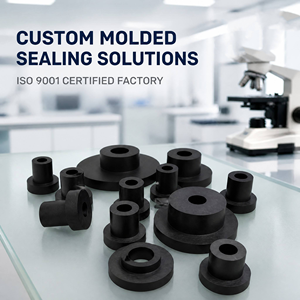
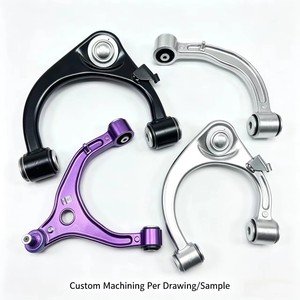
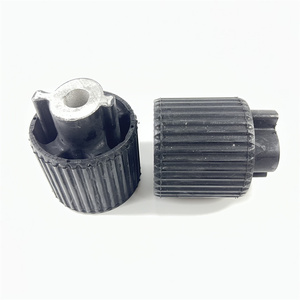
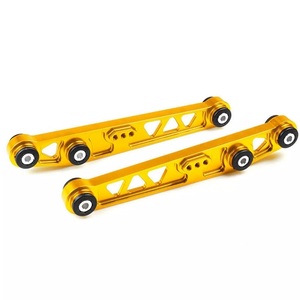
By eliminating third-party sub-assembly and controlling formula synthesis directly, our manufacturing lines guarantee performance consistency under extreme thermal and mechanical fatigue.
Custom Natural Rubber (NR), EPDM, and NBR formulations engineered specifically to minimize mechanical crystallization under high-frequency oscillating loads and cold-climate hardening.
Automated grit-blasting and multi-stage silane primer dipping guarantee shear peel strength above 10 MPa between seamless alloy steel inner sleeves and vulcanized elastomer cores.
Every cured batch undergoes durometer hardness cross-checks (Shore A 55 to 80), tensile deflection verification, and dynamic stiffness curve monitoring to match precise OEM rebound characteristics.
Analysis of dynamic operational stressors across the Trans-Caspian International Transport Route (TITR) and resource-rich regional basins.
Operating heavy commercial fleets, mining haulers, and passenger light vehicles in Kazakhstan demands suspension architectures capable of handling severe operational extremes. In regional industrial hubs such as Karaganda, Pavlodar, Kostanay, and East Kazakhstan, winter ambient temperatures regularly plunge below -40°C, while summer road surface temperatures in Shymkent and the Mangystau desert routinely exceed +55°C. Conventional general-market natural rubber formulations inevitably suffer rapid polymer crystallization below -25°C. This micro-structural transition hardens the rubber sleeve, causing micro-fissuring, unseating at the sleeve flange, and catastrophic shear failure of the elastomer-to-steel interface under sudden high-impact dynamic loading.
Our OEM suspension bushing manufacturing utilizes specialized anti-ozonant vulcanization chemistry with synthetic low-Tg (glass transition temperature) polymers. By integrating targeted plasticizers and high-structure carbon blacks, our formulations keep durometer hardness variance below ±5 Shore A across the entire operational range of -45°C to +120°C. For industrial fleet procurement directors across Kazakhstan, this metallurgical and polymer balance directly translates into longer bushing life cycles, stable wheel alignment retention, and minimized downtime on remote transport arteries.
In Aktobe and Karaganda open-pit copper, coal, and chrome basins, haulers and utility platforms operate under continuous unpaved vibratory loads. High-tensile steel flange bushings like the 4JH1 bracket series ensure extreme load capacity without plastic deformation.
Traversing the Western Europe–Western China Highway corridor subjects truck trailing arms and control linkages to relentless cyclic impacts. Our hydraulic sub-frame and differential mounts eliminate cab bounce and dampen driveline vibration over thousand-kilometer routes.
In municipal hubs like Almaty and Astana, seasonal temperature swings, freeze-thaw cycles, and heavy municipal de-icing chemicals rapidly degrade non-specialized rubber parts. Our zinc-nickel plated outer shells offer verified 720-hour salt spray corrosion resistance.
Key structural shifts shaping replacement component demand across wholesale distribution channels in Almaty, Astana, and Shymkent.
The geopolitical transformation of Eurasian trade routes has placed Kazakhstan at the epicenter of the Middle Corridor (TITR). As containerized freight and trans-Eurasian road haulage volumes reach historic highs, commercial vehicle utilization rates have climbed significantly. Simultaneously, Kazakhstan's domestic fleet profile is undergoing rapid modernization. While legacy platforms (Japanese SUVs, European sedans, and domestic commercial brands) maintain deep aftermarket demand, there is a surge in modern commercial pickups, cross-border prime movers, and newly registered passenger vehicle assemblies originating from regional manufacturing facilities in Kostanay and Almaty.
This evolving vehicle park creates a distinct supply challenge: traditional single-model distribution is no longer cost-effective. Wholesale distributors and tier-1 repair franchises require broad cross-catalog fitment coverage. Our manufacturing facility bridges this gap with over 9,485 active toolings spanning 31 major marques. Importers can consolidate control arm bushings, trailing link bushes, rear differential dampening units, and precision-turned CNC alloy arms into consolidated sea-rail containers, drastically lowering landing costs and import clearing complexities at Dostyk and Khorgos dry ports.
We operate dedicated compounding, tooling, and bonding lines to eliminate common failure points seen with outsourced supply chains.
We maintain full internal tool-making facilities for progressive stamping, precision CNC turning, and multi-cavity injection molds. This capability allows us to produce bespoke suspension geometry to sample drawings in under 25 business days with strict dimensional repeatability.
Every catalogued part number—whether engineered for Japanese, European, or American platforms—is benchmarked directly against factory original parts. Inner sleeves, outer cages, shore hardness curves, and mechanical voids precisely match original vehicle dynamics.
Our export operations team provides complete technical compliance documentation, including full HS-code classification, ISO/IATF certificates of conformity, localized batch labeling, and palletized export packaging designed for multi-modal rail and sea transit.
Technical and logistical considerations for automotive component distributors, fleet managers, and industrial buyers in Kazakhstan.
We engineer low-temperature formulations by blending high-purity natural rubber (NR) and customized synthetic elastomers with specialized ester plasticizers. This formulation lowers the glass transition temperature (Tg) well below -50°C. Standard commercial aftermarket compounds typically freeze and turn brittle at -25°C, causing surface tearing under cyclic impact; our parts maintain their designed durometer elasticity and torsional deflection curves throughout severe winter conditions.
Yes. Our in-house mold and CNC tooling workshop processes STEP/IGES files, 2D engineering drawings, or physically worn OE samples. We run full reverse engineering, establish correct shrinkage calculations, specify proper steel hardness (e.g., seamless cold-drawn steel ST52-3 or 40Cr), and supply prototype samples for dynamic fitment validation within 3 to 4 weeks.
Suspension parts in Northern and Central Kazakhstan face heavy salt and aggressive chemical de-icers. We apply automated electro-zinc plating followed by trivalent chrome passivation or specialized electrophoretic cathodic deposition (E-coat). These surface treatments deliver over 720 hours of salt spray testing (ASTM B117) with zero red rust propagation, preventing premature sleeve-to-chassis seizure.
We pack items in oil-resistant VCI (Vapor Corrosion Inhibitor) polybags, then into heavy-duty 5-ply corrugated master cartons, which are shrink-wrapped and strap-secured on fumigated Euro-standard wooden pallets. This packaging protects rubber chemistry from UV and ozone exposure and prevents internal condensation during transit through shifting climate zones into Almaty, Astana, or Karaganda.
All catalogued suspension bushings, differential mounts, and dynamic rubber-to-metal assemblies carry our standard 12-month or 50,000-kilometer replacement warranty. Each shipment includes full lot-traceability documentation, Certificates of Analysis (COA) for rubber cure properties, and dimensional CMM inspection reports matching original OE part numbers.
Whether you are stocking regional wholesale distribution warehouses in Almaty, managing an industrial fleet in Kostanay, or engineering custom suspension links, our technical engineering team is ready to assist with cross-referencing and factory pricing.