
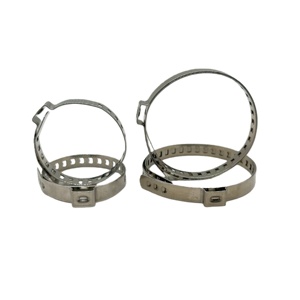
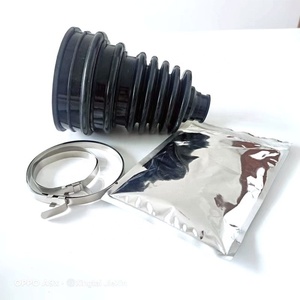
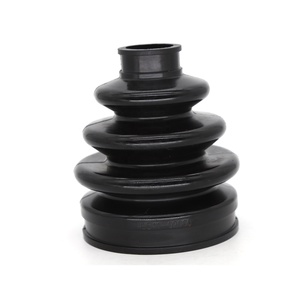
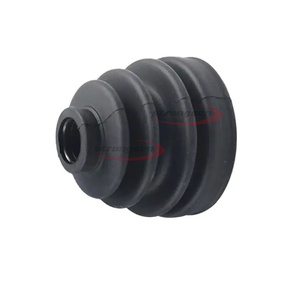
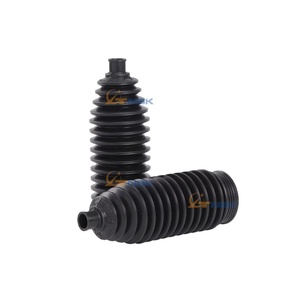
Direct-fit, universal stretch, and split-overhaul constant velocity boots molded in-house to withstand road brine, heavy angular articulation, and high centrifugal shear.
Why off-the-shelf rubber compounds degrade prematurely under United Kingdom driving profiles, MOT regulatory scrutiny, and micro-climatic hazards.
National Highways and regional UK councils dispense over 1.5 million tonnes of rock salt and liquid brine solutions annually. Standard natural rubber boots absorb brine mist, resulting in rapid micro-crazing, additive leaching, and embrittlement. Our bespoke polychloroprene and EPDM blends feature specialized anti-ozonant waxes that repel chloride crystallization.
In Great Britain and Northern Ireland, MOT testers evaluate drive shaft gaiters under severe inspection criteria. A missing, cut, severely cracked, or leaking boot results in an immediate "Major Defect" fail. Furthermore, grease contaminated onto brake discs escalates to a "Dangerous Defect." Our OE-tolerance boots prevent premature grease seepage and collar slippage.
Fleet operators managing Ford Transits, Vauxhall Vivaros, and Mercedes Sprinters across urban delivery routes subject front-wheel-drive CV joints to constant high-angle turning lock and full-torque acceleration. Our reinforced convolute geometry distributes bending stresses evenly across bellows, preventing friction-induced rib rub and localized thinning.
How British motor factors, wholesale stockists, and repair franchises are adapting procurement strategies to electrification, supply chain resilience, and material legislation.
The proliferation of battery electric platforms (Tesla Model Y, MG4, Nissan Leaf) produces instant peak torque from standstill. Electric drivelines generate intense rotational acceleration, forcing engineers toward thermoplastic polyester elastomer (TPE) boots capable of resisting ballooning at speeds up to 16,000 rpm motor speeds.
Tier-1 UK distributors are diversifying away from volatile transit corridors. Our ISO/IATF-aligned factory in Thailand offers duty stability, predictable container sea routes into Southampton, Felixstowe, and Liverpool, and reliable inventory replenishment without unpredictable tariffs or regional embargoes.
With UK garage hourly labour rates exceeding £85 to £130 per hour in Greater London and the Southeast, workshops increasingly demand universal pneumatic stretch and split-type CV boots. Saving 45 minutes of front hub teardown per side significantly increases a service bay's daily throughput and profit margin.
Following Brexit, UK REACH enforces strict limits on polycyclic aromatic hydrocarbons (PAHs), phthalate plasticisers, and toxic curing agents in vulcanised rubber products. Our formulation laboratories guarantee zero SVHC (Substances of Very High Concern), providing clean customs clearance.
Constant velocity (CV) joints operate under aggressive angular misalignment (up to 48 degrees on steering axles) while rotating at wheel speeds above 2,000 RPM. When designing drive shaft boots for the British aftermarket, material selection is the single most decisive factor dictating mean time between failures (MTBF). Below is a direct mechanical comparison of elastomeric compounds manufactured on our Thailand production lines:
| Polymer Base | Tensile Strength (MPa) | Cold Flexibility Limit | Mineral Grease Swell (%) | Stone Peening Resistance | Primary UK Vehicle Application |
|---|---|---|---|---|---|
| Polychloroprene (CR / Neoprene) | 16.5 - 19.0 | -40°C | < +4.2% (70h @ 100°C) | High Damping / Superior | Standard Passenger (Vauxhall, Ford, VW, Nissan) |
| Thermoplastic Elastomer (TPE-ET) | 28.0 - 34.0 | -50°C | < +1.1% (70h @ 100°C) | Exceptional Cut Resistance | High-Torque EVs, Modern German Platforms (BMW, Merc) |
| Specialty EPDM Copolymer | 14.0 - 17.5 | -45°C | Modified (Compound Dependent) | Moderate / High Ozone Repel | Universal Cone-Stretch & Pneumatic Repair Units |
| Nitrile Butadiene (NBR Blend) | 15.0 - 18.0 | -30°C | < +2.0% (Extreme Oil Lock) | Moderate Damping | Inboard Plunging Tripod Joints (High Engine Heat) |
To eliminate fatigue failure along the root radii of the bellows, our tooling incorporates parabolic wall thickness transitions. Rather than uniform extrusion walls, our blow-molded and injection-molded bellows transition from 2.6 mm at the clamp retaining lands to 1.4 mm along the active flex convolutes. This engineering detail prevents stress focalisation during dynamic wheel travel over British potholes, speed bumps, and rutted rural country lanes.
Decades of specialized elastomer compounding and automated precision molding directly from our integrated production plant in Thailand.
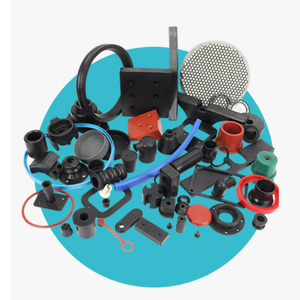
We produce exact-match replacement chassis and driveline components across 60 categories—including engine mountings, control arm bushes, stabilizer bushes, suspension mounts, and CV boots. Importers can consolidate multi-category container orders from one dedicated manufacturer, avoiding fragmented multi-vendor procurement.
No outsourced tooling. Our in-house CAD/CAM engineering center develops custom cavity molds, blow tooling, and progressive clamping dies with micron-level tolerances. We supply OEM cross-referenced items for 31 global marques including Toyota, Ford, Jaguar, Nissan, Isuzu, Honda, and Hyundai with rapid proto-sampling.
From computerized Banbury internal compound mixers to automatic cryogenic deflashing lines, every batch undergoes rheometer curing curve checks, tensile modulus testing, hardness verification (Shore A), and heat-ageing evaluations according to ASTM D2000 and ISO 37 testing standards.
Direct technical answers addressing installation compliance, material resilience, shipping lead times, and private label distribution.
Connect directly with our engineering and procurement team for OEM cross-referencing, full 9,485+ part catalog access, material test certifications, and container quotation pricing.
Inquire Now