
Engineering Solutions & Critical Polymer Chassis Components
Precision-molded vibration isolators, heavy-duty dampeners, and chassis links manufactured under rigorous ISO/TS quality frameworks for tier-one distribution.
9,485+
Catalogued Parts in Tooling
31+
Global Vehicle Makes Supported
100%
In-House Compound & Vulcanization
ISO9001
Certified Quality Management
Strategic Engineering of Automotive Exhaust Suspension in Romania
In modern vehicle dynamics, the exhaust hanging system represents a pivotal sub-assembly responsible for acoustic decoupling, vibration dampening, and the structural preservation of exhaust pipes, catalytic converters, and turbocharger manifolds. Operating within Romania's rapidly expanding automotive industrial clusters—spanning major manufacturing hubs from Pitești and Craiova to the automotive engineering parks of Timișoara, Cluj-Napoca, and Brașov—procurement directors face strict criteria for high-temperature elastomeric endurance.
An exhaust rubber hanger is not merely a flexible loop; it is a high-duty polymer isolator calibrated to suppress natural frequency harmonics (NVH) generated by internal combustion engines (ICE) and hybrid power units. At our state-of-the-art facilities, we combine advanced elastomer formulation with automated compression and injection tooling to supply components that meet and exceed strict OEM benchmarks across the European Union.
Elastomer Formulations: Natural Rubber vs. Ethylene Propylene Diene Monomer (EPDM)
A fundamental parameter when sourcing exhaust rubber hangers in Eastern Europe is the polymer compound selection. Automotive exhaust pipes experience intense thermal cycles ranging from ambient winter freezing points (-30°C in Central and Northern Romania) to operational exhaust pipe radiated surface temperatures exceeding +140°C.
While traditional Natural Rubber (NR) offers high tensile strength and tear resilience, its molecular structure remains prone to thermo-oxidative aging and ozone cracking under prolonged chassis exposure. Consequently, our factory relies on customized peroxide-cured EPDM (Ethylene Propylene Diene Monomer) and hybrid Fluoroelastomers (FKM) for exhaust hanger brackets. These compounds deliver superior resistance to thermal degradation, sulfur dioxide, acidic condensation, and corrosive highway de-icing salts widely used on Romanian transit corridors (such as the A1 and A3 motorways).
Tensile Strength & Durometry Control
Custom vulcanization balancing dynamic durometer scales from 45 to 80 Shore A. Engineered elongation curves prevent sagging under multi-component catalytic converter weight.
Thermal & Ozone Barrier Chemistry
High-grade EPDM formulations stabilized with anti-ozonants, maintaining elastomeric flex under high continuous engine heat load up to +150°C and sub-zero freeze dynamics.
Rubber-to-Metal Vulcanization Bonding
Dual-stage silane and phenolic adhesive pre-treatment guaranteeing cohesion strength between the elastomeric body and internal galvanized steel anti-tear sleeves.
Localized Industrial Application Scenarios in Romania
The operational landscape for automotive suspension and exhaust mountings in Romania spans three distinctive sectors, each imposing specific functional demands on the elastomeric profile:
1. Passenger Car Assembly & Tier-1 Integration: Supplying the high-throughput production lines supporting major national automotive programs such as Automobile Dacia (Groupe Renault) in Mioveni, as well as Ford Otosan in Craiova. Exhaust isolators engineered for these programs require rapid tooling turnaround, PPAP Level 3 compliance documentation, and tight dimensional tolerances to match automated assembly arm gripping end-effectors.
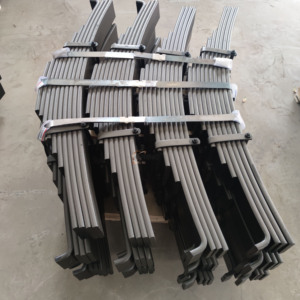
2. Commercial Logistics & Heavy Fleets: Romania serves as a central European freight crossroads connecting Western Europe with the Black Sea port of Constanța. Commercial transporters (running heavy-duty IVECO, MAN, Mercedes-Benz Actros, and Scania units) demand heavy-duty multi-plate leaf spring bushings, chassis stabilizers, and reinforced exhaust brackets designed to withstand high-amplitude road vibrations along unpaved secondary freight lines.
3. Aftermarket Distribution Networks: Domestic aftermarket spare parts distributors operating warehouses throughout Bucharest, Iași, and Oradea face consumer demand for direct-fit replacement rubber brackets. These components must match original equipment (OE) geometric dimensions without yielding premature tear failure or excessive engine transmission rumble inside the passenger cabin.
Trends Reshaping the Romanian Automotive Rubber Supply Chain
The shift toward lightweight vehicle architectures and hybrid powertrains (PHEVs/HEVs) is altering exhaust hanger requirements. Hybrid configurations undergo intermittent internal combustion cycles, triggering dynamic torque shocks as engines cycle between electric propulsion and internal combustion. Exhaust hangars must now exhibit nonlinear viscoelasticity to eliminate low-frequency shuddering during start-stop cycles.
Furthermore, European Green Deal circularity mandates demand strict control over raw ingredients. Our manufacturing facility enforces absolute conformity with EU REACH (EC 1907/2006) and RoHS, verifying our products remain completely free of Polycyclic Aromatic Hydrocarbons (PAHs), heavy metals, and restricted plasticizers.
Factory Strengths & Production Mastery
Engineered on automated molding lines with complete in-house control from polymer compounding to final tensile release testing.
Tooling Precision & 9,485+ Part Catalog
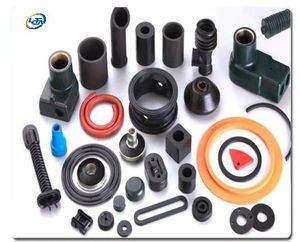
Decades of tool design engineering allow rapid development of custom dies for oval, teardrop, triangular, and multi-hole exhaust hanger brackets cross-referenced directly against OE numbers.
100% In-House Internal Mixing
No outsourced mixing. Banbury internal mixers and dual-roll cooling mills ensure that each compound batch meets specific tensile, elongation, and anti-aging criteria before pressing.
Rigorous Multi-Axis Dynamic Testing
Fatigue life and static shear verification replicating extreme thermal conditions to simulate hundreds of thousands of road kilometers before volume delivery.
Procurement & Engineering FAQ
Clear answers addressing common technical, regulatory, and logistics inquiries from Romanian automotive distributors and procurement leads.
What is the standard Shore A hardness for exhaust rubber hangers?
Most European automotive exhaust hangers are manufactured with an optimized hardness between 60 to 70 Shore A. This provides sufficient structural rigidity to support the exhaust weight while preserving the flexibility required to isolate engine vibration harmonics.
Can you provide custom compounds certified for high-temperature applications?
Yes. For performance vehicles and close-coupled catalytic converter locations where temperatures exceed 130°C, we provide peroxide-cured EPDM, Silicone, and Fluoroelastomer compounds engineered to resist heat hardening and permanent compression set.
How do you support Romanian distributors with low MOQ or custom OEM tooling?
Our engineering division develops custom molds based on technical drawings (CAD/STEP) or physical benchmark samples. We offer competitive initial trial batches, with dedicated capacity reserved for tier-1 distributors in Timișoara, Arad, and Bucharest.
Are your molded parts compliant with EU environmental regulations?
All compounds and chemical bonding agents conform fully to EU REACH (EC 1907/2006) and RoHS requirements. Complete material test sheets, third-party lab certifications, and IMDS submissions can be provided upon request.
Connect with Our Technical Polymer Engineering Team
Need custom tool development, rapid quote matching against OE numbers, or certified factory testing data for your Romanian distribution line? Speak to our engineers today.
Get a Quote