Metal Rubber Bushing Manufacturers & Supplier in Japan
Engineered to exceed JASO and JIS D 2605 fatigue durability standards. Direct tier supply, proprietary Chemlok® chemical vulcanization, and sub-micron dimensional tolerance for passenger fleets, heavy commercial vehicles, and industrial precision platforms across Japan.
9,485+
Production Toolings
Active OE-spec mold configurations covering 31 global automotive marques and Japanese Keiretsu designs.
< 15 ppm
Quality PPM Rate
Automated optical inspection and automated multi-axis torque deflection testing per ISO/IATF 16949 lines.
100%
Integrated Vulcanization
Zero-compromise in-house compound formulating, surface phosphating, primer bonding, and compression curing.
12-Month
Comprehensive Warranty
Fully backed against interfacial delamination, compound hardening, and dynamic modulus decay.
Featured Engineering Portfolio
High-Performance Metal Rubber Bushings & Heavy Duty Components
Designed to endure severe torsional stress, road debris contamination, and continuous cyclic vibrations in Japanese metropolitan and mountainous terrain.
Multi-layer composite design featuring self-lubricating porous bronze sintered matrix with PTFE overlay and heavy backing for industrial automation shafts.
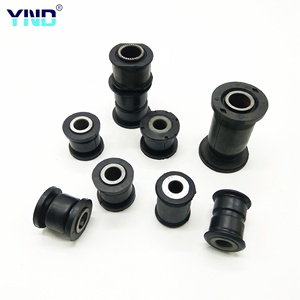
Dual-sleeve bonded architecture for lower control arms. High fatigue life Natural Rubber (NR) compound calibrated for optimized steering axis rigidity.
High-temperature silicone elastomer with ultra-wide operating range (-50°C to +180°C). Resists ozone degradation, high grease breakdown, and high-frequency flex tear.
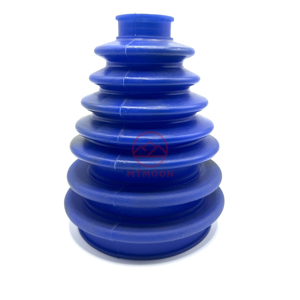
Engineered using premium grade vulcanized EPDM polymer for multi-diameter fitment. Outstanding resistance to de-icing calcium salts and Japanese highway winter brine.
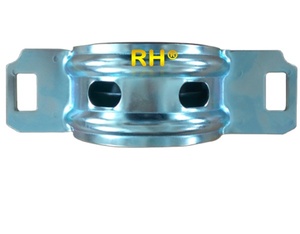
Precision sealed deep groove ball bearing cushion mounted in an elastomeric isolation ring with high-tensile stamped steel bracket. Mitigates driveline shudder.
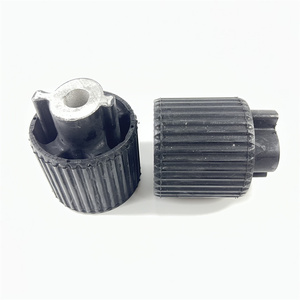
Self-lubricating graphite-impregnated contact interface minimizing stick-slip squeaks and lateral bar migration. Resistant to dust intrusion and moisture washout.
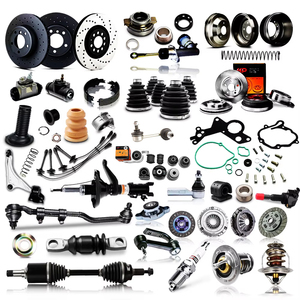
Comprehensive replacement line covering engine torque struts, rear axle mounts, trailing arm bushes, and subframe dampers matching original OEM drawings.
Japanese Industrial Standards (JIS) Alignment
Engineering Demands of the Japanese Automotive & Industrial Ecosystem
Procuring metal-rubber bonded components in Japan requires compliance with severe operating parameters unique to the Japanese archipelago. With high urban vehicle density in Tokyo, Osaka, and Nagoya demanding smooth start-stop NVH dampening, alongside demanding topographical inclinations across regional expressways, vehicle chassis bushings experience excessive multi-axial dynamic stress.
Our metal rubber bushings are manufactured using cold-drawn structural steel sleeves (STKM 11A / 13A equivalent) combined with automated phosphate micro-crystal pre-treatments. This guarantees superior peel strength against rubber interfaces under dynamic shear loads up to 12.5 MPa.
Elastomeric Integrity: Specially compounded NR/BR blends to prevent dynamic stiffness crystallization down to -40°C in Hokkaido winters.
Corrosion Resistance: Geomet® or electro-zinc plating passing 720+ hours of neutral salt spray testing (JIS Z 2371).
Micro-Cracking Immunity: Antizonant wax migrations engineered to withstand high urban NOx/Ozone levels without premature surface crazing.
Test Parameter
Standard Ref.
Engineering Specification
Rubber-Metal Bond Strength
ASTM D429 / JIS K 6256
> 10.0 MPa (100% Rubber Tear Failure)
Shore A Hardness Range
JIS K 6253
50 to 75 ± 3 Shore A (Tunable NVH Curve)
Dynamic Torsional Endurance
JASO C 709
> 1,000,000 Cycles @ ±15° Oscillation
Anti-Corrosion Surface Coat
JIS Z 2371
Tri-cationic Zinc Phosphate + E-Coat / Geomet
Compression Set (70h @ 100°C)
JIS K 6262
≤ 22% Permanent Deflection Maximum
Emerging Market Trends
Evolving Demands in Japan’s NVH & Drivetrain Components
The transition toward Battery Electric Vehicles (BEVs), autonomous shuttle fleets, and railway rolling stock modernization in Japan is fundamentally reshaping bushing specification metrics.
High-Frequency NVH Isolation for BEVs
With the elimination of internal combustion engine acoustic masking in modern Japanese EVs, road-induced noise from 500 Hz to 2000 Hz enters the cabin unfiltered. Our microcellular rubber formulation delivers non-linear dynamic dampening to eliminate high-frequency chassis harshness without sacrificing cornering authority.
Lightweighting & Hybrid Sleeve Matrix
To support weight reduction across hybrid (HEV) platforms, we have engineered ultra-compact aluminum alloy (A6061-T6) and fiber-reinforced composite inner sleeves. This achieves a 38% mass reduction compared to conventional solid carbon steel bushes while preserving equivalent radial crush loads.
Low Stick-Slip Tribology for Stabilizers
Modern commercial bus and rapid transit vehicles demand maintenance-free operation across 300,000 km schedules. Integrating graphite, molybdenum disulfide, and specialized internal bore vulcanization eliminates squeaks and dry friction without requiring continuous petroleum re-greasing.
Core Manufacturing Competence
Full Supply Chain Control: From Pure Raw Polymer to Finished Assembly
Unlike trading brokers, we operate fully integrated molding, compounding, and CNC tooling centers with end-to-end trace control.
In-House Elastomeric Compounding
We mix our own high-grade natural rubber, EPDM, chloroprene, and silicone compounds using closed Banbury internal mixers. Rheometer-controlled batches guarantee tight vulcanization kinetics, zero porosity, and homogenous mechanical dispersion across all production runs.
Sub-Micron CNC Metal Processing
All inner and outer metal inserts are turned on high-precision multi-axis CNC machines and cold swaged with ±0.015 mm tolerances. Outer diameters are precisely sized to allow proper press-fit interference fitment in cast iron and forged aluminum control arms without cracking housing bores.
Chemlok® Multi-Layer Surface Adhesion
Metal inserts undergo automatic degreasing, zinc phosphate conversion coating, and robotic spraying of thermal-activated primer and adhesive. This prevents bond interface degradation even under persistent hydraulic fluid or gearbox lubricant immersion.
Procurement Knowledge Base
Frequently Asked Questions by Japanese Technical Buyers
Can your bushings directly replace OEM numbers for Japanese vehicle brands?+
Yes. Our catalog provides 1:1 cross-referenced fitments for Toyota, Nissan, Honda, Mitsubishi, Isuzu, Mazda, Subaru, Hino, and Daihatsu. Dimensions, metal sleeve lengths, internal diameters, and dynamic spring rates are directly reverse-engineered against original factory samples to ensure plug-and-play installation without modification.
How do you prevent rubber-to-metal bonding separation under heavy shear?+
Interfacial bond failure is eliminated by executing multi-stage surface preparation: grit blasting to Sa 2.5 profile, chemical phosphating, and robotic application of two-coat adhesive systems (Lord Chemlok®). Curing is performed under strict vacuum hydraulic press control to eliminate air pocket entrapment.
What lead times and supply arrangements can you offer to ports like Yokohama, Kobe, or Nagoya?+
With thousands of standard part numbers maintained as ready inventory in our distribution hubs, shelf orders dispatch within 3-5 business days. Direct sea freight to primary Japanese ports (Tokyo, Yokohama, Nagoya, Osaka, Kobe) takes between 7 to 14 days, supported by complete commercial invoices, packing lists, and Certificate of Origin (CO).
Can you manufacture custom bushings based on 2D drawings or CAD step files?+
Yes. Our tooling workshop features dedicated EDM and 5-axis CNC machining centers. We can produce custom tooling within 15–20 working days based on your CAD models, technical drawings, or physical samples, followed by PPAP Level 3 documentation and Initial Sample Inspection Reports (ISIR).
How are products tested to withstand sub-zero conditions in northern regions like Tohoku and Hokkaido?+
We formulate rubber mixtures using low-temperature plasticizers and high-purity cis-1,4-polybutadiene rubber. Bushings undergo cryogenic brittle-point evaluation according to JIS K 6261 (-45°C) to maintain flexibility without glass transition micro-cracking during cold starts.
What testing protocols are executed on mass production batches?+
Each batch undergoes testing for Rheology Cure Profiles, Tensile & Elongation (JIS K 6251), Shore Hardness Verification (JIS K 6253), Static & Dynamic Radial/Axial Stiffness Rate curves, and Destructive 90-degree Peeling Adhesion tests. Full inspection certificates (COA) accompany every shipment.
Initiate Your OEM/ODM Metal Rubber Bushing Sourcing Project
Whether you require aftermarket replacement stocks cross-referenced to original OEM part numbers, or bespoke NVH damping bushes built to technical drawings, our engineering team provides rapid quote turnarounds and prototype support.