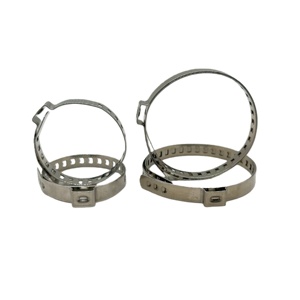

Engineered from specialized EPDM, Polychloroprene (CR), and thermoplastic elastomers (TPE/TPEE) designed to resist severe flex fatigue, lubricant wash-off, and extreme thermal cycling.
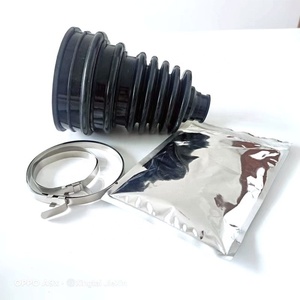
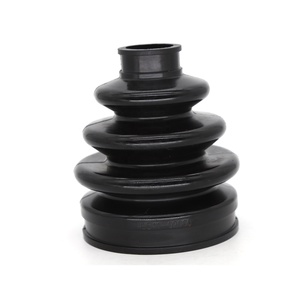
The Eurasian transportation corridor presents extreme tribological and mechanical stress profiles. Conventional drive shaft rubber fails when exposed to sub-zero shock loads and aggressive chemical de-icers.
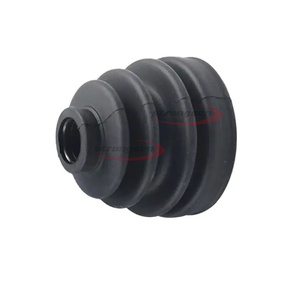
In regions such as Yakutsk, Novosibirsk, and Krasnoyarsk, ambient winter temperatures drop routinely to -45°C or lower. Standard neoprene elastomeric boots undergo glass transition, turning brittle and shattering under suspension oscillation. Our custom cold-vulcanized silicone and cross-linked EPDM boots preserve dynamic flexibility, preventing premature grease expulsion and catastrophic tripod joint scoring.
Federal highways and municipal roads throughout Moscow, Saint Petersburg, and the Urals rely heavily on calcium chloride, technical salts, and abrasive anti-ice reagents. Our boots are treated with fluorinated barrier surface chemistry that prevents petrochemical leaching, ozone oxidation, and outer-shell micro-cracking caused by road slush and grit impingement.
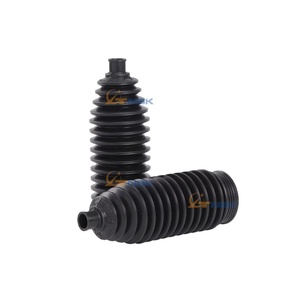
From logging roads in Karelia to oil-field utility transport in Khanty-Mansiysk, light commercial vehicles (GAZelle, UAZ) and heavy all-wheel-drive platforms undergo continuous maximum angularity deflection. Our thickened convoluted bellows withstand dynamic stone battering, high torque twist, and centrifugal bulge at continuous highway and gravel speeds.
Structural supply shifts require tier-1 distributors, assembly rebuilders, and fleet operators in Russia to rethink their procurement ecosystems.
With brands such as Haval, Chery, Geely, Changan, and Great Wall claiming dominant market share across Russia, legacy OE catalogs are obsolete. Our engineering department develops dedicated tooling molds matching OE geometry for modern Chinese platforms within 25 days, giving warehouse distributors first-to-market catalog coverage.
Due to the elongated operational lifecycle of existing European, Japanese, and Korean passenger fleets (Toyota, VAG, Hyundai-Kia, Renault-Nissan), workshops are shifting from replacing whole axle assemblies to precision rebuilds. High-tensile split boots and universal stretch CV boot kits serve as rapid, cost-effective maintenance assets for fleet profitability.
Intermediary European logistics hubs have been superseded by direct factory supply relationships with verified Asian manufacturing facilities. Russian procurement houses increasingly require custom private labeling, dual Cyrillic/English packaging, barcode serialization, and customized molybdenum-disulfide grease formulation bundling.
Complete internal vertical integration eliminates sub-supplier variance, guaranteeing dimensional stability and chemical resistance across millions of production units.
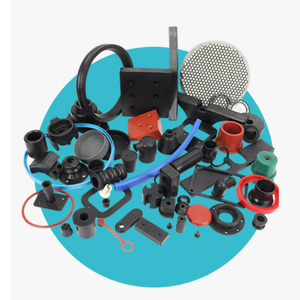
In-house mixing of custom rubber compounds utilizing virgin synthetic elastomers, plasticizers calibrated for extreme cold flexural fatigue, and anti-ozonant protection additives.
Dedicated high-precision CNC tool design replicating OE dimensions, internal bead locking grooves, and wall-thickness ratios to avoid dynamic collapse under centrifugal forces.
Automated injection and compression molding presses ensure homogeneous curing, eliminating micro-porosities, uneven seam lines, and internal structural stresses.
Rigorous bench testing for low-temperature elasticity (-45°C), grease barrier retention, dynamic angle rotation, coupled with 304 stainless steel clamping bands and MoS2 grease kits.
Everything you need to know about specifications, tooling timelines, logistics, and wholesale OEM production arrangements.
Connect with our technical engineering sales desk today to request low-temperature test certifications, volume price matrices, or custom tooling estimates for your fleet and distribution networks.
Send an Inquiry