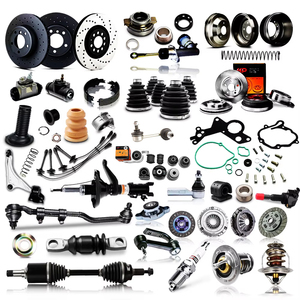
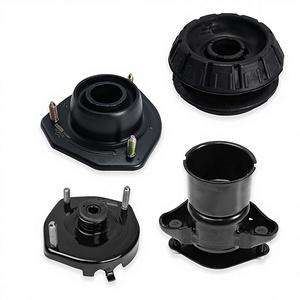
Engineered for exacting OEM specifications and severe operational dynamics. Browse our core catalog items engineered with anti-shearing elastomeric blends and bonded heavy-gauge steel seats.
Why Northern California’s operating conditions demand higher shear modulus, precise rubber-to-metal bonding, and specialized micro-cellular dampening architectures.
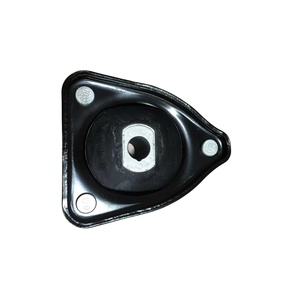
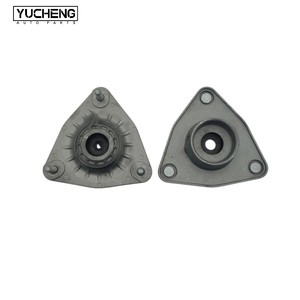
San Francisco’s infamous gradient grades (reaching over 20% along Nob Hill, Pacific Heights, and Twin Peaks) subject MacPherson strut top mounts to continuous non-axial shear. When vehicles brake on steep downward inclines, dynamic load transfers directly compress the forward vulcanized lip of the strut mount, causing premature polymer tear in substandard mounts.
The Bay Area serves as the global epicentre for high-density app-based ride-hailing and last-mile logistics fleets. Vehicles like the Toyota Prius, Camry, Ford Fusion, and Transit Connect run 14-hour cycles traversing potholed thoroughfares, degraded expansion joints across the Bay Bridge, and rough cable-car tracks, tripling standard fatigue rates.
San Francisco’s pervasive marine layer and salt-laden fog create a relentless corrosion cycle for chassis assemblies. Standard cold-rolled mount caps rust quickly if unprotected. NISTO integrates multi-stage zinc-nickel electro-coating and electrophoretic deposition to guarantee exceeding 500-hour ASTM B117 salt spray benchmarks without bond delamination.
OEM/ODM Technical Insight: The MacPherson strut mount acts as the singular structural bridge connecting the suspension damper assembly to the vehicle unibody. In San Francisco's multi-stress environment, our proprietary rubber compounds balance high elastic recovery (preventing steering stiffness) with dampening loss factor (tan δ), absorbing 92% of road vibration before it translates into steering column shudder.
As vehicle design in Silicon Valley moves toward electric drivetrains and intelligent suspension monitoring, strut mount engineering is experiencing major structural transformations.
Electric battery packs add 300 to 700 kg of unsprung and sprung curb weight. Traditional passenger vehicle mounts fail rapidly under this mass. Modern Bay Area repair programs mandate high-durometer elastomers (65 to 75 Shore A) paired with structural forged aluminum carrier plates to prevent permanent rubber deformation.
Without internal combustion engine hum to mask suspension harmonics, electric vehicle cabins expose subtle chassis noises. Today's top strut mounts must use tuned dual-path isolation bushings, separating spring coil energy from damper piston rod vibration to eliminate high-frequency acoustic transfer.
With self-driving robotaxis testing across San Francisco streets, autonomous vehicle fleets require extended duty components. Fleets are moving toward heavy-duty commercial strut mount designs with reinforced angular contact bearings and synthetic perfluoropolyether lubricants rated for 150,000 miles.
Modern suspensions split damper rods from spring loads through dual-bearing mount caps. This design reduces torsional steering resistance during tight city parking maneuvers while preserving high damping across rough concrete transitions along US-101 and I-280 corridors.
Why tier-one importers, regional Bay Area parts distributors, and global rebuilders rely on our dedicated rubber-to-metal molding plants in Thailand.
Unlike export traders who outsource production to disparate sub-suppliers, every part in our 9,485-item catalog is molded on our own specialized equipment. We design, machine, and maintain our own CNC compression and injection molds, holding critical tolerances to ±0.05 mm across multi-cavity tooling runs.
A strut mount is only as dependable as its rubber-to-metal bond. Our factories utilize automated, temperature-controlled robotic application of Lord Chemlok adhesive systems onto thoroughly shot-blasted, phosphated steel shells. Bonding strength exceeds 12 MPa, preventing elastomer separation even under full dynamic jounce impacts.
We compound our natural rubber (NR) and synthetic blends (EPDM, CR, and NBR) on internal automated Banbury mixers. By controlling polymer molecular weight, carbon black reinforcement dispersion, and antioxidant stabilizers in-house, we eliminate the brittleness and thermal hardening issues common in lower-tier aftermarket mounts.
Key technical and logistics inquiries answered for procurement directors, chassis rebuilders, and warehouse distributors across California and the West Coast.
Our manufacturing and consolidated shipping facilities in Thailand provide direct ocean freight lanes into the Port of Oakland—the key container gateway for Northern California and the San Francisco Bay Area. Ocean transit typically averages 18 to 24 days. From Oakland, containers clear US Customs efficiently and move quickly via regional drayage across San Francisco, South San Jose, and East Bay industrial corridors.
For urgent replenishment orders or trial runs, we also maintain air-freight logistics routing directly into San Francisco International Airport (SFO), delivering priority shipments within 3 to 5 business days.
Every compound batch is tested using automated rheometers, tensile stress pullers, and dynamic mechanical thermal analysis (DMTA). We verify durometer ratings (typically 55 to 65 Shore A for standard passenger, 65 to 75 Shore A for heavy fleet and EV applications) within a ±3 tolerance band across working thermal ranges from -40°C to +80°C.
Furthermore, random sample parts from each vulcanization batch undergo 500,000-cycle axial fatigue oscillation and 90-degree bond peeling tests. This ensures the bonded rubber will not tear away from steel inserts under continuous multi-axis loads.
Yes. We offer complete reverse engineering and bespoke tooling development for North American, European, and Asian vehicle models. If you have an out-of-production part, custom EV suspension setup, or special fleet design, provide our engineering department with your 3D CAD files (STEP, IGES, SolidWorks) or send an original sample part.
Our in-house tool shop produces rapid prototypes within 15 to 20 business days. Following CMM coordinate checks, metallurgical validation, and Shore hardness verification, we deliver initial sample units for on-vehicle fitment testing prior to volume mold manufacturing.

We provide full white-label and private-label packaging support for brand owners, distribution networks, and aftermarket retail suppliers. Capabilities include full-color custom boxes, sealed vapor-corrosion-inhibiting (VCI) polybags, laser-etched OEM part numbering on the steel bracket, and GS1/UPC-A barcode labeling on retail packages.
Master cartons are heavy-duty export grade, shrink-wrapped on ISPM-15 heat-treated wooden pallets to ensure clean handling and rapid scanning at your distribution centers.
Because our catalog spans 9,485 parts and 60 chassis and powertrain categories, we understand distributors need breadth of coverage rather than massive single-SKU orders. Our standard production MOQ is typically 100 to 200 units per line item, with lower thresholds available for items in active production.
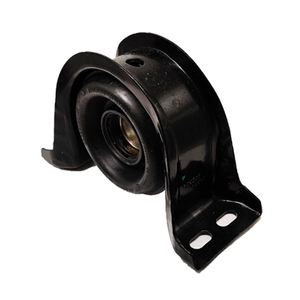
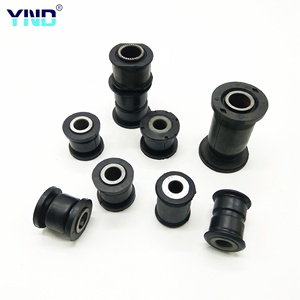
We allow buyers to mix and consolidate multiple categories—such as strut mounts, control arm bushings, engine mountings, stabilizer links, and driveshaft center supports—into a single 20ft or 40ft container to optimize your freight costs and working capital.
Connect with our technical sales and engineering group to discuss volume pricing, request physical product samples, or schedule custom tooling development for your chassis portfolio.
Get a Quote