
Engineered for high-torsion absorption, accurate strut alignment, and rigorous continuous service under demanding regional transit duty cycles.
A deep-dive technical assessment of metallurgical adhesion, polymer chemistry, and operational longevity across Southeastern European transport routes.
Bulgaria presents a unique topographical and infrastructural operating environment for automotive chassis assemblies. The national transit matrix spans the mountainous terrain of the Stara Planina (Balkan Mountains) and the Rila-Rhodope ranges down to urban centers like Sofia, Plovdiv, Varna, and Burgas. Commercial logistics corridors such as the Trakiya (A1) and Hemus (A2) motorways experience high continuous axle loads, whereas extensive regional (second- and third-class) networks are marked by asphalt micro-cracking, sudden elevation delaminations, expansion joints, and frost-heave potholes.
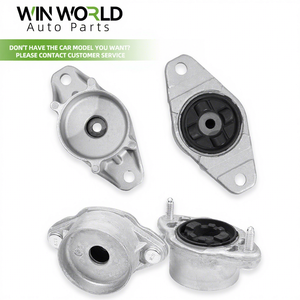
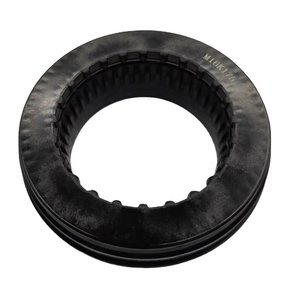
When a vehicle negotiates these sudden elevation transitions, the shock absorber piston rod transfers high-frequency hydraulic impact directly into the upper strut mount (shock absorber mounting). In standard consumer-grade mounts, peak impact velocity creates severe localized tension at the rubber-to-metal interface, inducing accelerated cavitation and micro-tears in non-optimized compounds.
Field Failure Analysis: Up to 68% of premature strut mount failures in Southeastern Europe do not stem from total hydraulic damper collapse, but from rubber debonding and polymer stiffening caused by substandard chemical compounds unable to survive cyclic freezing temperatures and heavy winter de-icing salt exposure.
To eliminate premature structural fatigue, NISTO's shock absorber mountings utilize an advanced vulcanization formula combining high-purity Natural Rubber (NR) blended with specialized synthetic elastomers. This preserves an optimized Shore A durometer hardness across thermal shifts from -40°C in mountainous winter passes (such as the Shipka Pass) up to +45°C ambient summer heat in the Thracian Plain.
The core structural integrity of a shock absorber mounting relies completely on the chemical bond between the outer metal retaining plate, internal metal sleeves, and the elastomer core. Cheap aftermarket mounts frequently rely on basic adhesive swabbing followed by inconsistent compression molding, which invariably separates under continuous shear stress.
At our specialized manufacturing facility in Thailand, every strut mount undergoes a proprietary 5-stage automated surface-treatment and vulcanization cycle:
• Shot-Blasting & Degreasing: Deep abrasive descaling of cold-rolled steel retaining plates to create microscopic anchorage profiles.
• Chemlok® Primer & Adhesive Silane Layering: Dual-coat robotic deposition ensuring uniform nanometer-level bonding film thickness without void formations.
• Controlled High-Pressure Molding: Dedicated mold cavity tooling with precision heating zones preventing under-curing at thick core sections and scorch at thin dampening lips.
• Anti-Hydrolysis & Road Salt Coating: E-coating (electrophoretic deposition) on metal housings yielding over 500 hours of ASTM B117 salt spray resistance—essential for Bulgarian winter road treatments utilizing aggressive calcium chloride and rock salts.
Direct factory supply from Thailand reduces supply chain friction, offering wholesale distributors in Sofia, Plovdiv, and Ruse stable unit economics and competitive margins against high-cost European re-boxers.
Every SKU is mapped to genuine OEM cross-reference numbers, complete vehicle fitment engines, and physical technical drawings, completely removing returns caused by incorrect mounting holes or stud pitch discrepancies.
Calibrated damping rates eliminate cabin boom, chassis vibration, and steering tug, providing silent operation for taxi fleets, micro-buses, and cross-border commercial transport vehicles operating across the Balkans.
Key drivers defining wholesale procurement, fleet maintenance schedules, and parts distribution channels in Southeastern Europe.
The automotive fleet in Bulgaria remains one of the oldest in the European Union, with the average passenger car and light commercial vehicle (LCV) age exceeding 15 to 19 years according to automotive registry trends. High volumes of pre-owned vehicles imported from Germany, Italy, and Austria enter the Bulgarian secondary market with degraded suspension rubber.
Consequently, professional automotive service workshops (Auto Services) across major municipal hubs are shifting from "shock absorber only" replacements to complete suspension refurbishments. Replacing hydraulic dampers without installing fresh strut mountings and bearings inevitably leads to customer comebacks due to steering clunking, erratic return-to-center steering action, and accelerated tire cupping. This shift represents a rapidly growing demand vector for wholesale distributors stocking pre-matched mounting assemblies.
Bulgaria serves as a vital strategic logistics bridge connecting Western and Central Europe with Turkey and the Middle East through the Kapitan Andreevo checkpoint. Light commercial fleets (Sprinter, Transit, Crafter, Master) run continuous heavy-duty routes under full payload capacity. Shock mounts installed on these LCVs endure severe high-cycle dynamic loading. NISTO's reinforced heavy-duty rubber compounds prevent premature permanent deformation (compression set), preserving front-end wheel geometry (camber and caster) and protecting transport operators from catastrophic roadside downtime.
Historically, Bulgarian auto parts importers procured Asian-manufactured components indirectly through distribution hubs in Poland, Germany, or Lithuania. Increasing operational costs, transportation surcharges, and intermediary margins have led forward-thinking importers and buying groups to source directly from primary manufacturers in Thailand like NISTO RUBBER. With full ISO9001-certified manufacturing protocols, consolidated container shipments, and extensive cross-cataloging, Bulgarian enterprises capture higher gross margins while securing uncompromised part authenticity.
Industrial scale, rigorous in-house chemical processing, and comprehensive catalog depth built over decades of manufacturing leadership.
We do not outsource critical molding operations. From formulation of natural rubber raw bales to CNC mold cavity production, every process step is governed on our proprietary production floors in Thailand, guaranteeing zero batch-to-batch variation.
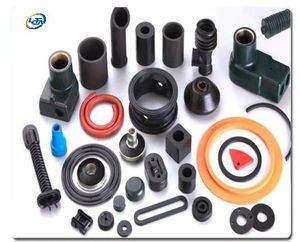
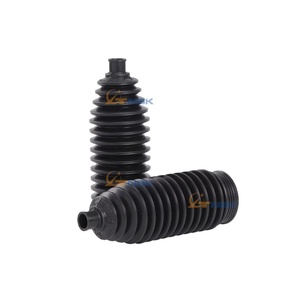
Our expansive warehouse facilities hold ready-to-ship stock across 60 product categories. Importers can combine shock absorber mountings with engine mounts, control arm bushings, CV boots, and driveshaft center bearings within a single consolidated sea container.
We engineer chassis parts matching global vehicle platforms: VAG, Ford, GM, Toyota, Nissan, Honda, Hyundai, Kia, Isuzu, and commercial truck applications including Hino. Comprehensive coverage empowers Bulgarian distributors to dominate local wholesale niches.
Essential answers regarding international shipping, minimum order quantities, compound certifications, and catalog matching.
Partner directly with NISTO RUBBER—Thailand's premier automotive rubber parts manufacturer. Request our comprehensive OE cross-reference catalog, request sample testing units, and secure factory-direct pricing for the Bulgarian and wider Balkan markets.