
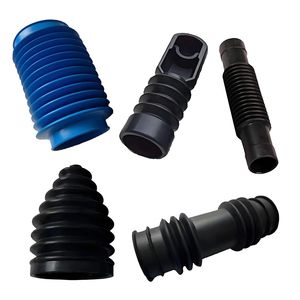
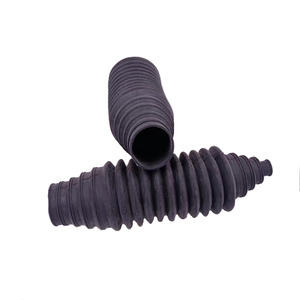
Engineering Silicone CV Boots for Singapore & Southeast Asian Logistics Realities
Constant Velocity (CV) boots operate in one of the most mechanically aggressive environments under the vehicle chassis. As the CV joint rotates at wheel speeds reaching thousands of RPMs while articulating through suspension travel and steering lock angles, the flexible boot bellow undergoes multi-axial cyclic fatigue. In conventional automotive markets, standard Neoprene (Chloroprene Rubber - CR) or EPDM bellows offer acceptable service lives. However, Singapore’s unique intersection of ultra-high ambient humidity (averaging 84%), coastal saline atmospheric conditions, stop-and-go urban heat cycles, and rapid electric vehicle (EV) torque delivery causes accelerated micro-cracking, ozone embrittlement, and plasticizer leaching in standard rubbers.
As an established Thai manufacturing powerhouse directly supplying and exporting through Singapore's Jurong, Tuas, and Changi air freight corridors, NISTO Rubber manufactures premium automotive elastomeric solutions engineered specifically against equatorial degradation vectors.
Material Science Breakdown: Neoprene vs. Thermoplastic Elastomer (TPE) vs. Silicone Elastomer
Procurement teams, fleet engineers, and aftermarket exporters frequently evaluate the balance between initial unit cost and Mean Time Between Failures (MTBF). The matrix below provides empirical mechanical and environmental metrics demonstrating why engineered silicone CV boots deliver lowest total cost of ownership (TCO) across equatorial fleets.
| Physical / Chemical Property | Standard Neoprene (CR) | Thermoplastic Polyester (TPE/TPEE) | NISTO Silicone Compound (VMQ/FVMQ) |
|---|---|---|---|
| Continuous Thermal Range | -30°C to +105°C | -40°C to +125°C | -50°C to +200°C (Unmatched) |
| Ozone & UV Resistance (ASTM D1149) | Moderate (Prone to surface cracking < 50 pphm) | Good (Rigid, susceptible to fatigue tear) | Immune (> 200 pphm continuous exposure) |
| Elastic Recovery & Flex Fatigue | Deuterates with heat-aging | High initial stiffness; noise transfer | Permanent elastic memory; low durometer flex |
| Synthetic MoS2 Grease Compatibility | Softens / swells over extended contact | Stable, requires high clamping tension | Inert chemical resistance across all ester blends |
| Suitability for Heavy EV Torque Spikes | Poor (Torsional ballooning failure) | Moderate (Risk of joint slip under max steering) | Superior wall stability with reinforced bellows |