Engineered with proprietary rubber-to-metal chemical bonding and low-temperature resilient polymers tailored for Central European commercial, passenger, and industrial chassis platforms.
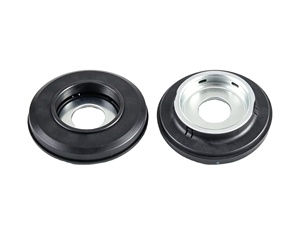
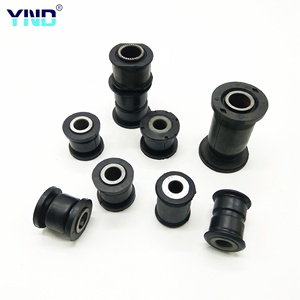
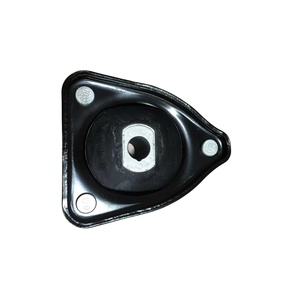
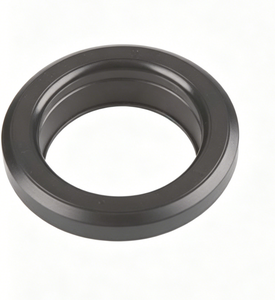
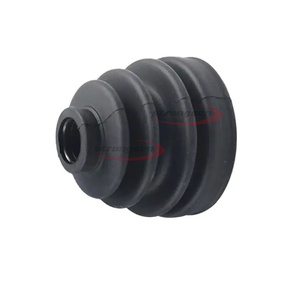
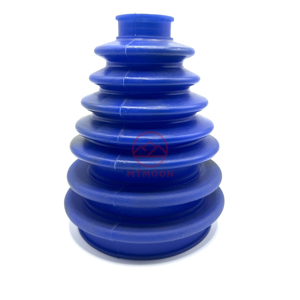
The automotive subframe (also recognized as the auxiliary chassis frame, axle carrier, or Achsträger in German-speaking territories) acts as the critical structural interface connecting the vehicle's suspension linkages, steering rack, and powertrain directly to the unitary body structure. In Austria, vehicle chassis endure operating conditions far more rigorous than standard European flatland highway driving. Between the steep ascending gradients of the Grossglockner and Tauern passes, the heavy-duty transit freight passing via the Brenner Corridor, and extensive sub-zero winter cycles, subframe mounts face accelerated degradation across radial, axial, and torsional axes.
As an integrated manufacturer producing over 9,485 OEM-specified catalogued components, our direct manufacturing approach controls the entire product lifecycle—from raw synthetic and natural rubber polymerization compounding to cold-drawn steel sleeve phosphating and automated hydraulic vulcanization. By eliminating sub-contracted molding, we eliminate the structural vulnerabilities frequently observed in standard aftermarket subframe bushings operating under Austrian environmental stressors.
| Engineering Parameter | Standard Aftermarket Standard | NISTO Heavy-Duty Alpine Spec | Target Operational Benefit |
|---|---|---|---|
| Base Polymer Matrix | Recycled Blend / SBR General Grade | 100% Virgin NR / EPDM Dynamic Grade | Prevents micro-crystallization at -35°C; avoids brittle cracking |
| Rubber-to-Metal Bond | Single-dip Adhesive Coating | Tri-Stage Zinc Phosphate + Chemlok Primer/Cover | Zero delamination under high continuous braking shear forces |
| Durometer Tolerance | Shore A ±8 points | Shore A ±3 points (Calibrated batch testing) | Preserves exact suspension geometry & toe/camber stability |
| Corrosion Resistance | Standard Flash Zinc (<120 hrs Salt Spray) | Geomet / Zinc-Nickel (>720 hrs DIN EN ISO 9227) | Immunity to wet Austrian road salt (NaCl + CaCl2 brine) |
| Dynamic Damping Range | Linear Single-Frequency | Dual-Rate Progressive Damping Void Geometry | Suppresses low-frequency rumble & high-impact pavement shocks |
The mechanical role of an auxiliary frame mounting in Austrian applications is multi-dimensional. The bushing must provide sufficient high dynamic stiffness to prevent excessive lateral displacement during aggressive hairpin cornering on mountain switchbacks, while simultaneously retaining low static stiffness along the vertical axis to absorb high-frequency road vibrations before they transmit into the passenger cabin. We balance these opposing requirements through finite element simulation (FEA) of elastomeric void geometry, paired with strictly controlled vulcanization rheology.
Why Austrian automotive wholesalers, fleet workshops, and OEM replacement specialists require purpose-built elastomeric suspension hardware.
Traversing mountain inclines like the Arlberg, Brenner, and Katschberg passes imposes continuous longitudinal load transfers onto rear subframes and front axle carriers. Heavy diesel and high-torque hybrid drivetrains exert aggressive torque oscillation during uphill acceleration and continuous engine braking, subjecting subframe bushings to intense rotational shear. Our bushings utilize cold-extruded seamless sleeves with high tensile yield strength to completely prevent inner core migration.
Austrian highway maintenance agencies (ASFINAG) and municipal road teams deploy extensive amounts of calcium chloride (CaCl2) and sodium chloride (NaCl) brine from November through April. Subframe mounts are positioned directly in the wheel-splash impact zone. Cheap rubber blends suffer rapid ozone and salt cracking, leading to metal sleeve corrosion and debonding. NISTO vulcanizes an antioxidant-saturated rubber skin with specialized anti-hydrolysis agents, guaranteeing extended longevity.
In Austria, the annual §57a periodic technical inspection (colloquially known as the Pickerl-Überprüfung) is among Europe's most stringent. Suspension play, rubber debonding, or hairline radial tears in subframe bushings are classified as immediate serious defects (Schwerer Mangel), preventing certificate renewal. Austrian repair workshops rely on NISTO bushings because our dimensions, rubber hardness, and deflection curves match original equipment standards precisely, passing hydraulic play detector tests effortlessly.
Light commercial vehicles (LCVs) like Mercedes-Benz Sprinters, VW Crafters, and Ford Transits operating along logistical arteries such as the Inntal Autobahn (A12) carry maximum payload capacities over rough altitude variations. Subframe bushings on these working vans absorb continuous heavy payload stress. NISTO manufactures reinforced heavy-duty subframe bushings engineered with higher static spring rates to prevent chassis bottoming and tire wear.
Austria is seeing rapid electric vehicle adoption in commuter regions around Vienna, Graz, and Linz. Battery electric vehicles (BEVs) exhibit curb weights up to 30% greater than comparable internal combustion engine vehicles, coupled with instantaneous peak torque. The subframe mounts must withstand higher cyclic low-frequency mechanical energy. Our specialized compression-limiter bushings and dual-elastomer mounts preserve stability without compromising acoustic isolation.
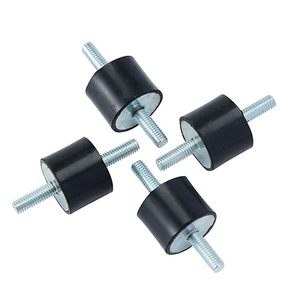
In rural regions including Tyrol, Styria, and Carinthia, municipal all-wheel drive vehicles and municipal maintenance machinery demand vibration isolation mounts with extreme shock absorption. Our cylindrical stud isolators and heavy machinery mounts provide high shear stability, protecting hydraulic assemblies and driver cabins from ground-induced harmonic destruction.
Emerging technical and regulatory shifts shaping procurement strategies for chassis components across the Austrian aftermarket.
Modern European vehicle architectures are increasingly migrating toward cast aluminum subframes and hybrid hydroformed steel cradles. Installing bushings into aluminum subframe bores requires strict control over outer sleeve tolerances (DIN ISO 2768-m) and galvanic isolation treatments. NISTO utilizes specialized zinc-nickel and non-conductive phosphating finishes to prevent electrolytic galvanic corrosion between steel bushing shells and aluminum subframe carrier housings.
With combustion engine noise eliminated in EVs and PHEVs, secondary acoustic paths—particularly tire-pavement roaring and motor high-frequency inverter whine transmitted through the subframe—become dramatically noticeable. Austrian buyers increasingly specify subframe mounts engineered with tuned internal fluid chambers or progressive void geometries that attenuate noise transmission within the 100 Hz to 350 Hz frequency spectrum.
Austrian commercial importers and automotive parts distributors operate under European Union REACH Regulation (EC No 1907/2006) and strict polycyclic aromatic hydrocarbon (PAH) limits. Substandard rubber compounds manufactured with toxic extender oils are prohibited. NISTO utilizes virgin non-aromatic process oils and environmentally compliant vulcanization accelerators, fully certified for European distribution without customs or hazardous material barriers.
Unlike export trading firms or assembly-only distributors, NISTO RUBBER MANUFACTURING CO., LTD. operates a completely vertical manufacturing plant in Thailand. We control every critical variable of the elastomeric transformation process, ensuring unmatched batch repeatability and reliability.
We mix our own proprietary compounds on internal Banbury mixers and precision rolling mills, customizing Shore A hardness, elongation at break, and damping ratios.
Utilizing multi-stage degreasing, zinc-phosphate conversion, and automated dual-coat Chemlok adhesive application for failure-free bonding.
Over 9,485 distinct part numbers spanning 31 major global vehicle makes across European, Asian, and American passenger and commercial applications.
Every production batch undergoes rheometer curing verification, tensile testing, durometer testing, and multi-axis dynamic fatigue cycle analysis.
By sourcing directly from our Thailand manufacturing hub, Austrian importers avoid expensive European intermediary markups while obtaining OEM-grade components engineered to exact technical drawings. Furthermore, Thailand's position as the world's leading producer of premium natural rubber ensures that our compounds feature the highest grade raw latex, providing exceptional molecular elasticity and mechanical endurance under cold climate fatigue.
Crucial information for wholesale importers, parts distributors, and automotive logistics managers in Austria.
Our subframe mounts are manufactured strictly to OEM geometric tolerances and static/dynamic deflection curves. We verify axial and radial play limits against genuine samples, ensuring zero abnormal movement on workshop hydraulic play detectors during the §57a Pickerl roadworthiness inspection.
Yes. All elastomers formulated at our factory comply with EU REACH Regulation (EC No 1907/2006) and Annex XVII limits on Polycyclic Aromatic Hydrocarbons (PAHs). We provide full chemical material declaration datasheets to ensure smooth customs clearance into the European Union.
We formulate our natural rubber and EPDM blends with specialized plasticizers that resist glass transition and crystallization down to -40°C. Even under extreme winter conditions in Innsbruck, Salzburg, or Klagenfurt, our bushings maintain structural elasticity without becoming brittle or developing micro-fissures.
Absolutely. In addition to our 9,485 standard catalog items, we offer bespoke mold engineering. Provide us with OE reference samples, CAD 3D models (STEP/IGES), or technical 2D drawings. Our engineering department can design the tooling, simulate rubber flow, and produce prototypes within 25–35 working days.
Containerized sea shipments are dispatched from Bangkok or Laem Chabang ports directly to major European ports (such as Hamburg, Rotterdam, or Koper), followed by bonded rail/truck transport into Austrian distribution hubs in Vienna, Linz, or Graz. Transit times typically range from 28 to 36 days.
Because we maintain ready stock of thousands of fast-moving line items across our 60 categories, we can support flexible minimum order quantities. Standard catalog line items typically require an MOQ of 50 to 100 units, whereas custom-compounded or bespoke molded components vary based on tooling parameters.
Connect with our technical engineering sales division today. Provide OE part numbers, vehicle applications, or custom technical specifications for immediate container and wholesale pricing.
Get a Quote