
Precision-manufactured elastomer products cross-referenced to original equipment (OE) tolerances. Tested for maximum torsional resilience, dynamic deflection, and prolonged operational cycles under tropical monsoon road conditions.
An engineering analysis of elastomeric stabilizer bar mounts under sustained lateral load, radial shear stresses, and high cyclic oscillation.
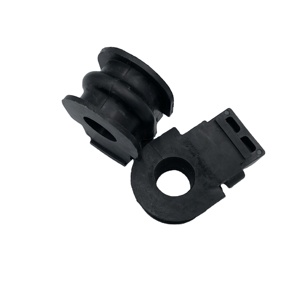
The sway bar (stabilizer bar) bushing functions as the primary mechanical interface securing the torsion bar directly to the vehicle chassis or subframe. Unlike static isolation mounts, stabilizer bar bushings are subject to intense, multi-directional loading: torsional friction generated as the sway bar twists during cornering, radial forces exerted by vehicle body roll, and continuous micro-vibrations transmitted from irregularities in the pavement. Premium anti-roll bar performance requires balancing hysteresis loss with high elastic recovery.
Our manufacturing protocols utilize proprietary compounded natural rubber (NR) and ethylene propylene diene monomer (EPDM) matrices reinforced with active furnace carbon blacks (N330/N550 series). This specific formulation achieves an elongation at break exceeding 450% and tensile strength ratings over 20 MPa, preventing premature surface micro-cracking and compression setting. In contrast to low-grade polybutadiene alternatives that harden significantly below 10°C and experience thermal softening above 40°C, our compound maintains stable dynamic shear moduli (G*) across the operational spectrum required for Southeast Asian road infrastructures.
A primary failure mode reported by automotive maintenance networks is suspension squeak and binding, caused by excessive friction between the sway bar steel surface and the inner diameter of the rubber bushing. When an anti-roll bar binds, it alters the effective suspension spring rate, causing unpredictable handling and accelerating fatigue on sway bar end links.
To eliminate this phenomenon, our design incorporates an engineered internal fluted reservoir profile. These circumferential or helical micro-channels retain specialized lithium-complex silicone lubricants during installation, providing a sustained hydrodynamic lubrication boundary. For severe-duty applications and modern European/Japanese platforms, we implement direct vulcanized rubber-to-metal bonding or internal PTFE-coated fabric liners. This design eliminates rotational slip entirely, absorbing stabilizer torsional angles through continuous elastomeric shear deflection, drastically extending service life while eliminating cabin-perceptible acoustic resonance (NVH).
| Performance Criterion | Standard Commercial Rubber | Polyurethane (Aftermarket Street) | NISTO Heavy-Duty Natural/EPDM Formulation |
|---|---|---|---|
| Shore A Hardness Range | 50 - 58 Shore A (Sub-optimal roll stiffness) | 75 - 90 Shore A (Harsh, high vibration transfer) | 62 - 70 Shore A (Calibrated OE dynamic stiffness) |
| Torsional Friction Coefficient (μ) | 0.45 - 0.60 (Susceptible to dry squeak) | 0.30 - 0.40 (Requires frequent greasing) | < 0.20 (With internal fluted PTFE lubrication channels) |
| Hydrocarbon & Ozone Resistance | Moderate (Dehydrates and splits over time) | High (Vulnerable to severe thermal degradation) | Exceptional (Added anti-ozonant microcrystalline waxes) |
| Acoustic Isolation (NVH Damping) | Moderate Damping Factor | Poor (Directly transmits road gravel noise) | Maximum Hysteresis Absorption (Eliminates cabin drone) |
| Life Expectancy in Tropical Urban Cycles | 20,000 - 35,000 km | 40,000 km (Risk of squeaking and binding) | 80,000 - 120,000 km continuous operational capability |
Designing suspension rubber compounds specifically tailored to withstand the demanding road profiles, monsoon flooding, and severe transit loads across Northern Vietnam.
Hanoi districts such as Cau Giay, Ha Dong, and Nam Tu Liem frequently experience flash urban waterlogging during the summer monsoon season. Submerged suspension assemblies encounter road grime, petroleum residues, and standing wastewater. Standard inferior rubber quickly suffers hydrolytic breakdown, plasticizer leaching, and bracket oxidation. Our sway bar bushings utilize hydrolytically inert vulcanization systems, ensuring zero swelling, zero softening, and sustained clamp force when submerged.
With thousands of commercial transport vehicles, metered taxis, and Grab fleet operations (predominantly Toyota Vios, Hyundai Grand i10, Mitsubishi Xpander) navigating Hanoi's stop-and-go ring roads (Vanh Dai 2, Vanh Dai 3 elevated expressways), stabilizer bars undergo hundreds of thousands of torsional load reversals per week. Our high-cycle compounds resist bore ovalization, preventing front-end clunking noises and protecting fleet operators from recurring suspension downtime.
Heavy commuter and freight corridors connecting Hanoi to satellite industrial zones in Bac Ninh, Hai Duong, and Hai Phong expose light commercial trucks (such as Hyundai Porter, Kia Bongo, Isuzu QKR) to severe vertical axle impacts and payload shifts. Our dual-layered, fabric-reinforced, and high-durometer stabilizer bushings distribute dynamic lateral roll forces across the mounting bracket without permanent deformation or structural shearing.
Key shifts transforming component procurement, inventory distribution strategies, and fleet maintenance practices across the Red River Delta trade basin.
The municipal transit landscape of Hanoi is modernizing rapidly. The large-scale deployment of electric taxis (VinFast VF e34, VF 5, VF 8) across urban districts has introduced unprecedented suspension stress factors. Because battery electric vehicles (BEVs) carry significant curb weights—often 20% to 35% heavier than internal combustion counterparts in the same class—the dynamic energy transferred to stabilizer bars during lane changes and cornering maneuvers increases exponentially.
Hanoi aftermarket procurement directors are actively replacing low-cost generic chassis rubber with reinforced, high-damping elastomers. Our engineering group has developed high-durability replacement bushings tailored for heavy battery-platform sedans and crossovers, ensuring commercial fleets retain pinpoint roll stability without experiencing high-frequency motor vibration transfer to passenger compartments.
Hanoi auto parts distributors centered around traditional automotive distribution hubs like Cho Gioi (Pho Thinh Yen) and modern logistics zones along Highway 1A are shifting their sourcing strategies away from volatile, low-quality intermediaries. Sourcing automotive rubber parts directly from NISTO RUBBER in Thailand gives distributors distinct competitive advantages:
1. ASEAN Free Trade (ATIGA Form D): Qualifying goods flow into Vietnam under 0% preferential import tariffs, drastically reducing landed cost structures compared to third-country imports subject to 10% to 20% standard duties.
2. Streamlined Maritime Freight Logistics: Consolidations shipped out of Laem Chabang reach the Port of Hai Phong within 4 to 6 business days. Fast ocean transit enables Vietnamese wholesale distributors to maintain lean inventories, shorten supply lead times, and replenish fast-moving chassis bushings rapidly during peak seasonal maintenance periods.
Complete in-house control from raw elastomer compounding to final robotic vulcanization and rigorous lab certification in Thailand.
We do not outsource critical molding stages. All 9,485 part configurations are cured on our own hydraulic vulcanization presses, maintaining exact dimensional tolerances (±0.15mm) across steel sleeves, internal bore diameters, and bracket retention lips.
Our raw compound mixing lines utilize natural rubber directly harvested and refined in Thailand, blended with specialized chemical polymers to deliver extreme fatigue thresholds and superior resistance against tropical oxidation.
For silentblock suspension components and metal-bracketed stabilizer assemblies, our automated multi-stage phosphating, degreasing, and adhesive primer processes guarantee chemical bond strengths that exceed vulcanized rubber tear thresholds.
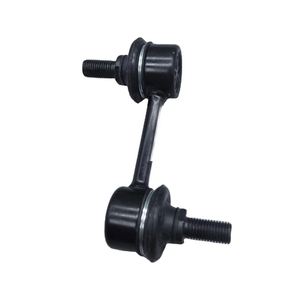
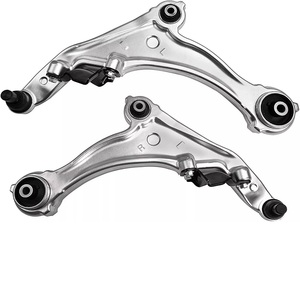
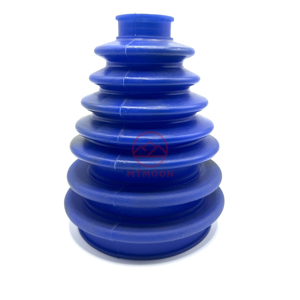
Covering 31 major automotive manufacturers across Asian, European, and American marques. Importers can consolidate engine mounts, control arm bushings, strut mountings, CV boots, and sway bar links into single container orders.
Key information addressing import tariffs, logistics routing, OE part verification, and commercial terms for buyers in Northern Vietnam.
Connect directly with our engineering and commercial export team in Thailand. Access complete factory pricing, technical dimensional specs, and our catalog of over 9,485 high-durability automotive rubber components.