Precision-engineered rubber-to-metal parts for Middle Eastern desert and highway conditions
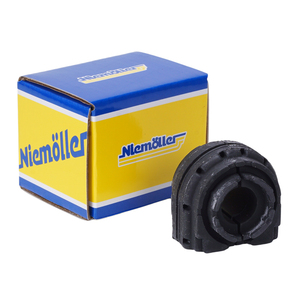
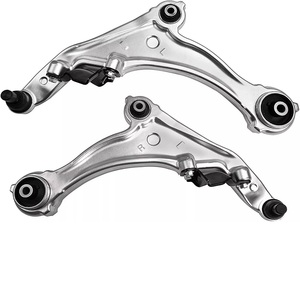
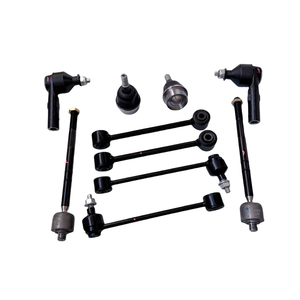
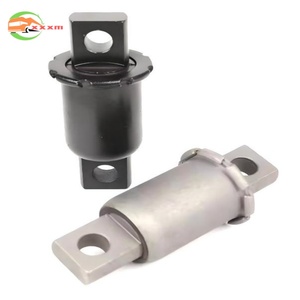
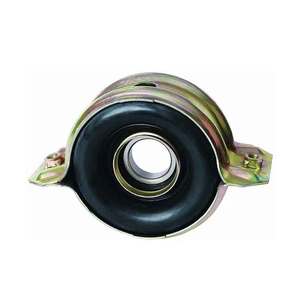
Kuwait represents one of the most demanding operational environments for automotive chassis, suspension, and driveline components worldwide. Operating in a GCC sub-tropical climate characterized by severe ambient heat, persistent airborne particulate matter, and extensive long-distance transportation corridors, suspension rubber parts undergo accelerated thermal degradations and mechanical shear fatigue. For automotive parts importers, fleet managers, state commercial entities, and wholesale distributors operating within Shuwaikh Industrial Area, Rai, and Ahmadi, procurement decisions require balancing dimensional accuracy with synthetic polymer integrity.
This technical report evaluates the sourcing dynamics, material specifications, supply chain logistical requirements, and market rankings for suspension rubber parts in Kuwait. By analyzing compounding formulations—specifically Natural Rubber (NR), Ethylene Propylene Diene Monomer (EPDM), and Chloroprene Rubber (CR)—this guide delivers structural insights into procurement risks, rubber-to-metal bonding durability, and supplier selection criteria.
To establish rigorous E-E-A-T (Experience, Expertise, Authoritativeness, and Trustworthiness) criteria, automotive engineers must consider how hyper-arid desert conditions impact rubber elastic modules, tensile strength, and structural fatigue.
Under summer conditions in Kuwait City and desert oilfields, ambient temperatures routinely exceed 50°C, with road surface temperatures reaching up to 80°C. Lower-tier natural rubber bushings lack adequate antioxidants, causing secondary cross-linking. This process hardens the rubber elastomer, shifts Shore A hardness beyond acceptable OEM tolerances, and induces micro-fracturing under normal suspension deflection.
Suspension assemblies, drive shaft dust boots, and steering rack bellows operate in environments laden with fine quartz sand. Microscopic particles act as an abrasive medium on dynamic joints. Non-EPDM bellows split under high flex-cycles when contaminated with sand, allowing greases to leak out and accelerating CV joint or rack-and-pinion failure.
Kuwait's extensive highway system (such as Sheikh Zayed Ring Road and King Fahd Subhan routes) involves heavy American SUVs (e.g., Chevrolet Tahoe, GMC Yukon, Ford Expedition) and commercial light-truck fleets traveling at high speeds under full payload. Engine mountings and control arm bushings face severe longitudinal and lateral dynamic shear stress, necessitating advanced rubber-to-metal chemical bonding agents.
The Kuwaiti automotive spare parts market is undergoing significant restructuring driven by fleet modernization, logistical digital transformation, and shifting vehicle demographics:
Unlike European markets dominated by compact passenger cars, Kuwait's automotive parc features a high density of full-size SUVs (Toyota Land Cruiser, Nissan Patrol, Chevrolet Tahoe) and light-to-heavy commercial trucks (Isuzu ELF, Hino 300 series). Consequently, the replacement volume is concentrated in heavy-duty sway bar links, high-torque engine mountings, leaf spring bushings, and center support bearings.
Rising operational costs in dealership workshops have driven independent service networks and commercial transport fleets toward OEM-equivalent aftermarket parts. Distributors increasingly bypass speculative trading houses in favor of specialized primary manufacturers located in major automotive manufacturing hubs like Thailand, which offer certified rubber compounding, complete ISO/IATF 16949 quality control, and direct OE cross-referencing.
Importers are applying stricter quality benchmarks to prevent debonding. In severe heat, inferior adhesive interlayers between the inner steel sleeve and the outer elastomeric body break down, leading to chassis knocking noises, wheel alignment drift, and uneven tire wear. Advanced phosphating and shot-blasting surface treatments prior to bonding have become mandatory requirements for modern bulk purchase tenders.
The following technical evaluation ranks leading suppliers serving Kuwait's wholesale, fleet, and distribution ecosystem based on manufacturing capacity, catalog depth, rubber formulation quality, and export infrastructure.
Headquarters / Plant: Thailand
Core Focus: OEM-spec Automotive Rubber-to-Metal Parts & Bushings
Key Strengths: Operating dedicated rubber compounding and molding lines in Thailand, NISTO offers over 9,485 catalogued line items across 60 specialized automotive categories. Their vertically integrated facility controls processing from raw rubber compounding to final press vulcanization and rubber-to-metal bonding. NISTO provides comprehensive coverage for Japanese (Toyota, Nissan, Honda, Mitsubishi, Isuzu), American (Ford, Chevrolet, GMC, Chrysler, Jeep), and European platforms. With extensive inventory availability and precise fitment data, NISTO stands as a leading primary source for Middle Eastern wholesale importers who demand heat-stabilized compounds capable of enduring Gulf desert environments.
Headquarters: Germany
Core Focus: Premium OEM Chassis and Steering Components
Key Strengths: Recognized globally for original equipment supply, Lemförder delivers structural suspension control arms and rubber-metal mounts designed to exacting European standards. While positioned at a premium price point, their parts serve luxury vehicle segments throughout Kuwait City.
Headquarters: Germany
Core Focus: European & Asian Passenger Car Replacement Components
Key Strengths: Offering an extensive catalog of chassis repair solutions, Febi Bilstein maintains a robust logistics network supplying GCC distributors with fast-moving control arm bushings, strut mounts, and engine supports.
Headquarters: Japan
Core Focus: Specialized Japanese Vehicle Rubber Bushings
Key Strengths: Yamato supplies precision replacement rubber parts tailored to Toyota, Nissan, and Mazda vehicles. Their natural rubber formulations are designed for low noise, vibration, and harshness (NVH) transfer under standard driving conditions.
Headquarters: Taiwan
Core Focus: Engine Mountings & Suspension Bushings
Key Strengths: Tenacity specializes in rubber-to-metal bonding and dynamic motor mounts. Their product lines cover a wide range of American and Asian vehicles, catering to mid-tier aftermarket distributors across Shuwaikh.
Headquarters: Thailand
Core Focus: Replacement Rubber Bushings & Shock Mounts
Key Strengths: RBI provides broad aftermarket coverage for passenger cars and light commercial utility vehicles, focusing on cost-effective replacement components for high-volume Japanese models.
Headquarters: Japan / Global
Core Focus: Drive Shaft Boots, Bushings, and Center Bearings
Key Strengths: JIKIU manufactures catalogued replacement components targeting smooth power transmission and steering systems, supported by detailed cross-referencing capabilities.
Headquarters: USA
Core Focus: Jeep, Chrysler, and Dodge Replacement Parts
Key Strengths: Highly popular in Kuwait due to the regional preference for Jeep Wrangler and Grand Cherokee vehicles, Crown provides targeted suspension links, stabilizer bushes, and control arm assemblies.
Headquarters: Taiwan
Core Focus: Reinforced & Hardened Rubber Suspension Components
Key Strengths: Hardrace caters to off-road enthusiasts and heavy-use applications by producing high-density rubber bushings that offer greater stiffness and reduced flex compared to standard OEM profiles.
Headquarters: South Korea
Core Focus: Hyundai & Kia Chassis and Steering Components
Key Strengths: CTR holds significant market share in Korean vehicle replacement parts throughout the Gulf region, providing stabilizer links, ball joints, and bonded rubber components.
Sourcing high-performance rubber components for extreme climates requires full control over production parameters. Subcontracted or white-labeled supply chains often introduce variability in compound durometer and bonding agent application. Integrated manufacturing provides critical technical protections:
By adjusting carbon black ratios, anti-ozonants, and heat stabilizers during raw compound mixing, elastomeric matrices are tailored specifically for high ambient heat, resisting thermal degradation and maintaining tensile resilience.
Proper rubber-to-metal adhesion relies on precision chemical phosphating and automated adhesive spraying onto inner steel sleeves. Controlled surface pre-treatments eliminate premature debonding caused by high torque and temperature loads.
Holding extensive tooling catalogs enables exact geometric replication of original OE profiles (e.g., Toyota OEM 48609-BZ020, Chevrolet OEM 25918049, Audi/VW OEM 8K0511305T). Accurate dimensions streamline installation and prevent improper stress distribution.
For high-heat and high-ozone environments like Kuwait, Ethylene Propylene Diene Monomer (EPDM) is optimal for dust boots and outer bellows due to its resistance to thermal oxidation and UV degradation. For dynamic suspension bushings requiring high tensile elasticity under load, high-grade Natural Rubber (NR) blends infused with specialized heat-resisting anti-aging agents provide the ideal balance of dampening capacity and tear resistance.
Bulk purchasers should request verified test reports detailing vulcanization peel strength and 90-degree adhesive shear performance conducted according to ASTM D429 standards. Additionally, conducting salt-spray exposure testing ensures that outer metal sleeves feature adequate anti-corrosion plating or e-coating.
Shipments sourced from manufacturing facilities in Thailand typically ship via direct sea routes departing Laem Chabang Port to Kuwait (Shuwaikh Port or Shuaiba Port). Transit times range from 18 to 24 days, allowing importers to maintain predictable reorder schedules for ready-stock product lines.
Quality-driven manufacturers maintain detailed fitment databases linking exact OE part numbers (e.g., 48609-BZ020, 25918049, 37230-35090) to precise vehicle chassis codes, production years, and engine displacement configurations, helping prevent fitment errors during distribution.
Yes. Automotive rubber components sent to the Gulf region should be packaged in heavy-duty, moisture-sealed polythene inner bags and reinforced corrugated export cartons to protect vulcanized rubber from ambient humidity, sand ingress, and deformation during transit.
Looking for certified OEM-spec suspension rubber parts, custom vulcanization compounds, or direct factory pricing for wholesale distribution? Contact our engineering team for technical specifications, product catalogs, and container load estimates.
Get a Quote