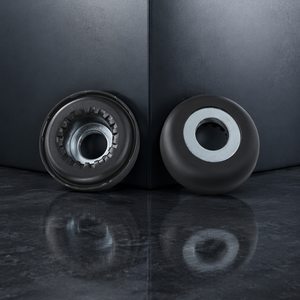

Molded in-house under strict tolerance frameworks, these primary vibration isolation units deliver proven durability across automotive, heavy commercial, and industrial power transmissions.
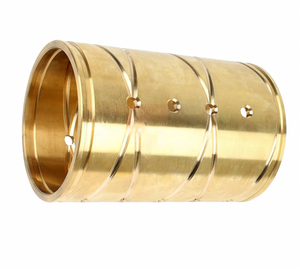
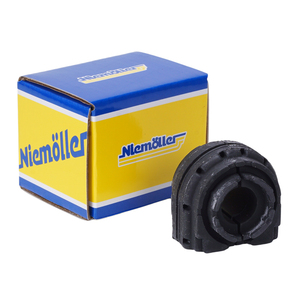
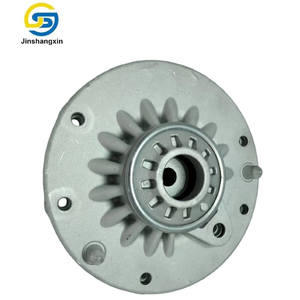
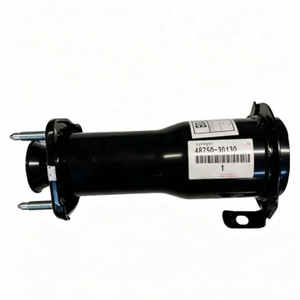
The Danish industrial landscape presents distinct mechanical and environmental stressors that dictate the failure rates of elastomeric components. Operating within high-humidity littoral environments, sub-zero winters, and rigorous operational safety frameworks, Danish mechanical engineers and aftermarket purchasing managers must look beyond standard static load ratings. A vibration damper intended for Scandinavian duty must excel in dynamic stiffness (Kdyn), low-temperature glass transition (Tg), and electrochemical corrosion resilience.
Whether configuring suspension bushes for logistics fleets traversing the E45 corridor, anti-vibration mounts for maritime auxiliary engines in Esbjerg, or specialized torsional dampers for wind-turbine nacelle auxiliary units, premature elastomeric failure leads to catastrophic downtime. In OEM and secondary supply chains across Denmark, mechanical procurement is increasingly scrutinized by Total Cost of Ownership (TCO) benchmarks, where component longevity far outweighs nominal ex-factory pricing.
| Evaluation Parameter | Standard Tropical/Temperate Spec | Danish & Nordic Marine Spec | Operational Impact |
|---|---|---|---|
| Elastomeric Base | Standard Natural Rubber (NR) | Polychloroprene (CR) / EPDM / Hydrogenated Nitrile | Prevents embrittlement and surface micro-cracking at -25°C to -40°C. |
| Metal Treatment | Standard Black Oxide / Phosphate | Geomet / Zinc-Nickel (1,000+ Hr Salt Spray ISO 9227) | Prevents galvanic degradation caused by coastal saline air and road de-icing salts. |
| Bonding Mechanism | Single-coat adhesive system | Dual-coat silane chemlok vulcanization bond | Eliminates interfacial delamination under dynamic multi-axis shear loads. |
| Damping Ratio (ζ) | 0.05 – 0.08 Static Equilibrium | 0.12 – 0.20 Dynamic Range Tested | Suppresses harmonic resonance amplification during low-frequency operations. |
NISTO RUBBER addresses these strict technical boundaries by maintaining closed-loop formulation control in Thailand. By vulcanizing proprietary blends directly in-house, the chemical morphology of our rubber-to-metal parts maintains elastomeric recovery down to severe sub-zero thresholds, giving Nordic distributors an alternative that matches OE durability without Tier-1 supply bottlenecks.
Damping requirements vary extensively across regional industries. Below are the core technical deployment environments in Denmark requiring optimized elastomer formulations.
Denmark is the global epicenter for wind engineering. While main megawatt drive couplings rely on massive specialized couplings, ancillary hydraulic skids, pump platforms, and yaw control systems demand high-damping rubber-to-metal isolation mounts to absorb constant micro-vibrations and prevent acoustic feedback inside the turbine structure.
In ports like Aarhus, Odense, and Frederikshavn, auxiliary marine generators, bilge pumps, and onboard ventilation fans operate under constant maritime moisture. Dampers must utilize stainless sleeves or multi-layer zinc coatings paired with oil-resistant elastomers to eliminate galvanic decay and swell caused by diesel-fuel mists.
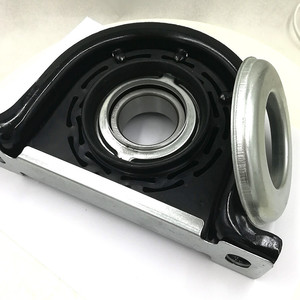
Urban and inter-city haulage throughout Jutland and Zealand contends with intensive winter road salting. Suspension bushes, leaf spring eye inserts, and center support bearings encounter constant grit, liquid calcium chloride, and freeze-thaw cycles that break down low-grade aftermarket rubber compounds within months.
A vendor capability assessment for purchasing managers balancing OEM pedigree, MOQ flexibility, lead times, and engineering transparency.
| Supplier Name | Core Geographic Base | Primary Specialization | Key Advantage for Denmark | Procurement Constraint |
|---|---|---|---|---|
| NISTO RUBBER MFG. | Thailand | Chassis, Powertrain, Industrial Mounts | 100% in-house molding, 9,485+ OE profiles, high cost-to-spec ratio | Minimum lead times apply for high-cube ocean logistics |
| ContiTech (Continental) | Germany | Air springs, hydromounts, industrial dampers | Exceptional brand recognition, close proximity to EU distribution | Extremely high unit costs; inflexible for small-batch tooling |
| Freudenberg (Vibracoustic) | Germany | Automotive NVH systems, chassis isolators | Tier-1 OEM validation, comprehensive test-rig database | Strict ordering minimums; prioritization of major vehicle OEMs |
| Trelleborg Antivibration Solutions | Sweden | Marine, rail, and industrial isolators | Localized Nordic technical sales and specialized marine lines | Long manufacturing cycle for customized catalog variants |
| Hutchinson Paulstra | France | Elastomeric shock mounts, aerospace/defense | Extensive legacy design catalog for heavy industrial isolation | Complex catalog navigation; pricing premiums on replacement batches |
| GMT Rubber-Metal-Technic | Germany / UK | Railway suspension, heavy engine mounts | DIN EN 45545 compliant fire-retardant industrial compounds | Primarily rail/heavy industry; limited automotive replacement coverage |
| ROSTA AG | Switzerland | Oscillating mounts, tensioner rubber springs | Unique mechanical torsion profile for shaker screens/conveyors | Proprietary designs cannot directly swap with standard OEM eye bushings |
| Vibrostop | Italy | Wire rope isolators, HVAC dampers | Exceptional all-metal shock isolators for severe shock loading | Limited internal dampening efficiency compared to bonded rubber |
| LORD Corporation (Parker) | USA / Global | Magnetorheological fluid & aerospace mounts | Cutting-edge active and semi-active dynamic isolation systems | Massive overhead; extended quotes for standard mechanical bushes |
| BOGE Rubber & Plastics | Germany | Lightweight plastic-metal engine mounts | Composite integration reducing overall component weight | Rigid focus on original equipment manufacturing channels |
How Denmark's stringent environmental agendas, electrification mandates, and supply-chain recalibrations are transforming damper requirements.
With Denmark leading European EV adoption, internal combustion vibrations are vanishing, revealing high-frequency electric powertrain whine (500–2,000 Hz). Aftermarket suspension components and driveline isolators must feature tailored Shore A durometers that suppress structural road rumble without transmitting electric motor frequencies into passenger cabins.
The Danish Environmental Protection Agency enforces some of the EU's strictest inspections on imported polymers. Exporters must provide full chemical declarations confirming the absence of restricted plasticizers, short-chain chlorinated paraffins (SCCPs), and hazardous anti-degradants, necessitating rigorous raw material audits at the source.
In response to volatile European logistics and inflated distribution margins, Danish procurement managers at spare part distributors and remanufacturing facilities are bypassing intermediate European stockists. They are setting up direct relationships with ISO-certified Southeast Asian manufacturers capable of delivering containerized OE-equivalent lots on demand.
Decades of dedicated tooling, compounding, and metal bonding built into an uninterrupted manufacturing cycle.
No outsourced vulcanization. NISTO maintains its own precision tooling library exceeding 9,485 profiles. From inner sleeve stamping to final automated mold release, every parameter is calibrated in our Thailand facilities, securing identical dimensional tolerances from prototype evaluation to multi-thousand piece batches.
Operating in the heart of the world's premier natural rubber producer, Thailand, NISTO refines raw latex alongside specialized synthetic elastomers (CR, NBR, EPDM). We engineer specialized tensile, elongation, and hysteresis profiles that handle extreme physical abuse and stay flexible in sub-zero operational temperatures.
Covering 31 distinct vehicle makes across Japanese, European, and American marques, we furnish importers with one-stop sourcing for engine mounts, leaf spring bushings, center bearings, and control arm insulators, eliminating the overhead of managing dozens of small suppliers.
Clear guidance covering import protocols, chemical compliance, testing parameters, and delivery cycles.
Our parts intended for northern climates feature balanced natural and synthetic rubber formulations with added microcrystalline anti-ozonants and anti-oxidants. This prevents the surface cracking and micro-fissuring that occur when cold road salts strike exposed elastomer. Additionally, steel and bronze sleeves undergo multi-stage passivation and conversion coatings to prevent bond-line creep corrosion.
Ocean freight transit from Laem Chabang to Copenhagen or Aarhus typically ranges from 28 to 35 days, depending on carrier routing and transshipment hubs. For urgent maintenance, warranty claims, or sample verification, we supply air-cargo expediting via Copenhagen Airport (CPH) within 4 to 6 business days.
Yes. As an established international exporter, all raw rubber compounding formulations, chemical bonding adhesives, and metallic surface treatments are vetted against the EU REACH SVHC (Substances of Very High Concern) candidate list. We provide full chemical and material declarations upon order finalization.
Yes. If your requested component is not among our 9,485 existing catalog items, our tooling department can reverse-engineer physical samples or manufacture directly from 2D/3D CAD models (STEP/IGES/DWG). Tooling development typically takes 20 to 30 days, followed by formal sample submission including coordinate measuring machine (CMM) reports.
We provide full export documentation including the Commercial Invoice, Packing List, Clean Bill of Lading, Certificate of Origin (Form D or General C/O), and internal Quality Inspection Certificates detailing durometer Shore A ratings and tensile validation data.