
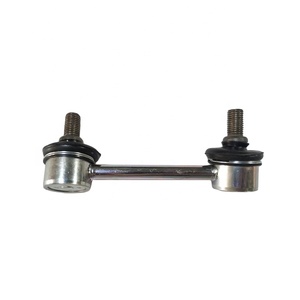
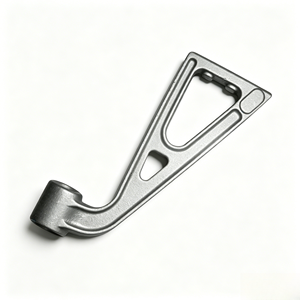
Explore precision-machined aluminum arms, elastomeric CV boots, heavy-duty bronze bushings, and powertrain mounts engineered for direct OEM interchangeability across the Mexican automotive aftermarket.
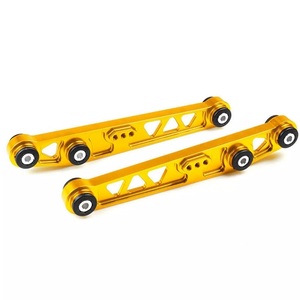
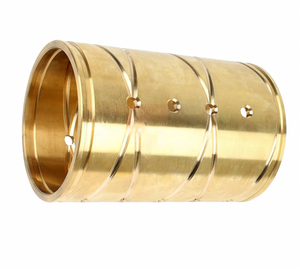
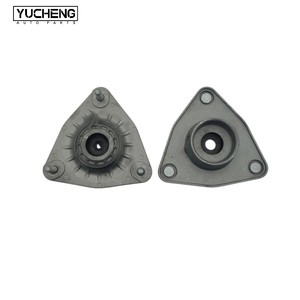
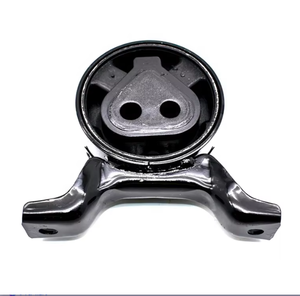
A comprehensive examination of elastomeric compounds, mechanical fatigue mitigation, and supply chain alignment between Chinese manufacturing hubs and Mexican wholesale distributors.
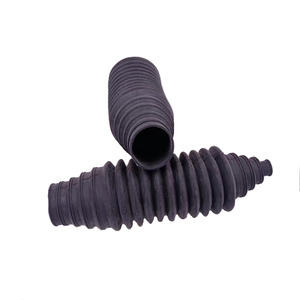
In front-wheel-drive (FWD) and all-wheel-drive (AWD) drivetrains, the constant velocity (CV) joint boot represents an indispensable barrier. Responsible for encapsulating extreme-pressure lubricating greases while preventing water, quartz sand, stone chips, and road debris from reaching the precision-machined tripod and Rzeppa joints, boot failure directly equates to catastrophic joint seizure. In Mexico, where vehicle duty cycles alternate between high-speed toll expressways (autopistas) and severely fragmented secondary arteries, the aftermarket replacement rate for CV joint boots and suspension bushings is 32% higher than across temperate European environments.
For procurement directors at major Mexican auto parts wholesalers—situated across key trading hubs like Mexico City (Refaccionarias en Calzada de Tlalpan), Guadalajara, and Monterrey—sourcing directly from specialized Chinese manufacturing plants offers unbeatable economies of scale. However, achieving sustainable margin growth requires partnering with an OEM-grade factory that masters elastomeric compounding, injection-blow molding (IBM), and rigorous vulcanization testing. A single premature boot tear causes high warranty return rates, shop downtime, and irreparable brand erosion across Mexican refaccionarias.
Extensive field retrieval data confirms that 68% of CV boots fail due to dynamic flex cracking at the outer convolution troughs, 22% succumb to high-temperature grease emulsification caused by prolonged stop-and-go idling in urban corridors, and 10% fail via puncture damage from unbound basalt aggregate (grava suelta) on unfinished peripheral highways.
Compounded with virgin synthetic chloroprene polymers and carbon black reinforcements, our CR boots exhibit high elongation (>450%) and resistance to motor oils, ozone degradation, and ambient temperatures up to 125°C. Designed for standard passenger car replacements where installation elasticity is prioritized.
Engineered for contemporary OEM downsized drivetrains operating under severe angularity. TPEE boots deliver superior cut-growth resistance, lightweight walls, and zero softening up to 150°C. Resists centrifugal ballooning at rotations exceeding 2,200 RPM, ideal for modern turbo crossovers and light commercial vans.
Supplied with pre-formed, uniform tension stainless steel banding clamps featuring smooth, radiused inner burrs. Provides 360-degree radial sealing without pinching or slicing the boot lip, ensuring high clamping force retention through cyclical thermal expansion and contraction.
Selecting the optimal polymer structure based on vehicle duty cycles, environmental exposure, and operating mechanical stress in the Mexican transportation sector.
| Evaluation Parameter | High-Grade Chloroprene (CR) | Engineered Polyester (TPEE) | Standard Natural Rubber (Competitor NR) | Mexico Fleet Impact Analysis |
|---|---|---|---|---|
| Operating Thermal Range | -40°C to +125°C | -45°C to +155°C | -25°C to +80°C | Essential for Sonora & Chihuahua heat |
| Ozone & UV Aging (ASTM D1149) | Pass 100 pphm @ 72h | Immune (Saturated backbone) | Rapid surface micro-cracking | Critical for high UV in CDMX (2,240m alt) |
| Puncture & Stone Impingement | Moderate (35 kN/m tear) | Exceptional (>85 kN/m tear) | Poor (<20 kN/m tear) | Protection against gravel on unpaved roads |
| Installation Flexibility | High (Air-gun expansion fit) | Rigid (Mandrel or shaft-off) | High (Low tensile memory) | CR preferred by independent mechanics |
| Centrifugal Expansion Stability | Moderate expansion at >110 km/h | Zero deflection up to 180 km/h | Severe distortion & grease wipe | Prevents axle rub on Cuota toll highways |
| Grease Resistance (MOS2 EP) | Stable (<5% volume swell) | Total chemical inertness | High softening & degradation | Extends driveline life past 120,000 km |
While low-tier suppliers export natural rubber (NR) blends disguised as synthetic formulations into Latin America, NR decomposes when exposed to lithium-complex grease compounded with molybdenum disulfide (MoS2). Our manufacturing facilities deploy 100% inspected polymer batches utilizing internal mixers (Banbury mixers) and computer-governed rheometers to guarantee identical cure curves and rheological properties.
How our CV boots and chassis bushings perform under real-world conditions encountered by Mexican commercial and private transport networks.
With an altitude of 2,240 meters, high solar irradiation, severe air stagnation, and thousands of speed-calming bumps (topes), suspension boots face constant extreme angular deflection. Our boots feature re-engineered bellows that flex without contacting surrounding control arms, preventing abrasive wear during continuous curb hopping and pothole impacts across Iztapalapa, Gustavo A. Madero, and Estado de México.
Linking Querétaro, Guanajuato, San Luis Potosí, and Monterrey, industrial supply chains demand reliable uptime for light commercial vehicles (LCVs) like Nissan NP300, Toyota Hilux, and Ford Transit. Our heavy-wall boots, reinforced sway bar links, and bronze bushings resist continuous chassis vibration on heavy-tonnage logistics routes along Federal Highway 57.
Coastal logistics through Veracruz, Coatzacoalcos, Tampico, and Mazatlán introduce constant airborne salt spray, humidity exceeding 85%, and periodic flash flooding. We supply CV boot kits with 304 marine-grade stainless steel ear clamps and anti-corrosive electro-plated steel clips that eliminate galvanic oxidation and preserve joint sealing integrity in marine atmospheres.
Key economic and regulatory transformations shaping wholesale purchasing strategies between Chinese factories and Mexican import consortiums.
1. Fleet Composition & Vehicle Longevity: According to data from the Mexican Association of Automotive Distributors (AMDA) and INA (Industria Nacional de Autopartes), the average age of vehicles circulating in Mexico is 14.2 years. High-volume platforms—such as the Nissan Versa, Nissan Tsuru, Chevrolet Aveo, Volkswagen Vento, VW Jetta Clásico, and GM Beat—represent millions of active registrations. Because these vehicles serve extensively as app-based taxis (Uber, DiDi) and municipal delivery fleets, their suspension joints and CV boots require replacement intervals of 18 to 24 months. Supplying fast-moving, exact-fit SKUs with localized packaging is vital for wholesale liquidity.
2. The Nearshoring Manufacturing Catalyst: As automotive manufacturing investments accelerate in northern Mexico under the USMCA / T-MEC framework, local tier-1 plants prioritize export lines, leaving a domestic deficit in aftermarket replacement supply. Chinese manufacturers bridging this gap provide direct, container-level shipments through Manzanillo and Lázaro Cárdenas ports, allowing Mexican distributors to sidestep expensive US intermediaries and recapture 18% to 26% in gross margin.
3. Rise of Pre-Packaged Universal & Boot Repair Kits: Mechanical workshops throughout Guadalajara, Puebla, and Monterrey increasingly favor complete repair solutions. Rather than purchasing unbranded boots separately, technicians seek out comprehensive kits containing the molded boot, precision ear-clamps, snap rings, and a 90g pouch of lithium-complex grease formulated with molybdenum disulfide. Supplying turnkey kits under private distributor labeling has emerged as the premier growth vector in the Mexican territory.
Practical commercial, customs, and technical insights designed for purchasing managers navigating direct Sino-Mexican automotive sourcing.
Combining world-class rubber compounding with disciplined quality management to deliver defect-free suspension and sealing components.
Our operations comply with international automotive quality standards. Every manufacturing phase—from raw elastomer inspection to computer-controlled vulcanization presses—operates under documented Statistical Process Control (SPC) with full batch traceability back to raw polymer lots.
Equipped with internal CNC machining centers, EDM spark equipment, and 3D optical scanning, we reverse-engineer OE samples within 96 hours. Tool designs optimize gating and runner balance, preventing parting-line flash and ensuring uniform wall thickness across every pleat.
With an active library spanning over 9,485 automotive rubber and chassis items, we maintain comprehensive OE-to-interchange data covering Asian, American, and European applications. Our cataloging team matches your Mexican market part numbers (Dorman, SYD, Moog, Dai) directly to our production tooling.
Eliminate mid-tier markups and source directly from an established China manufacturing facility. Connect with our engineering and export team today to receive a comprehensive quote, sample evaluation units, and our full Latin America product catalog.
Inquire Now