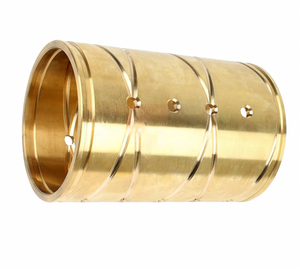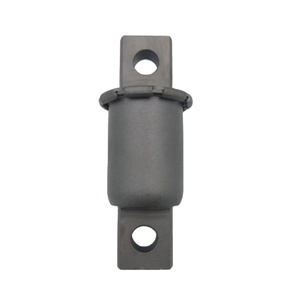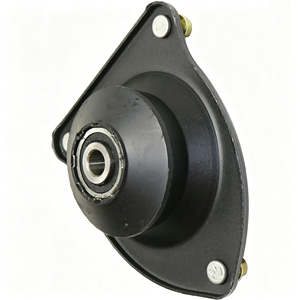
Our precision catalog pairs OE-matched compounds with proprietary bonding chemistry. Sourced by Tokyo commercial fleet operators, regional distributors, and specialist repair workshops across Kanto.
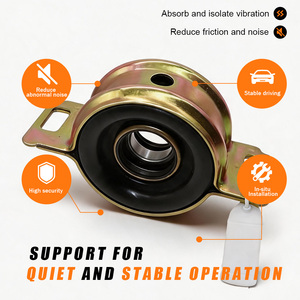
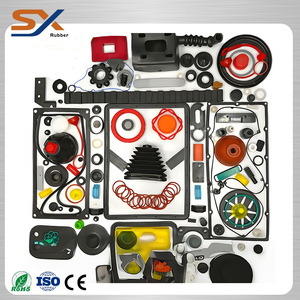
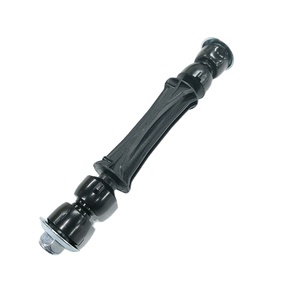
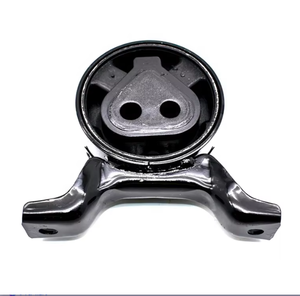
In modern automotive chassis architecture, the upper control arm functions as the vital geometric constraint governing camber angle, caster stability, and longitudinal impact absorption. Positioned within independent double-wishbone and multi-link suspension linkages, the upper arm bushing must execute a dual mechanical role: delivering high torsional and axial flexibility to facilitate uninhibited dynamic articulation, while maintaining extreme radial stiffness under lateral cornering loads to prevent unwanted kinematic toe shifts.
For procurement professionals, fleet maintenance supervisors, and Tier-2 distributors operating within the Tokyo Metropolitan Area, selecting an offshore manufacturing partner in China is not merely a pricing calculation. The unique driving environment of Tokyo imposes rigorous metallurgical and elastomeric demands. Vehicles traversing the Shuto Expressway (Metropolitan Expressway network) encounter rapid lateral load transitions, high-speed radial expansions over expansion joints, and continuous low-amplitude high-frequency vibrations. Meanwhile, intra-city delivery fleets (such as Toyota HiAce, Nissan Caravan, and light distribution trucks) undergo severe stop-and-go cyclical strain, tight-radius multi-point turns, and aggressive curb contact throughout districts like Ota, Koto, and Shinagawa.
The primary failure mode of conventional aftermarket upper control arm bushings is unbonding at the rubber-to-metal interface, followed by micro-fissuring of the elastomer envelope under cyclical shear loads. As a premier Chinese manufacturer with dedicated automated lines, our engineering philosophy prioritizes molecular-level bonding integrity.
| Engineering Parameter | Standard Aftermarket Spec | Our Precision Tokyo-Export Spec | Operational Impact |
|---|---|---|---|
| Base Elastomer | Recycled / SBR Blends | 100% Virgin Natural Rubber (NR) + BR Polymer Matrix | Superior dynamic fatigue resistance; low hysteresis heat buildup |
| Inner Sleeve Metallurgy | Welded Mild Carbon Pipe | Seamless Cold-Drawn STKM11A / STKM13C Steel Tubing | Eliminates internal seam cracking under 150Nm torque clamping |
| Phosphatizing & Primer | Single-dip iron phosphate | Micro-crystalline Zinc Phosphatizing + Chemlok® Primer | Chemical bonding exceeds 12.5 MPa tensile shear without delamination |
| Hardness Tolerance | Shore A 55 ± 8 | Shore A 60 ± 3 Durometer Precision | Consistent steering response; strictly complies with OEM NVH curves |
| Corrosion Resistance | 24-hr Salt Spray Test | 96-hr Neutral Salt Spray (JIS Z 2371 Equivalent) | Withstands Tokyo coastal winter de-icing salt and moisture |
Our formulation incorporates proprietary anti-ozonants and paraffinic waxes that continuously bloom to the surface, protecting the elastomer core against atmospheric degradation caused by coastal saline air from Tokyo Bay and intense localized ozone pollution. This vulcanization control ensures that our bushings consistently clear the stringent biennial Shaken (Japan Motor Vehicle Inspection) protocol without physical cracking, excessive displacement, or play.
Tailoring component design to the exacting demands of Japanese transit, logistics, and climate environments.
Intense stop-start cycles across Tokyo's 23 special wards. Our bushings utilize progressive stiffness curves to absorb high-frequency street vibrations, preventing premature control arm fatigue in commercial light trucks and vans.
Tokyo leads Asian adoption of hybrid (HEV) and battery electric platforms. Increased curb weight and abrupt regenerative braking transfer immense longitudinal force to the upper wishbone, requiring our high-damping NR formulation.
Vehicles operating along the Tokyo Bay littoral corridor and northern mountain transit routes face salt aerosol and calcium chloride de-icers. Zinc-plated outer shells prevent galvanic corrosion and bore seizing.
Key macroeconomic shifts redefining component procurement across the Greater Tokyo Area.
The average age of registered passenger vehicles in Japan has surpassed 9.0 years, with commercial vehicles exceeding 11.5 years. Tokyo workshops are shifting from full control arm assembly replacement to press-fit bushing rebuilds to manage repair budgets.
Surging OEM genuine parts prices have accelerated demand for certified Tier-2 alternatives. Importers in Tokyo require high-precision Chinese manufacturers capable of providing OEM dimensional parity backed by verifiable batch lab testing.
Tokyo distributors hold lean inventories. Sourcing from our modern coastal facilities allows fast shipping through Ningbo/Shanghai directly into the Port of Tokyo or Yokohama within 48 to 72 hours sailing time, drastically shrinking inventory holding costs.
Complete vertical integration from in-house compounding to multi-axis fatigue testing.
Comprehensive tooling library covering Japanese makes (Toyota, Nissan, Honda, Mitsubishi, Isuzu, Mazda, Hino) alongside European and American chassis platforms.
Automated vacuum compression molding ensures void-free rubber, uniform density, and absolute concentricity for smooth, trouble-free hydraulic press installations.
Every production batch undergoes rheometer testing, tensile shear verification, and durometer calibration. Laser-etched traceability marks guarantee accountability.
Dedicated technical support bridging OE part number cross-referencing, CAD dimensional verification, and custom durometer tuning tailored to Japanese specifications.
Direct, transparent answers addressing compliance, testing, logistics, and quality assurance.
Direct factory pricing, OEM-grade vulcanization integrity, and dedicated engineering support for Tokyo auto parts distributors, trading firms, and commercial fleet managers.
Get a Quote