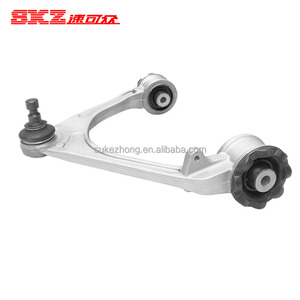

Explore our industrial-grade automotive elastomers, manufactured directly on in-house molding lines with complete raw compound control and micro-gap rubber-to-metal bonding integrity.
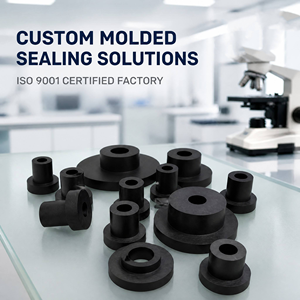
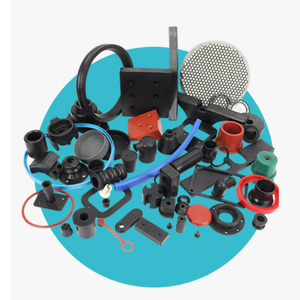
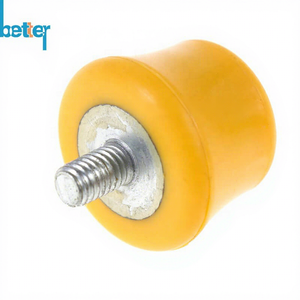
The automotive exhaust system is subjected to some of the most unforgiving working envelopes in modern vehicle dynamics. Constantly suspended beneath the vehicle underbody, exhaust components endure cyclic thermal expansion exceeding 650°C at the downpipe, continuous harmonic vibrations transferred directly from engine firing pulses, and violent shock accelerations caused by road roughness. As an industry-leading exhaust rubber hanger manufacturer and supplier serving the Argentine Republic, we engineer elastomeric insulators that function not merely as passive weight supports, but as calibrated mechanical filters designed to tune out Noise, Vibration, and Harshness (NVH) before acoustic energy transmits into the passenger cabin.
In fleet operating conditions across Argentina—ranging from the high-density stop-and-go traffic of the Autonomous City of Buenos Aires (CABA) to heavy agricultural transport corridors throughout Santa Fe, Córdoba, and the unpaved corrugated routes of Patagonia—standard commercial aftermarket hangers suffer from accelerated plastic deformation, ozone cracking, and catastrophic tensile failure. Our engineering paradigm resolves this by compounding custom ethylene propylene diene monomer (EPDM) matrices reinforced with ultra-fine furnace carbon black and specialized anti-ozonants, yielding exhaust hangers that maintain structural tensile memory across severe continuous thermal cycling.
Specifying exhaust hangers requires a granular understanding of elastomeric chemistry. Natural Rubber (NR) offers exceptional mechanical tear strength and high dynamic rebound resilience, making it suitable for lower-temperature suspension bushings. However, when deployed within 200 mm of catalytic converters or diesel particulate filters (DPFs), NR degrades rapidly due to thermo-oxidative chain scission. Below is a comparative material performance analysis of our proprietary compounded elastomers formulated for automotive and commercial vehicle exhaust isolation.
| Performance Parameter | Commercial Grade NR (Market Standard) | NISTO High-Performance EPDM (Proprietary) | Fluoroelastomer / Silicone Refit Grade |
|---|---|---|---|
| Continuous Temperature Range | -40°C to +85°C | -45°C to +150°C (Intermittent +175°C) | -50°C to +220°C |
| Tensile Strength (MPa) | 14 - 18 MPa | 12 - 16 MPa (Optimized Retained Modulus) | 8 - 11 MPa |
| Ozone & UV Aging (50 pphm @ 40°C, 200h) | Surface Micro-Cracking observed < 48h | Zero Cracks / Class A Impermeability | Zero Degradation / Immune |
| Compression Set (100°C, 22h, ASTM D395) | > 42% (Permanent Elongation Sag) | ≤ 18% (Superior Height Retention) | ≤ 15% (Ultra-Stable Dynamic Modulus) |
| Hydrocarbon & Road Salt Resistance | Poor (Rapid Swelling / Softening) | Excellent (Hydrophobic Barrier) | Moderate to Good (Application Dependent) |
A one-size-fits-all exhaust hanger inevitably fails when exposed to the distinct geographical, regulatory, and mechanical challenges present in Argentina. Automotive component distributors, fleet maintenance contractors, and exhaust workshop networks face three critical regional challenges:
Over 1.7 million vehicles in Argentina run on GNC (Gas Natural Comprimido). GNC combustion produces significantly higher exhaust gas temperatures (EGTs) upstream and around the mid-pipe compared to standard naphtha fuel. Standard rubber brackets experience premature vulcanization hardening, becoming brittle and snapping within 15,000 km. Our elevated thermal-grade EPDM retains elastic compliance under sustained 140°C floorpan proximity.
Argentina’s agro-industrial breadbasket (Pampa Húmeda) relies heavily on light commercial pickup fleets (Toyota Hilux, Ford Ranger, Volkswagen Amarok). Continuous traversal over washboard gravel roads induces dynamic shock loads up to 4.5G on exhaust pipe brackets. If an exhaust hanger lacks tear-resistant internal cord reinforcement or specific Shore 65A durometer balancing, the exhaust system sags, strikes the rear differential, or ruptures manifold joints.
The Argentine circulating fleet averages over 12.5 years of age. Wholesale importers must maintain stock that accommodates classic platforms (e.g., Renault Kangoo, Peugeot Partner, Fiat Cronos/Palio) alongside modern European, Asian, and Mercosur commercial platforms. NISTO’s tooling portfolio delivers complete dimensional accuracy across European OE round, teardrop, dual-hole, and bracketed isolators.
Argentina's automotive sector is navigating significant economic stabilization and structural transformation. Macroeconomic shifts are reshaping how tier-1 parts distributors, buying groups (centrales de compras), and retail repuesteros manage inventory, procurement lead times, and warranty claims:
1. Shift Toward Preventive Fleet Maintenance: With vehicle replacement costs remaining elevated due to currency cycles, logistics operators in Greater Buenos Aires, Rosario, and Mendoza are investing heavily in commercial fleet longevity. Fleet directors recognize that a broken $3 exhaust hanger can lead to a damaged $1,200 SCR/DPF emissions canister or severed lambda oxygen sensors. Demand has shifted from generic domestic regrind rubber to certified imported EPDM parts backed by ISO 9001 quality audits.
2. Stringent VTV (Verificación Técnica Vehicular) Inspection Standards: Provincial vehicle technical inspections across Buenos Aires Province, Córdoba, and Santa Fe have tightened acoustic and emission compliance. An exhaust line that rattles or contacts heat shields fails VTV immediate clearance. Distributors require hangers with calibrated static spring rates that keep tailpipes rigidly centered within bumper cutouts while absorbing low-frequency subframe vibrations.
3. Supply Chain Near-Shoring and Direct Factory Sourcing: Importers in Warnes and across Argentina are reducing reliance on multi-tiered middle distributors in Europe or the US. Direct container and mixed-SKU procurement from dedicated Asian and Southeast Asian manufacturers allows wholesalers to bypass inflated markup structures, securing landed costs that protect gross margins against local inflation.
Unlike export trading firms that broker rubber products from disparate small workshops, NISTO RUBBER MANUFACTURING CO., LTD. operates fully integrated manufacturing facilities in Thailand. Direct control over the complete production life-cycle allows us to deliver structural advantages that independent importers can verify in every production run:
Key information regarding international logistics, customs compliance (SIMI/SIRA to current regimes), technical specs, and commercial container terms.
Expand your Argentine automotive catalog with high-tensile exhaust rubber isolators, OEM bushings, and custom-bonded rubber-to-metal components engineered for extreme durability. Request your tailored catalog and wholesale FOB/CIF export pricing quotation today.
Get a Quote