
Source high-wear upper arm bushings, stabilizer links, differential damping elements, and control arms manufactured to precise ISO/TS tolerances for Hungarian automotive wholesale, commercial trans-European fleets, and OE-spec repair networks.
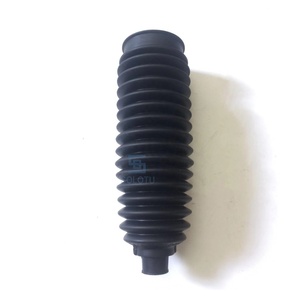
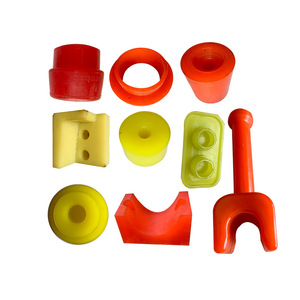
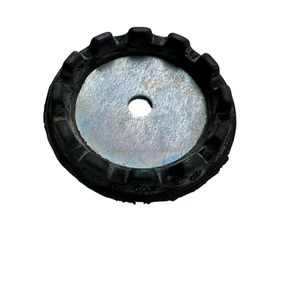
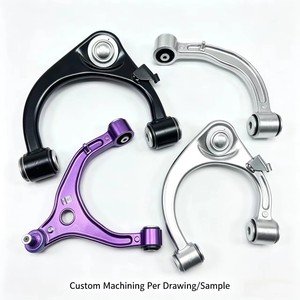
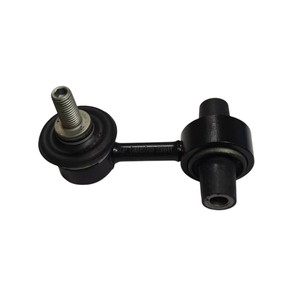
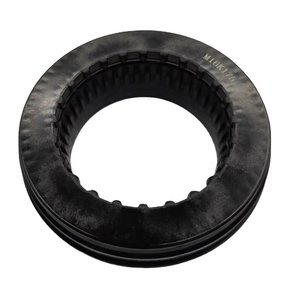
An in-depth review of upper arm bushing kinematics, load-deflection behavior, rubber-to-metal chemical vulcanization, and compound survival thresholds within extreme operational environments.
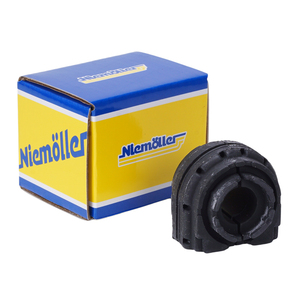
Upper control arm bushings act as rotational bearings while simultaneously controlling lateral compliance during steering maneuvers and fore-aft deflection under hard braking. Our proprietary synthetic natural rubber (NR) and ethylene propylene diene monomer (EPDM) matrix formulations balance Shore A Durometer hardness (55° to 70° ± 5°) with high loss factors (tan delta). This specific loss coefficient dampens high-frequency road vibrations (50–200 Hz) before acoustic noise reaches the unibody passenger compartment, mitigating cabin droning while maintaining crisp steering feedback.
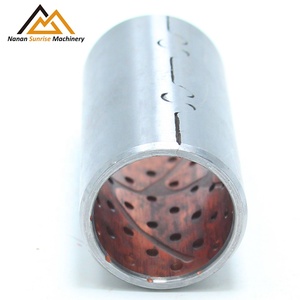
Failure in multi-link suspension bushings typically stems from cohesive metal-elastomer shear delamination rather than vulcanizate rupture. We deploy multi-stage automated phosphating and degreasing of carbon steel (JIS G3141 / SPCC) and high-yield cold-drawn seamless sleeves. A dual-layer thermal reactive primer and Chemlok bonding polymer is electrostatically applied under micro-micron monitoring. In high-pressure injection molds, high-temperature vulcanization at 165°C yields a boundary molecular crosslink bond strength exceeding 12 MPa, eliminating unbonding across multi-million cycle torsional tests.
Suspension arms experience continuous angular deflection across pitch, roll, and bump cycles. Our upper arm bushing designs integrate finite-element-optimized inner contour shapes and directional voids. These radial reliefs allow low torsional resistance during suspension compression up to ±25° without generating shear-tear stresses within the core rubber. Concurrently, lateral stiffness remains rigid under high cornering g-forces, ensuring precision wheel camber and caster geometry stabilization.
| Performance Metric | Standard Aftermarket Spec | NISTO Heavy-Duty Hungary Export Spec | Operational Impact |
|---|---|---|---|
| Rubber Core Composition | Reclaimed Rubber / Generic SBR | 100% Virgin NR / EPDM Blend with Micro-Carbon | Zero cold-crystallization; superior cyclic fatigue life |
| Shore A Hardness Range | Variable (45° to 75° erratic) | 58° to 65° ±3° Controlled Durometer | Consistent toe/camber stability; no harsh NVH |
| Metal Sleeve Metallurgy | Seamed welded pipe | Cold-drawn seamless carbon steel (ST52 / SPCC) | Resists structural collapse under hydraulic press fitment |
| Bonding Shear Strength | < 5.5 MPa (Prone to peel) | > 12.0 MPa (Cohesive failure limit) | Prevents inner sleeve slippage during hard braking |
| Corrosion Resistance | 48h Salt Spray (White rust) | 720h ASTM B117 Trivalent Zinc Passivation | Immunity to Central European de-icing brines and gravel impact |
| Thermal Operating Window | -20°C to +80°C | -45°C to +125°C Sustained Dynamic Range | Prevents brittleness in Carpathian winter and heat sink soak |
Why chassis and suspension bushing durability is a mission-critical purchase criterion for Hungarian logistics hubs, metropolitan fleets, and independent repair garages.
Hungary acts as the primary freight crossroads between Western Europe, the Balkans, and the Black Sea. Heavy-duty delivery vans, light commercial fleets (Iveco Daily, Mercedes-Benz Sprinter, Ford Transit), and passenger vehicles log excessive monthly mileage across major highways and rough secondary connector routes. Worn control arm bushings lead to uneven commercial tyre tread wear within fewer than 15,000 kilometers. Our heavy-duty upper arm bushings provide reinforced load bearing, preventing camber shift under fully loaded payload configurations.
Urban vehicles in Budapest, Debrecen, and Szeged endure high-frequency cyclic impact loads across tram track crossings, patched asphalt, and historic cobblestone sectors. Low-grade natural rubber bushings exhibit micro-fissuring and permanent plastic deformation under repeated high-frequency road shocks. Our upper arm and stabilizer bar bushings incorporate dynamic anti-rebound properties that absorb sharp chassis impacts, protecting delicate steering rack assemblies and strut top mounts.
In rural sectors of the Alföld (Great Plain), multi-purpose utility pick-ups (Toyota Hilux, Ford Ranger, Isuzu D-Max) and service vehicles operate continuously on dirt roads, agricultural tracks, and unpaved paths containing abrasive quartz dust and mud. Bushing sleeves manufactured without precision inner tolerances let micro-particulates infiltrate between the sleeve and bolt shaft, resulting in binding and metal-on-metal squealing. Our bushings feature tight outer interference fits and precision-aligned bore sleeves that seal out abrasive particulates.
Strategic perspectives for Tier-1 parts distributors, central warehouse operators, and purchasing directors operating in the Hungarian automotive ecosystem.
According to Hungarian Central Statistical Office (KSH) records, the average age of passenger cars registered in Hungary exceeds 15.6 years. High new-vehicle purchase costs have extended vehicle ownership spans, resulting in booming demand for high-durability chassis restoration parts. Hungarian repair shops prefer individual replacement bushings over entire control arm assemblies to keep repair costs economical for vehicle owners while preserving OEM stamped steel or forged aluminum arms.
Hungary's positioning as a European battery manufacturing powerhouse is matched by accelerating domestic adoption of Battery Electric Vehicles (BEVs) and Plug-in Hybrid Vehicles (PHEVs). The heavy battery packs in vehicles like the VW ID series, Audi e-tron, and BYD models elevate chassis curb weight by 25% to 40% compared to traditional internal combustion counterparts. Heavy vehicles accelerate shear wear on factory upper control arm bushings, demanding aftermarket replacements with elevated durometers and superior tear resistance.
Automotive parts distributors throughout Central and Eastern Europe (CEE) are moving away from unpredictable, multi-tiered brokerage houses. Wholesalers based in Győr, Budapest, and Székesfehérvár require direct factory integration with manufacturers that maintain massive ready stock, comprehensive catalogue cross-referencing (TecDoc-compatible OE part numbers), and dependable containerized shipping to European ports (Koper, Hamburg, Rotterdam).
Direct manufacturer control from raw polymer compounding to precision packaging. We remove the middleman risks of dimension mismatch, batch-to-batch variation, and delivery delays.
All 9,485 part numbers are vulcanized on dedicated production lines in our Thailand manufacturing facility. We retain full control over molds, metallurgy, and curing kinetics.
Full cross-reference database mapping OE numbers, engine codes, and chassis platforms across 31 vehicle brands spanning Japanese, German, American, and Korean models.
Export cartons prepared to withstand sea freight and customs transit. Available with private label box printing, EAN-13 barcodes, and batch identification for automated warehouse sorting.
Continuous dynamic fatigue, hardness testing, tensile strength evaluation, and multi-axis destructive pull tests conducted in-house to verify vulcanization bonding integrity.
Transparent operational and commercial insights for purchasing directors, supply chain managers, and chassis specialists evaluating export shipments to Hungary.
Connect with our technical engineering and export team. Request our complete chassis bushing catalog, verify OE cross-reference numbers, and receive consolidated factory-direct quotation terms.
Get Catalog