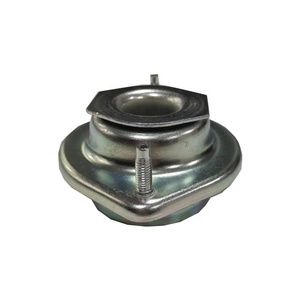
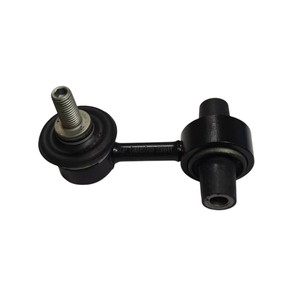
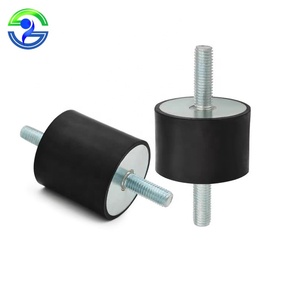
Direct OEM-matched components, structural forged aluminum linkages, and precision vulcanized mounts engineered to eliminate ball joint binding, NVH interference, and premature bushing degradation.
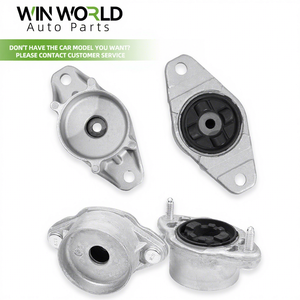
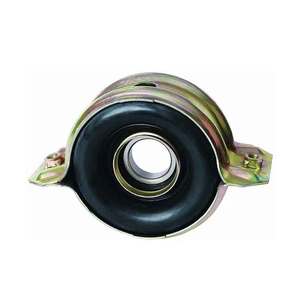
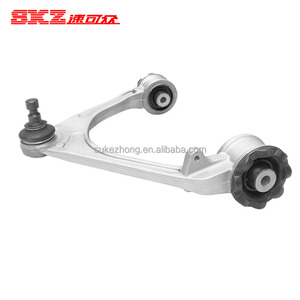
Exporting automotive suspension assemblies to Canada requires deep metallurgical and chemical formulation competence to mitigate premature chassis degradation caused by severe environmental stressors.
Standard suspension bushings utilize commodity natural rubber compounds that reach their glass transition threshold at -25°C, resulting in micro-fracturing, structural hardening, and compromised steering return. Our Canadian-bound upper control arms integrate low-temperature vulcanized elastomer matrices compounded with micro-synthetic polymers. This allows the bushing sleeve to maintain elastomeric compliance, rebound resilience, and acoustic isolation across brutal prairie winters down to -45°C.
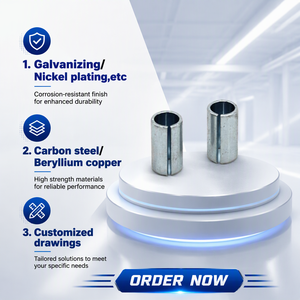
Canadian municipalities heavily apply magnesium chloride, calcium chloride, and sodium brine across Ontario, Quebec, and Atlantic transit corridors. This accelerated corrosive environment triggers rapid galvanic reactions between steel ball joint housings and aluminum control arm bodies. Our components feature zinc-nickel multiphase electrolytic platings and cathodic e-coating rated for over 1,000 hours of ASTM B117 salt spray exposure without base metal pitting.
From Alberta oil sands logistics fleets to cross-provincial haulers, pickup trucks (F-Series, Silverado/Sierra, Ram) experience intense cyclic payload spikes and severe unpaved gravel washboard vibration. Our engineered upper control arms are forged using aerospace-grade 6082-T6 aluminum and high-tensile stamped steel architectures, eliminating camber loss, structural fatigue deformation, and ball joint pull-out failures during rigorous cross-country commercial use.
Evaluating commercial macro-shifts across the Canadian automotive parts distribution ecosystem, inventory consolidation paradigms, and electric vehicle adoption curves.
With Canada's aggressive zero-emission vehicle mandates accelerating passenger EV adoption, suspension linkages must withstand significantly elevated instantaneous torque and curb weights up to 30% higher than internal combustion counterparts. Our precision upper control arm assemblies incorporate high-density radial bonded bushings designed to manage extreme longitudinal shear loads during regenerative braking cycles without bushing separation.
Canadian automotive technician labor rates in major urban hubs (Toronto, Vancouver, Montreal) have surged beyond $140/hour. Independent repair garages and dealership networks increasingly reject the process of hydraulic bushing pressing and ball joint fitting on aging arms. Distributors who import pre-assembled, fully aligned control arms complete with pre-greased ball joints and installed hardware unlock massive labor savings and return-rate reductions for repair facilities.
Supply chain security in North America mandates ACES and PIES standard digital catalogue compliance alongside accurate cross-referencing against both North American and global OEM part numbers. Providing comprehensive fitment data alongside direct factory documentation ensures Canadian commercial warehouse distributors and importers avoid landed inventory deadstock while preserving healthy order turnarounds.
Direct manufacturer control—from raw elastomer compound mixing and precision tool design to automated robotic assembly and containerized intermodal export logistics.
We eliminate quality variance by keeping all tooling production, CNC metal machining, and rubber compounding strictly on our own manufacturing lines. We never outsource critical molding operations.
Our vulcanized rubber-to-metal bonding processes employ automated chemical phosphating and multi-stage adhesive primers to prevent sleeve slippage, shear detachment, or structural delamination.
Comprehensive catalog coverage across 31 major passenger and commercial vehicle makes spanning American domestic platforms, Japanese high-volume applications, and European chassis systems.
Cost-effective FCL and LCL containerized freight forwarding handling directly to major Canadian ports including Vancouver, Montreal, and Halifax, backed by prompt technical support and OE cross-checks.
Everything automotive warehouse distributors, jobbers, and commercial fleet purchasers need to know regarding bulk procurement, technical tolerances, and supply continuity.
Our steel and forged aluminum control arm assemblies undergo multi-layer surface protection protocols, including zinc-nickel electro-coating and specialized electrophoretic painting. This protective film is formulated to pass over 1,000 continuous hours of ASTM B117 salt spray testing without micro-pitting, blister formation, or underlying oxidation, making them ideal for heavy brine use across Ontario and Quebec highways.
Yes. All of our control arm assemblies arrive as completely integrated units featuring factory-pressed elastomeric bushings and pre-greased, sealed ball joints with heavy-duty polychloroprene dust boots. This complete assembly model saves technicians substantial install time, eliminates press-fit misalignment mistakes, and provides long-term dimensional repeatability.
Our Canadian export programs utilize proprietary low-temperature compounded elastomers engineered with dynamic plasticizers. This keeps the material ductile down to -45°C, preventing the rubber from hardening into its glass transition phase, preserving dampening properties, and preventing premature tear along the inner metallic pivot sleeves.
Yes. We offer complete private label OEM/ODM manufacturing partnerships. We can stamp part numbers, batch tracking serials, and custom brand logos directly onto the arm body, alongside custom retail box printing, barcode tagging, and custom master shipping carton arrangements tailored to your distribution requirements.
Our minimum order quantities (MOQs) are structured to accommodate both regional master distributors and national jobber networks. For in-stock catalog applications, dispatch can be finalized within 10 to 15 days. Custom forging production cycles typically run 30 to 45 days, with direct shipping schedules to Vancouver, Montreal, or Toronto inland intermodal terminals.
Each production run is monitored using multi-axis coordinate measuring machines (CMM) and laser optical scanning systems. Pivot points, ball joint angles, and bushing eye center-to-center distances are held to tight tolerances within ±0.15mm of original vehicle manufacturer specifications, ensuring trouble-free wheel alignment upon vehicle installation.