Global Sourcing Guide & OEM Standards
How to Source Molded Automotive Rubber: The Engineering Quality, Testing Standards, and Direct Sourcing Playbook
Procuring tier-one molded automotive rubber requires navigating complex polymer chemistries, dynamic NVH dampening parameters, and rubber-to-metal bonding durability. Sourcing directly from NISTO RUBBER in Thailand eliminates tier markups and non-conformance risks. Access 9,485 active OE-matched part numbers produced across our dedicated compounding, compression, and transfer molding facilities.
9,485Catalogued SKUsMolded to strict OE specs
31Vehicle MakesJapanese, American & European
60Rubber CategoriesChassis, driveline & powertrain
100%Molded In-HouseThailand raw compound to finish
High-Volume Product Recommendations
Engineered Molded Automotive Rubber Components
Every molded automotive rubber component is engineered to counteract specific stress vectors: heavy axial torsion, high cyclic amplitudes, extreme chemical exposures, and broad ambient temperature fluctuations.
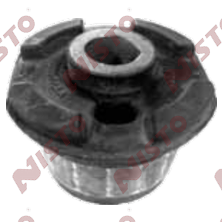
Control Arm Bushes
1,536 Catalogued References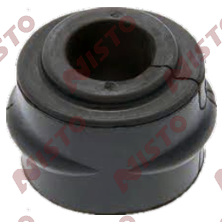
Stabilizer Bar Bushes
780 Catalogued References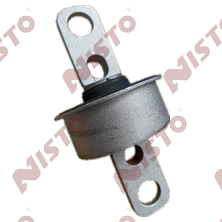
Suspension Bushings
724 Catalogued References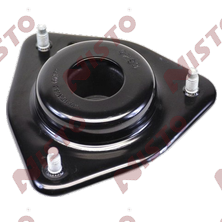
Shock Mountings
557 Catalogued References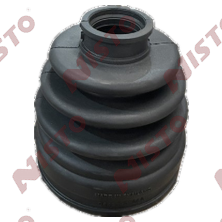
Drive Shaft CV Boots
387 Catalogued References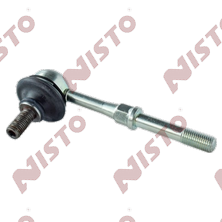
Link Rod Assemblies
368 Catalogued References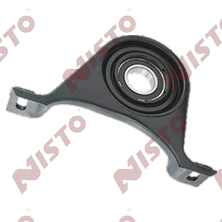
Center Support Bearings
239 Catalogued References Strategic Market Intelligence
Future Procurement & Technology Trends in Molded Automotive Rubber
As the automotive landscape shifts toward electrification and strict supply chain ESG mandates, purchasing leaders must anticipate key material and manufacturing evolutions.
1. Nearshoring & Supply Chain Redundancy (China+1)
Global automotive parts importers and warehouse distributors are restructuring their procurement risk models away from single-geography reliance. Thailand has established itself as the premier manufacturing hub in Southeast Asia, providing robust access to world-grade natural rubber (NR) latex alongside mature infrastructure for automated injection and compression molding. Sourcing from Thailand mitigates tariff exposures while delivering exceptional logistical stability to North American, European, and Australasian corridors.
2. EV Transition Demands: High-Frequency NVH Dampening
Electric vehicles remove internal combustion engine masking noise while adding instantaneous torque and significant battery curb weight. This transition demands molded automotive rubber components with drastically higher load capacities, superior tear strength, and broader damping frequencies. Suspension bushings and motor mounts must now feature customized elastomer blends—such as EPDM and formulated synthetic polyisoprene—engineered to eliminate micro-vibrations without accelerating fatigue wear under high-torque acceleration.
3. Advanced Chemical Adhesion in Rubber-to-Metal Bonding
Failure in bonded automotive chassis parts predominantly occurs at the adhesive interface. Modern procurement programs emphasize solvent-free, eco-compliant chemi-bonding agents and automated multi-stage metal phosphating lines. NISTO utilizes high-tensile inner and outer metal sleeves that receive calibrated surface degreasing and robotic priming, ensuring that tear tests fail within the rubber matrix itself (100% rubber failure) long before adhesive detachment can ever take place under real-world road shocks.
Direct Thailand Manufacturing Full Process Control.
Full Process Control.
Zero Intermediaries.
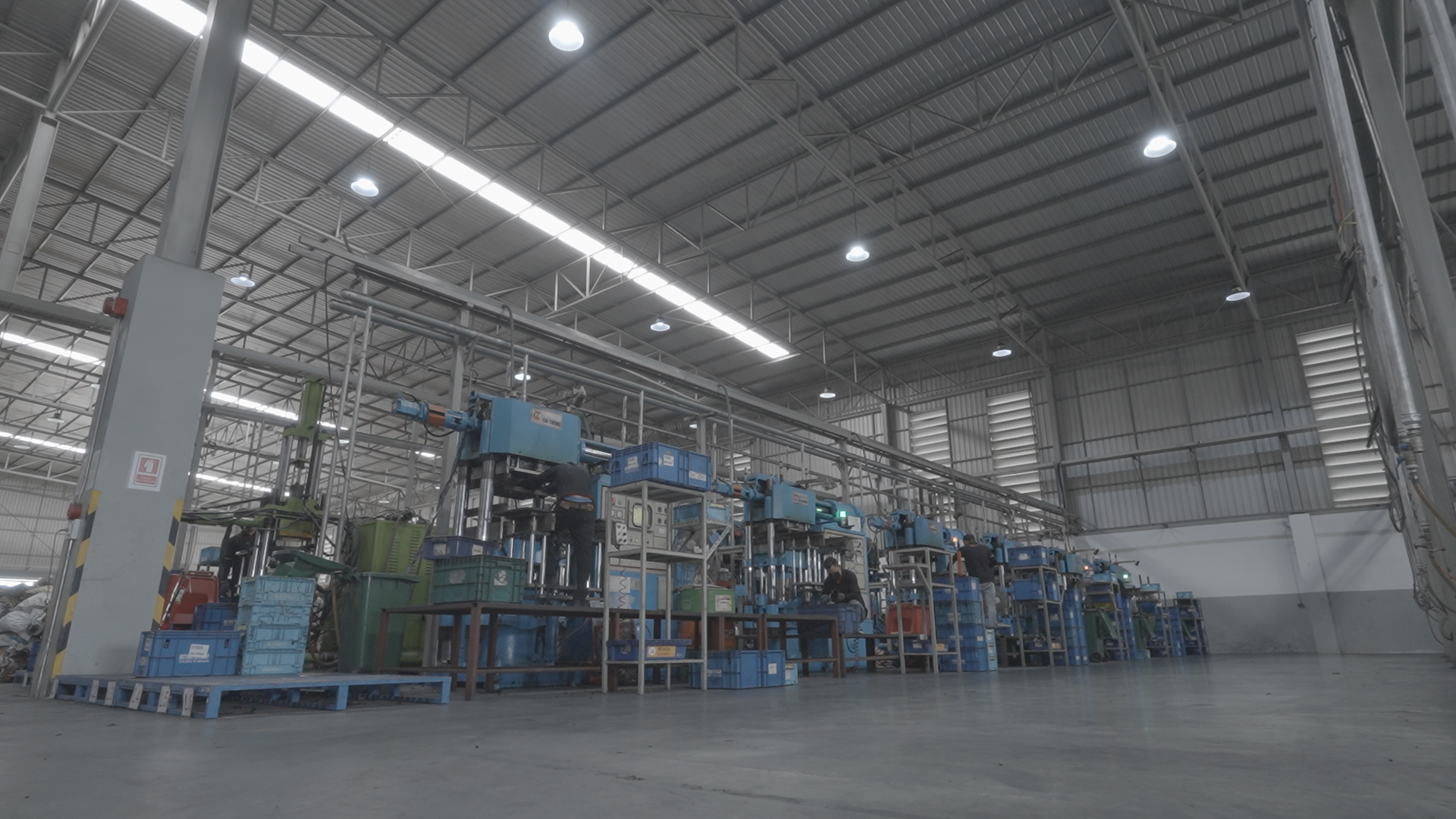
NISTO RUBBER operates an integrated manufacturing pipeline in Thailand. By managing formulation design, multi-cavity tool manufacturing, mechanical stamping, automated chemical bonding, and vulcanization under one roof, we guarantee exact shore durometer tolerances, uniform tensile strength, and verifiable batch-to-batch consistency.
Inquire Now Enterprise Advantage
Why Global Importers Partner with NISTO
For distributors, OEM procurement directors, and tier importers, defective or ill-fitting rubber parts generate catastrophic warranty claims and eroded brand trust. NISTO removes operational risk through four core operational pillars:
- 01
True Vertical Manufacturing in Thailand
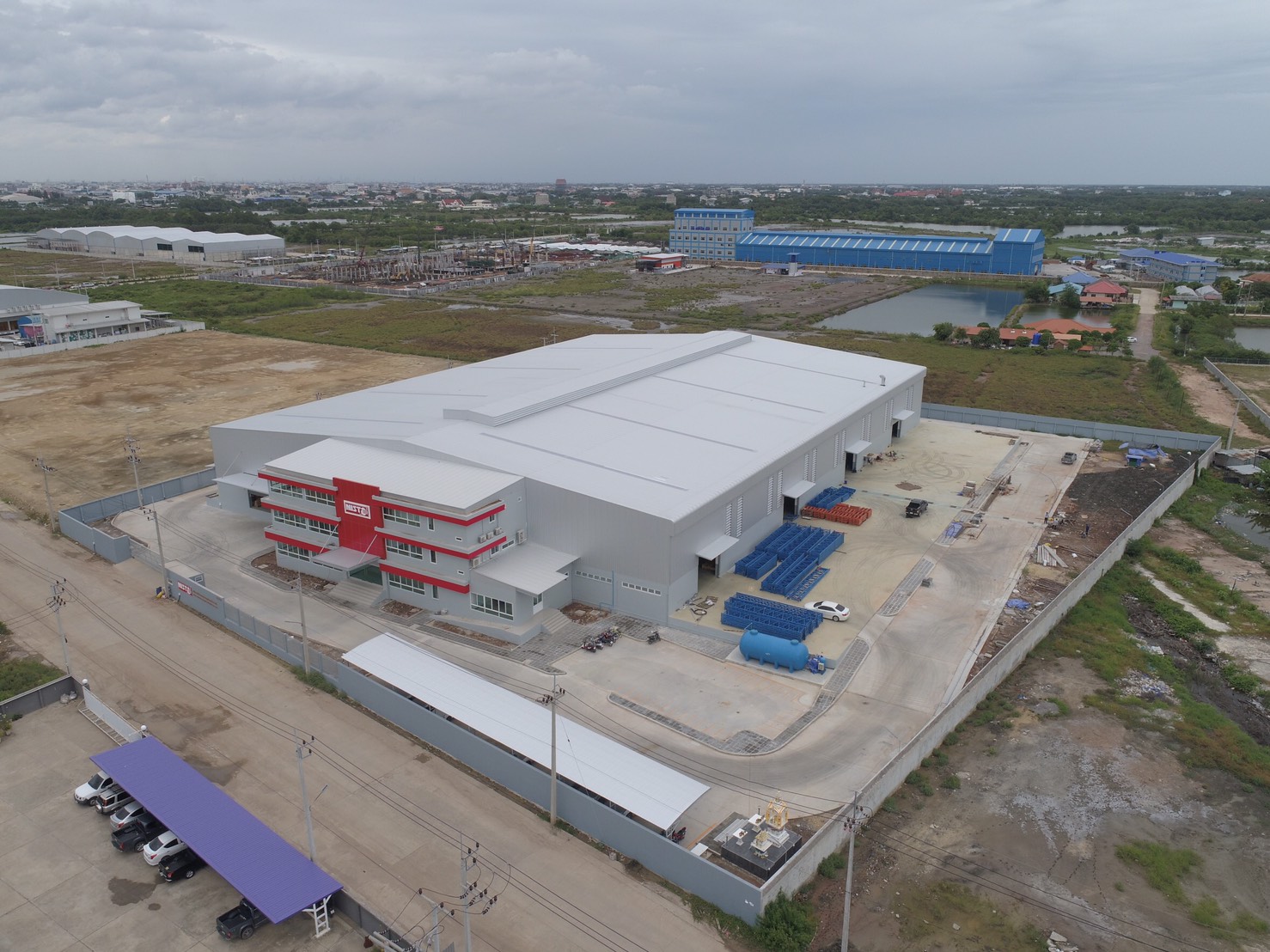
We eliminate trading intermediary markups. NISTO controls compounding, precision tooling, compression and transfer molding, and rubber-to-metal vulcanization directly on site in Thailand.
- 02
9,485+ OE-Matched Catalogued Parts
A comprehensive inventory spanning 31 major automotive manufacturers across 60 chassis and powertrain categories. Every SKU is documented with cross-reference OE numbers, fitment years, and technical schematics.
- 03
Verified Compound & Bonding Integrity
Our lab validates tensility, elongation, ozone degradation resistance (ASTM D1149), and rubber-to-metal peel strength (ASTM D429) to ensure components survive heavy duty cycling.
- 04
Rapid Container Loading & Flexible MOQ
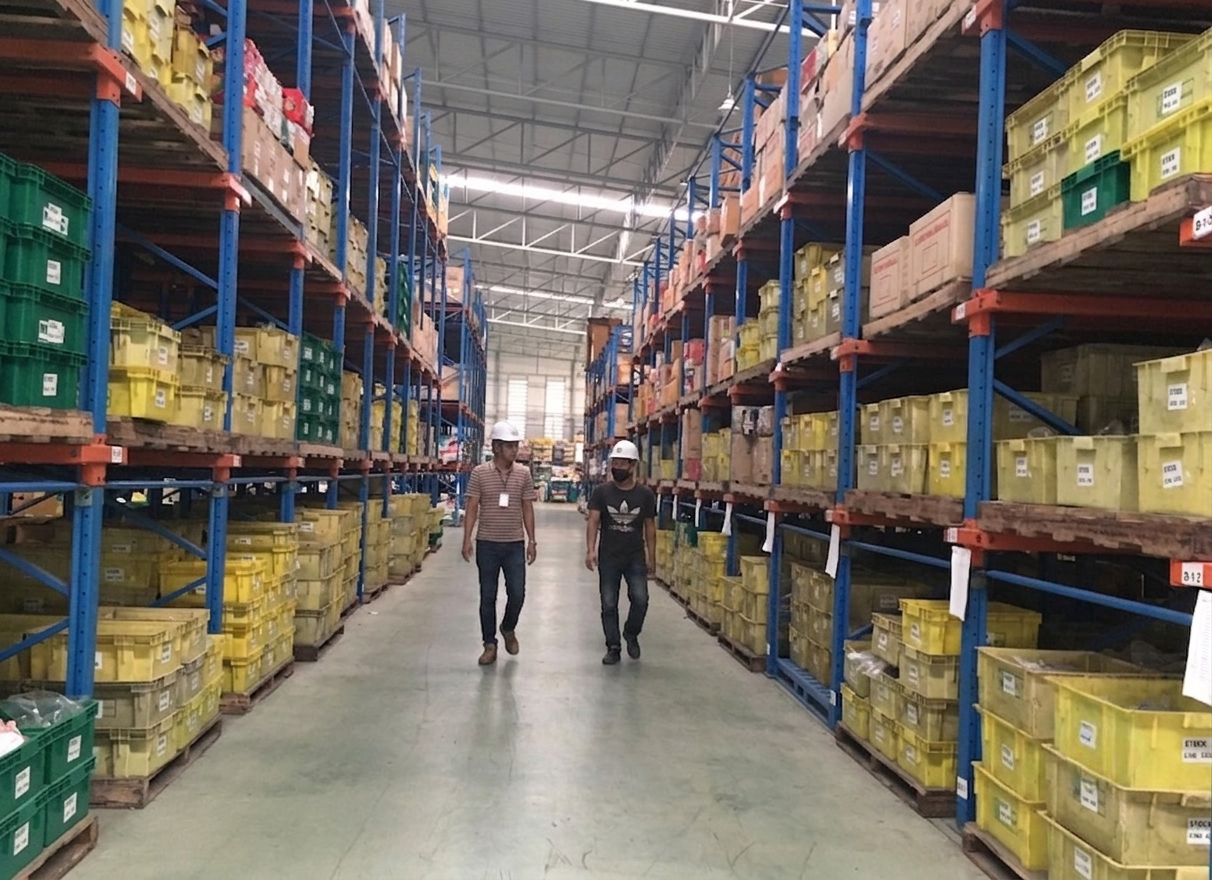
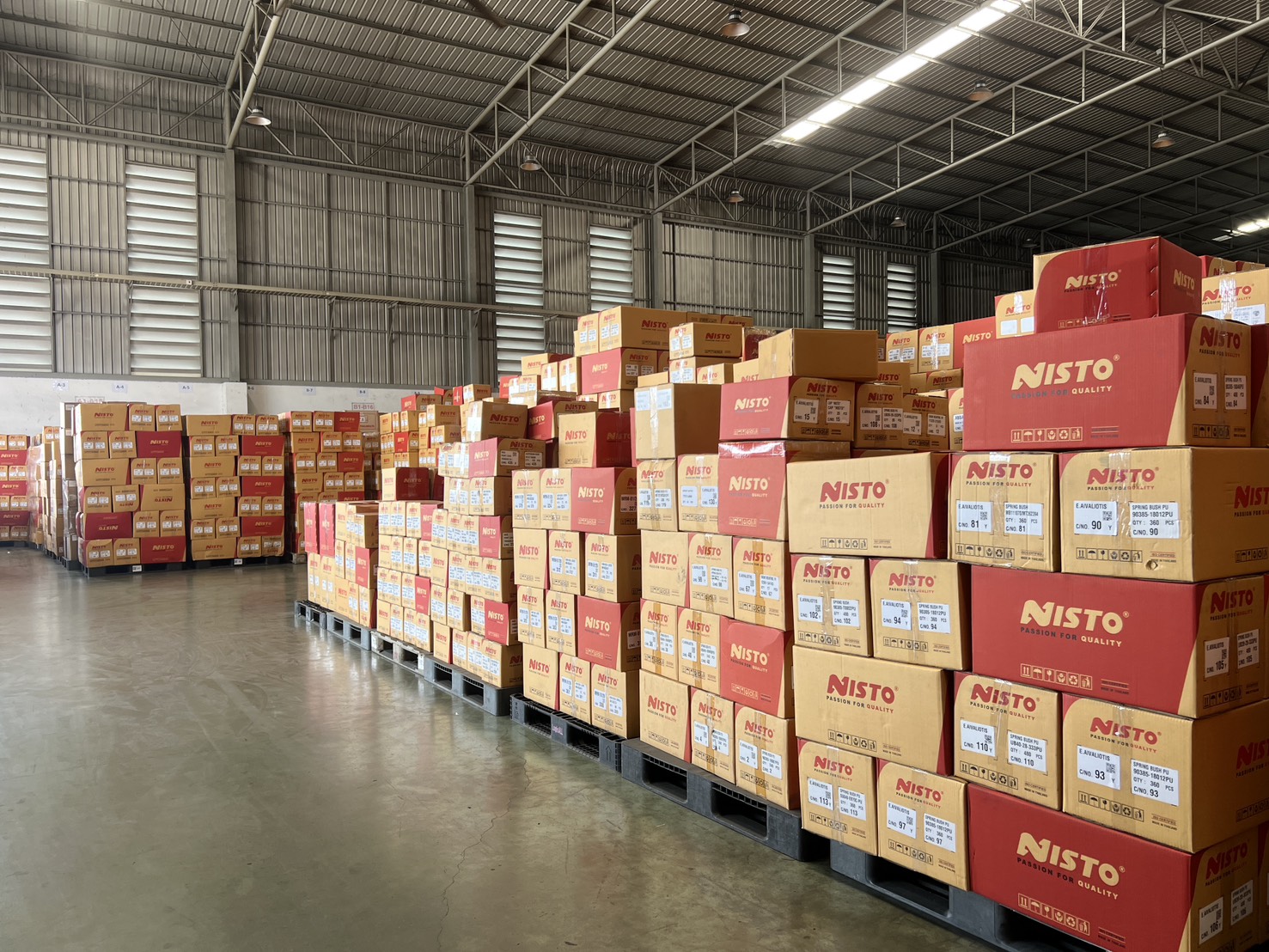
With vast ready stock housed across our organized warehouse aisles, we offer shorter production lead times, combined product container shipments, and dedicated customer engineering support.
Manufacturing Engineering
Our 4-Stage Precision Rubber Molding Process
From raw virgin elastomer compounds to finished and stress-tested assemblies, every stage reflects strict ISO-level production governance.
Custom Compounding
Formulating Natural Rubber (NR), EPDM, Chloroprene (CR), and Nitrile (NBR) with carbon black, anti-ozonants, and vulcanization accelerators precisely matched to vehicle dynamic requirements.
Surface Preparation
Metal stamping, shot blasting to achieve the correct Ra surface roughness, followed by automated multi-stage degreasing and dual-coat thermosetting adhesive application.
Hydraulic Molding
High-tonnage compression and injection vulcanization under micro-controlled temperature, cycle duration, and hydraulic pressure profiles to guarantee zero porosity and uniform density.
Deflashing & Quality QA
Cryogenic or precision edge deflashing, followed by visual inspection, automated dimensional checks, hardness testing (Shore A), and batch recording prior to barcode packaging.
Fleet & Platform Coverage
Compatible Vehicle Makes & Platforms
Engineered replacement molded automotive rubber components cross-referenced with complete OE accuracy across 31 vehicle marques.
CHRYSLER / DODGE / JEEP
DATSUN

GAC
HOLDEN

INFINITI
JAGUAR
Extensive catalogs also maintained for Toyota, Nissan, Mitsubishi, Mazda, Subaru, and heavy commercial applications. Trademarks remain property of respective owners.
Procurement Technical FAQs
Frequently Asked Questions by Global Buyers
Direct technical answers addressing the real questions sourcing engineers, QA inspectors, and procurement managers ask when purchasing molded automotive rubber.
What elastomers are used in molded automotive rubber parts, and how do you choose them?
The elastomer selection is dictated strictly by mechanical application, temperature exposure, and dynamic loading. Natural Rubber (NR) is predominantly selected for engine mountings, suspension control arm bushings, and strut mounts due to its exceptional dynamic fatigue resistance, high resilience, and low hysteresis damping. For components operating in contact with grease, oil, and road grit—such as CV joint boots and steering rack bellows—we utilize Chloroprene (CR) or Nitrile (NBR). When high thermal stability (-40°C to +135°C) and superior ozone/UV resistance are required (e.g., stabilizer bar bushings and radiator isolators), EPDM compounds are deployed. NISTO formulates proprietary compound recipes in-house to balance cost with OE performance criteria.
How does NISTO prevent delamination in rubber-to-metal bonded parts?
Delamination failure is completely avoided through a controlled surface engineering protocol. First, cold-rolled metal sleeves and brackets undergo automated grit-blasting to establish an optimal anchor profile (Ra 2.5–3.5 µm), removing surface scale and oxidation. Second, parts undergo alkaline ultrasonic degreasing and zinc phosphating. Third, a high-performance two-coat polymeric bonding system (primer + covercoat) is applied under precise humidity and film-thickness controls. Finally, transfer and compression molding vulcanization takes place within optimized thermal windows. We routinely subject batch samples to destructive 90° and 180° peel adhesion testing in compliance with ASTM D429 Method B, requiring 100% cohesive rubber tear before product dispatch.
Can you manufacture custom molded automotive rubber from samples or technical 2D/3D CAD drawings?
Yes. In addition to our 9,485 active catalogued reference numbers, NISTO provides comprehensive contract molding and reverse engineering services. If you provide a physical benchmark sample, our metrology lab reverse-engineers the metal sleeve dimensions, rubber geometry, and compound Shore A durometer. For CAD blueprints (STEP, IGES, DXF), our in-house tooling shop designs and machines high-precision multi-cavity tooling utilizing CNC machining centers and EDM spark erosion. Rapid prototype sampling typically ships within 25–35 days from tool finalization for fitment and torsional testing.
What quality inspection and testing reports accompany volume shipments?
Every export shipment from NISTO can be certified with comprehensive inspection documentation upon request. Standard quality records include Material Inspection Reports (verifying tensile strength, elongation at break, and Shore A hardness via ASTM D2240), Dimensional Inspection Reports (CMM verification against OE specifications), and Rubber-to-Metal Bonding Adhesion Test Certificates. Accelerated ozone aging reports (ASTM D1149) and rheometer vulcanization curves can also be generated to satisfy stringent Tier-1 and regional distributor incoming inspection criteria.
What are NISTO’s typical Minimum Order Quantities (MOQ) and production lead times?
Because we maintain extensive ready-inventory reserves across our Thai distribution warehouse, catalogued items in stock carry flexible MOQs—often as low as 50 to 100 units per line item—allowing distributors to consolidate multi-SKU sea container shipments (20GP / 40HQ). For out-of-stock items requiring custom compounding and dedicated molding runs, standard MOQs range between 300 to 500 units depending on component volume. Production lead times average 30 to 45 days from purchase order confirmation to vessel departure at Laem Chabang Port, Thailand.
Why is sourcing molded rubber parts from Thailand more advantageous than China?
Thailand is the world's leading producer and exporter of premium natural rubber latex, providing NISTO with immediate access to unadulterated, farm-fresh virgin elastomeric raw materials at lower freight and handling costs. Furthermore, Thailand’s mature automotive manufacturing supply base offers high-precision steel tubes, reliable stamping, and international logistics connectivity. Sourcing from Thailand also helps overseas buyers circumvent punitive anti-dumping duties or trade tariffs while de-risking geopolitical supply chain vulnerabilities through authentic supply chain diversification.
Upgrade Your Molded Automotive Rubber Supply Chain
Connect with our technical sales engineers in Thailand. Send us your OE reference list, sample drawings, or project specifications to obtain factory-direct quotations, tooling assessments, and sample support.
Inquire Now