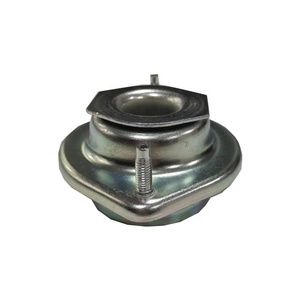

Precision-bonded, fatigue-resistant elastomeric components designed to absorb rotational engine inertia and eliminate harmonic chassis resonance across passenger and light commercial applications.
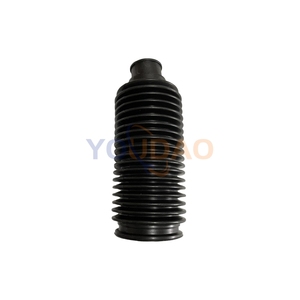
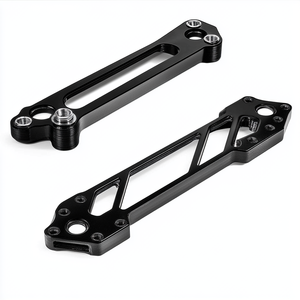
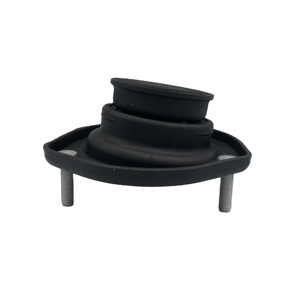
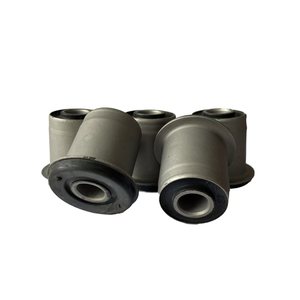
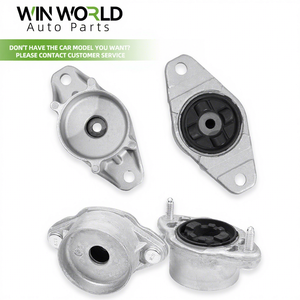
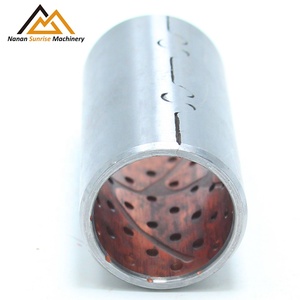
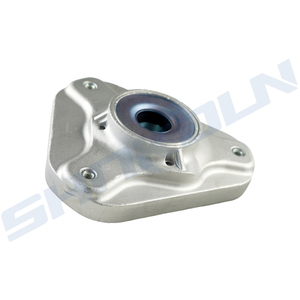
A comprehensive analysis of torque strut engineering, polymeric damping formulations, and global aftermarket procurement benchmarks.
In modern transverse engine architectures and high-torque hybrid powertrains, the torque strut mount (commonly designated as the engine dogbone or pitch control rod) acts as the critical mechanical fuse between the internal combustion/electric powertrain and the vehicle subframe. Unlike conventional load-bearing hydro-mounts that support the static gravitational mass of the engine assembly, torque strut mounts are engineered specifically to constrain pitch oscillation, rotational torsional deflection, and transient jerk induced under rapid acceleration, deceleration, and high gear shifts.
As a leading Chinese supplier and global manufacturing exporter, our engineering facilities utilize multi-stage chemical surface preparation, high-pressure sandblasting, and thermo-reactive silane-based priming agents prior to transfer compression molding. This process achieves superior adhesion strengths conforming strictly to ASTM D429 Method B standards, ensuring the rubber elastomer tears cohesively before structural bonding failure can occur.
Formulated using high-purity Natural Rubber (NR) blended with synthetic Polybutadiene and EPDM to preserve structural rebound, Shore A durometer consistency (±5 tolerance), and dynamic stiffness across temperature extremes of -40°C to +120°C.
Equipped with vacuum compression molding lines that eliminate air entrapment, internal gas porosity, and vulcanization micro-fissures. Every cavity is strictly mapped for continuous real-time temperature, dwell, and pressure profiling.
Validated on servo-hydraulic dynamic testing rigs subjecting components to 1,000,000 axial and radial endurance cycles under dual-frequency oscillation to guarantee comprehensive acoustic attenuation and anti-shake isolation.
| Performance Metrics | OEM Specification | Our Engineered Quality | Standard Low-Cost Competitor |
|---|---|---|---|
| Base Polymer Composition | 100% Virgin Natural Rubber (NR) / EPDM Blend | 100% Virgin NR Compound with Anti-Ozonants | Recycled Rubber / High Clay Filler Loading |
| Bonding Strength (ASTM D429) | > 10 MPa (Elastomer Structural Rupture) | ≥ 10.5 MPa (100% Cohesive Failure) | < 5.2 MPa (Adhesive Interfacial Peeling) |
| Tensile Strength & Elongation | ≥ 18 MPa / ≥ 450% Elongation | ≥ 19.5 MPa / ≥ 480% Elongation | < 10 MPa / < 280% Elongation |
| Dynamic Damping Shift (-30°C) | Hardness Increase ≤ 8 Shore A | Hardness Increase ≤ 9 Shore A | Hardness Increase ≥ 22 Shore A (Brittle) |
| Sleeve & Bracket Metallurgy | High-Strength Q235 / Aluminum ADC12 | Precision Drawn Seamless Steel / ADC12 Alloy | Seamed Scraps / Porous Low-Grade Castings |
The global automotive chassis industry is undergoing a structural paradigm shift dictated by electrification (EVs/PHEVs), platform lightweighting, and tightened emissions standards. For automotive procurement directors, wholesale distributors, and brand importers, navigating the next decade of chassis sourcing requires understanding three critical supply chain trajectories:
1. Instant Torque & High-Frequency Vibration in EV/Hybrid Retrofits: Electric motors generate instantaneous peak torque curves from zero RPM. Consequently, engine torque strut mounts installed in hybrid power units endure up to 40% higher torsional shock cycles than historical internal combustion counterparts. Sourcing must pivot exclusively toward high-damping, synthetic-elastomer-matrix mounts engineered to handle rapid transient torque spikes without micro-cracking.
2. Structural Lightweighting: Aluminum Castings & Composite Integration: In pursuit of vehicle curb weight reduction to extend battery ranges, global automakers are replacing traditional deep-drawn steel brackets with thin-wall high-integrity aluminum alloys (ADC12, A380) and glass-fiber-reinforced polyamides. Suppliers must demonstrate precision CNC machining capabilities and non-destructive acoustic/ultrasonic testing to prevent localized stress fractures around bolt sleeves.
3. Supply Chain Traceability, Near-Zero PPM, and Eco-Formulations: International buyers are transitioning away from high-polluting open-bath vulcanization processors toward automated, closed-loop facilities that comply with environmental chemical regulations (such as REACH and RoHS). Sourcing agreements are increasingly tied to documented scrap rates lower than 200 PPM and real-time electronic batch-tracking of rubber masterbatches.
Engineered reliability backed by fully integrated manufacturing facilities, proprietary compounding lines, and exhaustive catalog verification.
From initial CAD drafting and CNC metal tooling to raw rubber compound mixing and transfer injection molding, every manufacturing step is retained in-house to protect dimensional consistency batch after batch.
With an extensive catalog covering Asian, North American, and European applications (including Toyota, Honda, Ford, GM, Isuzu, Mercedes-Benz, and Nissan), we provide one-stop consolidation across 9,485 active SKUs.
Our expansive logistics hubs maintain standing inventory on fast-moving chassis bushings, center support bearings, and strut mounts, slashing international lead times down to standard 14-day container dispatches.
Direct technical answers addressing OEM cross-referencing, manufacturing verification, packaging options, and bulk procurement logistics.
Every single torque strut mount and chassis bushing is reverse-engineered directly from pristine OEM samples. Geometric tolerances are verified with coordinate measuring machines (CMM) and compared against strict original equipment drawings before steel mold tooling is released to production.
We implement a automated 4-stage surface pretreatment that includes automated shot blasting, dual-coat chemical adhesive application (primer and cover cement), and high-pressure compression transfer molding. This process delivers cohesive failure ratings compliant with ASTM D429 standards.
For catalogued lines with established tooling, our standard MOQ is 100 to 200 units per line item. Because we maintain warehouse stock across thousands of rapid-turnover items, mixed-container consolidated shipments can often dispatch in 15 to 25 business days from order confirmation.
Yes. Our in-house chemical mixing laboratory can tailor rubber formulations to meet regional requirements—such as high-resilience natural rubber mixtures for sub-zero Arctic conditions (-40°C) or fortified EPDM/synthetic blends resistant to tropical humidity and ozone-heavy environments.
Our operations function under strict IATF 16949 quality management protocols. Every production run undergoes automated batch rheometer curing tests, durometer hardness cross-checks, and statistical tensile/shear destructive audits, keeping global warranty claim rates under 0.15%.
Yes. We offer turnkey OEM/ODM export solutions, including precision laser etching of customer part numbers, custom color boxes with barcode/anti-counterfeit labeling, and export-grade pallet packaging designed to withstand long ocean transits.
Connect with our technical sales engineers to review digital catalogs, request physical testing samples, or obtain volume pricing for custom OEM-grade torque strut mounts.