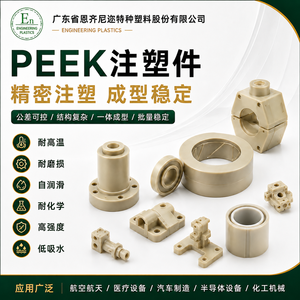

Precision-molded anti-vibration components engineered for rigorous multi-axis load dampening. Retaining 100% strict tolerances matching OEM reference drawings.
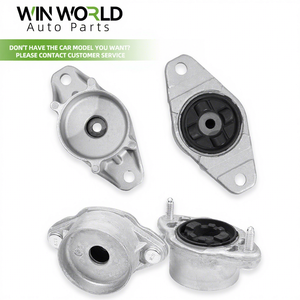
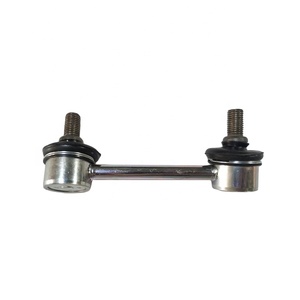
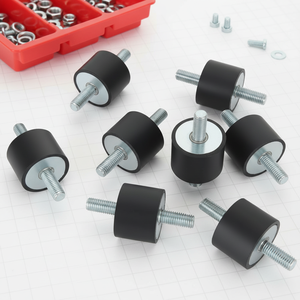
In modern multi-link, twist-beam, and semi-trailing arm suspension systems, trailing arm bushings are pivotal elastomeric linkages that govern longitudinal braking loads, lateral cornering stiffness, and high-frequency acoustic isolation.
Failure in aftermarket suspension bushings predominantly manifests as adhesive bond failure between the inner steel core and the vulcanized elastomer. Our facilities use automated multi-stage phosphate washing, automated silane primer coatings, and Chemlok bonding systems to ensure tensile shear strengths exceeding 12 MPa.
Sourcing from unverified wholesale operators often yields products with excessive dynamic hardening. By maintaining proprietary formulations of high-purity cis-1,4-polyisoprene Natural Rubber (NR) combined with virgin carbon black (N330/N550), our Kd/Ks dynamic factor is kept strictly below 1.35 to prevent cabin drone.
Trailing arm linkages undergo continuous torsional, axial, and radial deflections under adverse environmental exposure. Our compounds incorporate anti-ozonants (6PPD) and microcrystalline waxes, enabling our parts to surpass 1,000,000 multi-axial cycle fatigue tests without micro-fissure propagation.
| Evaluation Parameter | Tier-1 OEM Benchmark Standard | Generic Commodity Suppliers | Our Precision Manufacturing Standard |
|---|---|---|---|
| Base Polymer Composition | 100% Virgin NR / EPDM Blend | Reclaimed Scrap Rubber > 35% | 100% Virgin Polyisoprene / Custom Blend |
| Metal Sleeve Surface Treatment | Zinc-Nickel Plate / E-Coat (720h Salt Spray) | Basic Oiled Black Oxide (< 48h Salt Spray) | Cataphoretic E-Coating (> 960h Salt Spray) |
| Rubber-to-Metal Peel Strength | ≥ 10.5 N/mm (100% Rubber Tear) | < 5.0 N/mm (Adhesive Interface Delamination) | ≥ 11.8 N/mm (100% Rubber Tear Failure) |
| Radial Load Deflection Variance | ± 8% Tolerance Curve | ± 25% to ± 35% (Inconsistent Handling) | ≤ ± 6% Fully Calibrated Curve |
| Operating Thermal Window | -40°C to +105°C continuous | -20°C to +75°C (Premature Cracking) | -45°C to +120°C High Stability Range |
By retaining end-to-end tooling, compounding, metal stamping, and injection vulcanization under one roof, our manufacturing ecosystem eliminates tier margins and ensures comprehensive traceability for global chassis programs.
Immediate access to over 9,485 mold configurations covering Asian, American, and European passenger vehicles, SUVs, and light commercial vehicles across 31 major automotive platforms.
No outsourced curing. Our precision vacuum compression and transfer injection presses maintain uniform heat distribution across all cavity positions, preventing localized under-curing.
Equipped with computerized rheometers, tensile elongation testers, MTS multi-axis hydraulic fatigue dynamometers, and salt spray testing chambers ensuring continuous compliance with IATF 16949 specs.
Every SKU is reverse-engineered and cataloged directly against OEM dimensional data, ensuring plug-and-play installation for mechanical repair workshops without pressing difficulties.
The global transition toward electrified platforms (BEVs) and multi-material lightweight chassis architecture is fundamentally shifting engineering criteria for tier-1 buyers, wholesale distributors, and fleet managers.
Battery electric vehicles impose 30% to 50% greater static mass and instantaneous torque spikes on rear trailing links during regenerative braking. The industry is moving toward high-modulus, low-creep synthetic elastomer blends capable of absorbing sustained multi-directional vectors without degradation.
To eliminate harsh road feedback without making suspensions uncomfortably stiff, modern trailing arms increasingly adopt internal fluid chambers tuned with orifice channels. Fluid dampening dissipates vibration energy at tuned resonant frequencies, achieving passenger cabin isolation previously unavailable with standard solid rubber designs.
Weight reduction demands have triggered a shift away from traditional mild steel outer metal shells toward 6000-series structural aluminum and continuous fiber-reinforced engineering polyamides. Sourcing partners must command cold-forming, laser surface etching, and precise knurling to secure strong inter-layer adhesion.
Strategic Sourcing Takeaway for 2025–2030: Enterprise parts distributors must consolidate procurement around factories with comprehensive CAD/CAM capabilities and localized mold shops. Suppliers relying on third-party curing or open-market rubber batches cannot meet modern dimensional stability requirements (±0.05 mm) or low PPM defect expectations.
Direct technical and logistical insights addressing common operational bottlenecks in automotive rubber component importation.
Direct-from-factory pricing, guaranteed OEM dimensional accuracy, and comprehensive private-label logistics for global importers and parts distributors.
Get Catalog